The Price Of Admission
Moving a cache out of the process is presented as a capacity and consistency upgrade: one copy instead of one per instance. Both of those are real. What the move also does is put a fixed price under every single hit.
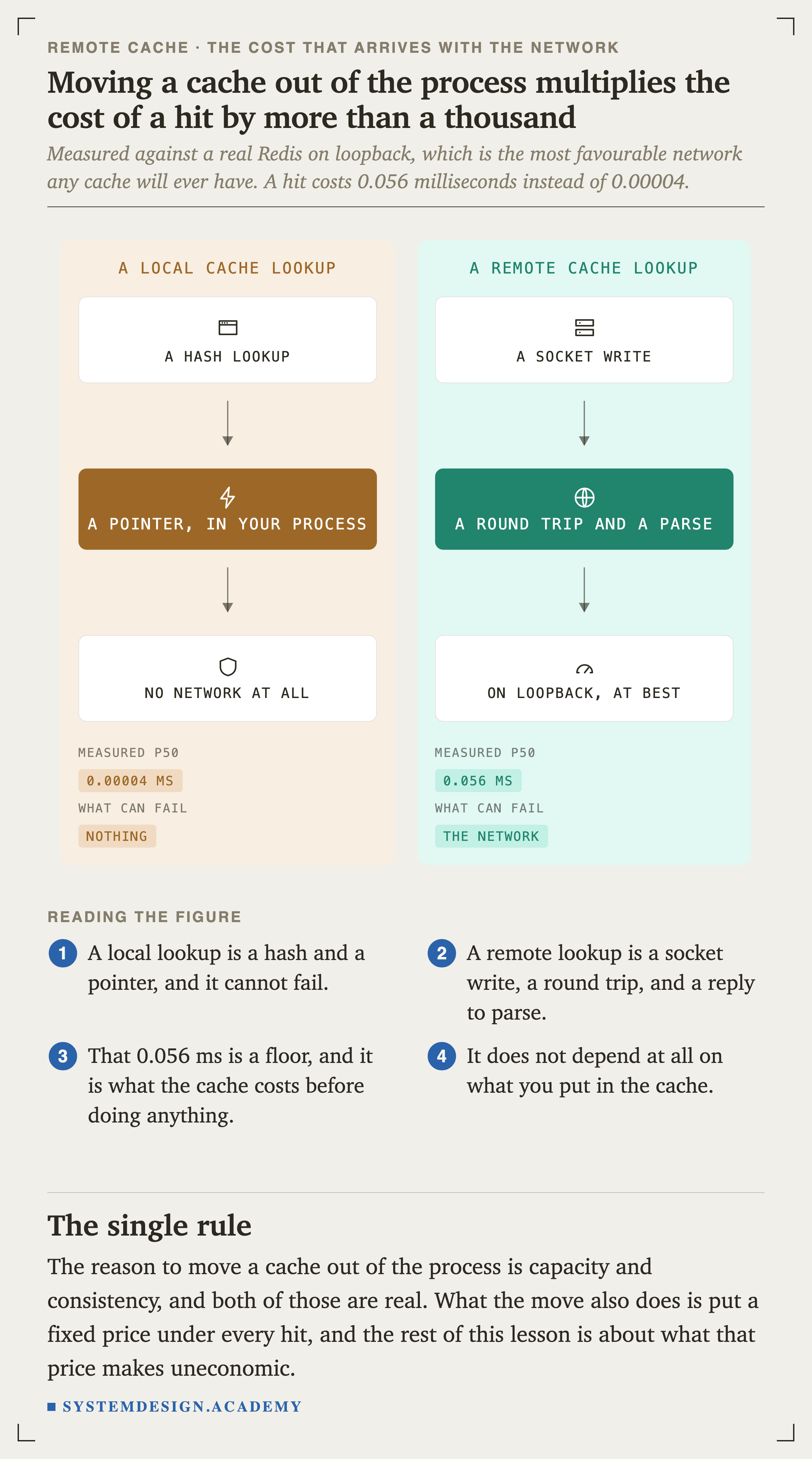
Measured against a real on loopback, which is the most favourable network any cache will ever have. That 0.056 milliseconds is a floor, and it does not depend at all on what you put in the cache.
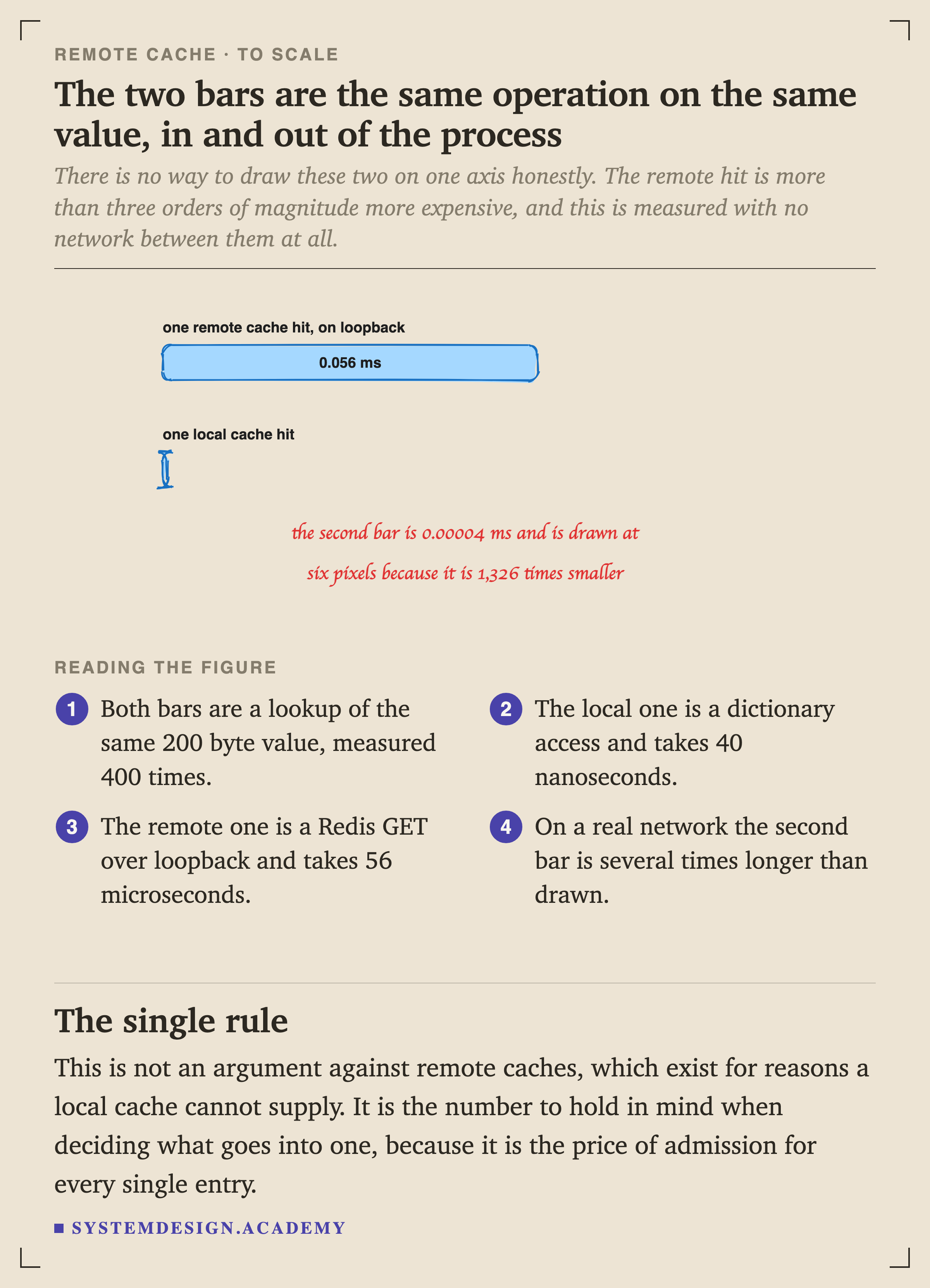
There is no way to draw these two on one axis honestly. This is measured with no network between them at all, so on a real deployment the first bar is several times longer than drawn.
What The Floor Makes Uneconomic
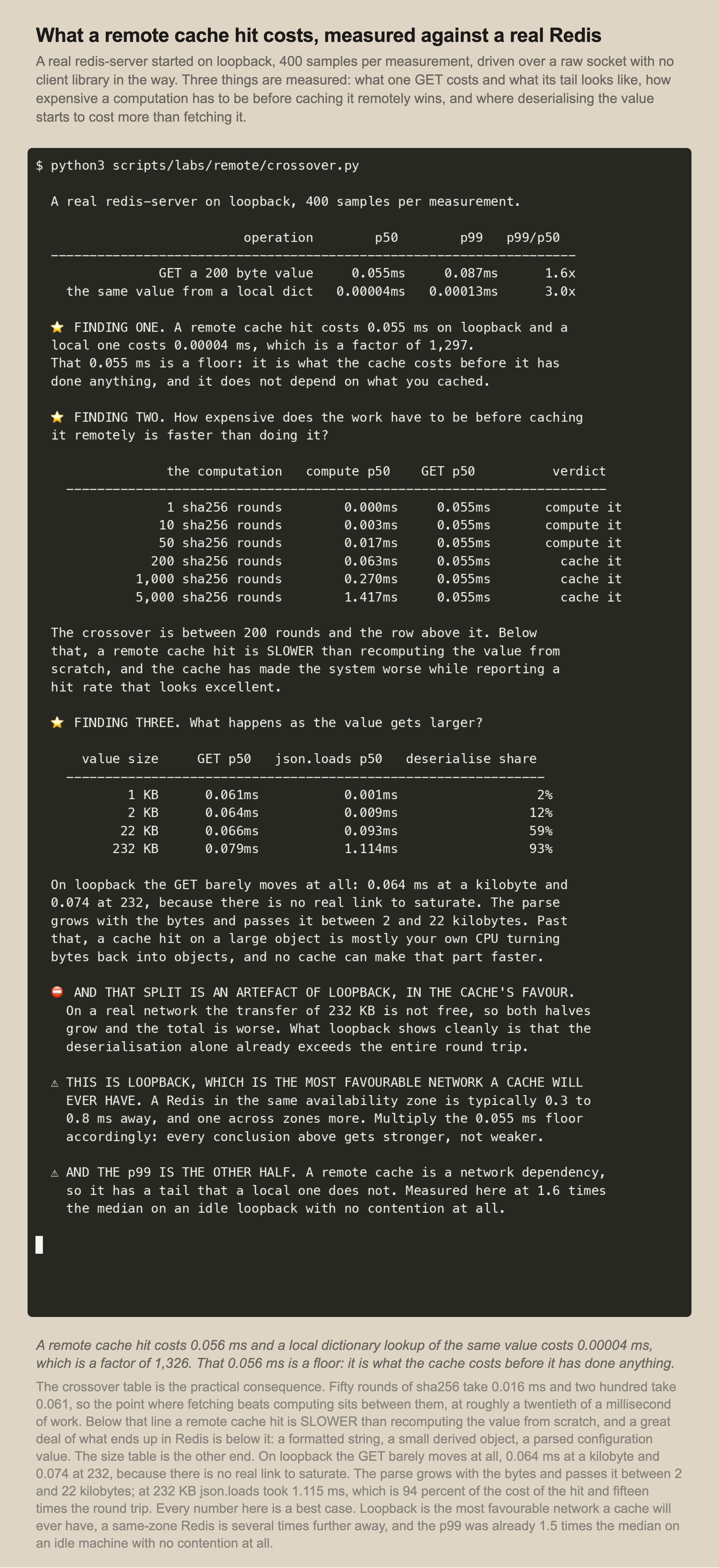
A remote cache hit costs 0.056 ms and a local dictionary lookup of the same value costs 0.00004, which is a factor of 1,326.
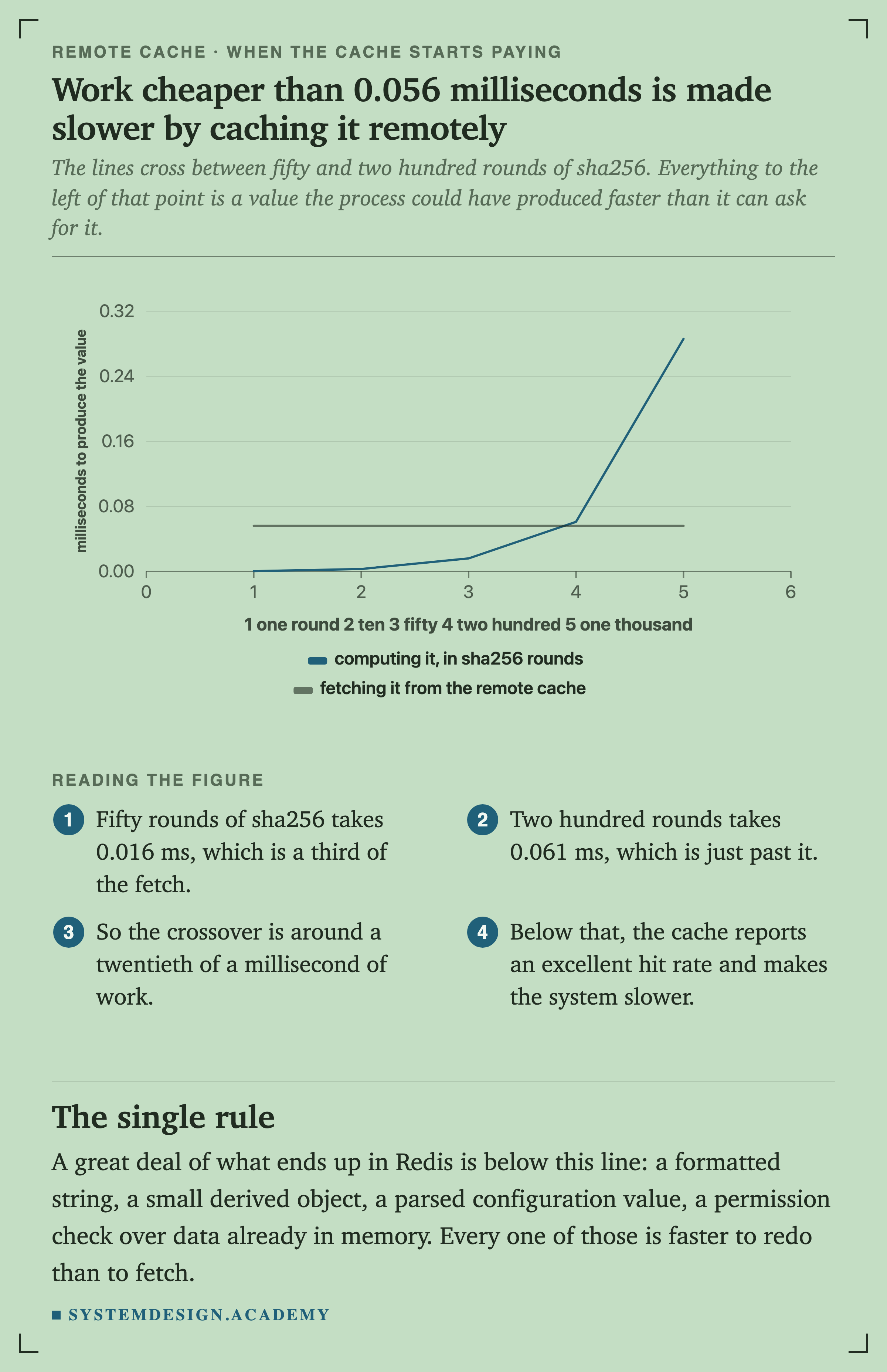
Fifty rounds of sha256 takes 0.016 ms, which is a third of the fetch. Two hundred takes 0.061, which is just past it. Below that line the cache reports an excellent hit rate and makes the system slower.
A great deal of what ends up in is below this line: a formatted string, a small derived object, a parsed configuration value, a permission check over data already in memory. Every one of those is faster to redo than to fetch.