Two Roads to the Same Station
Picture a young woman standing where a road splits in two. Both roads end at the same railway station. She has a paper map in one hand and a stopwatch in the other.
The map says the left road is shorter. It runs straight along the river and crosses one narrow bridge. The right road is longer. It curves around a hill, but it is a wide, open highway.
If she trusts the map, she takes the river road every morning. But the map does not know about the bridge. The bridge has one lane, and every morning it is full of slow cars. So for one week she does something simple. She takes the river road on Monday and times it. She takes the highway on Tuesday and times that. She keeps going, back and forth, and writes the times down.
At the end of the week the stopwatch tells her what the map never could. The longer road is faster.
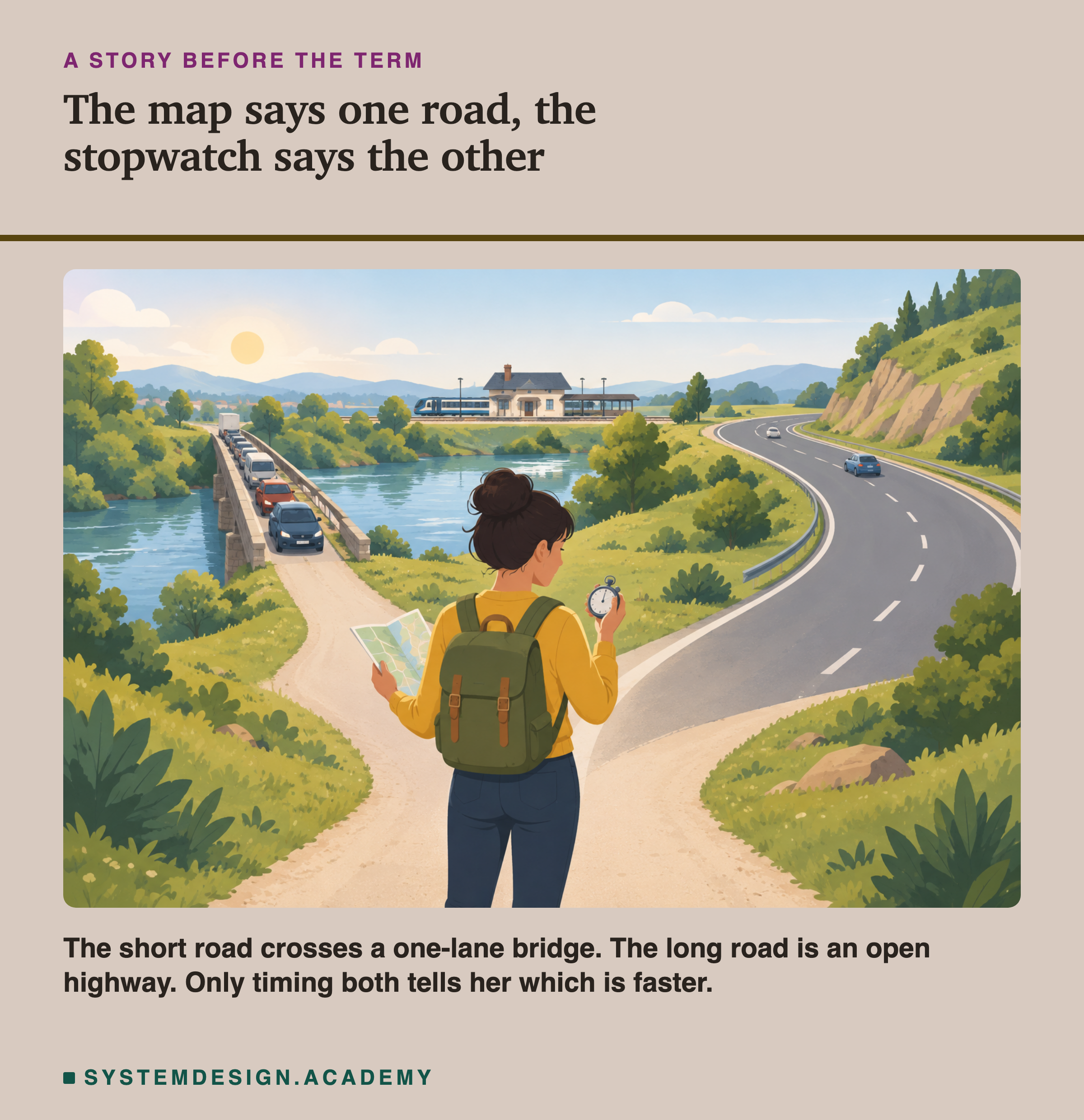
The map measures distance. The stopwatch measures time. When the thing you care about is time, the stopwatch is the right instrument, even when the map looks more certain.
Now keep the story going, because three more things happen, and each one is a part of this lesson.
First, she can only time the roads from where she lives. Her neighbour lives on the other side of the river. For him, the bridge road might really be faster. Her stopwatch says nothing about his mornings.
Second, her times are from last week. If the city closes a lane on the highway tomorrow, her notebook is wrong, and she will not know until she times it again.
Third, she tells everyone in her street. Next week, all of them take the highway. Now the highway is full, and the bridge road is empty. The very act of following the measurement changed what the measurement would say.
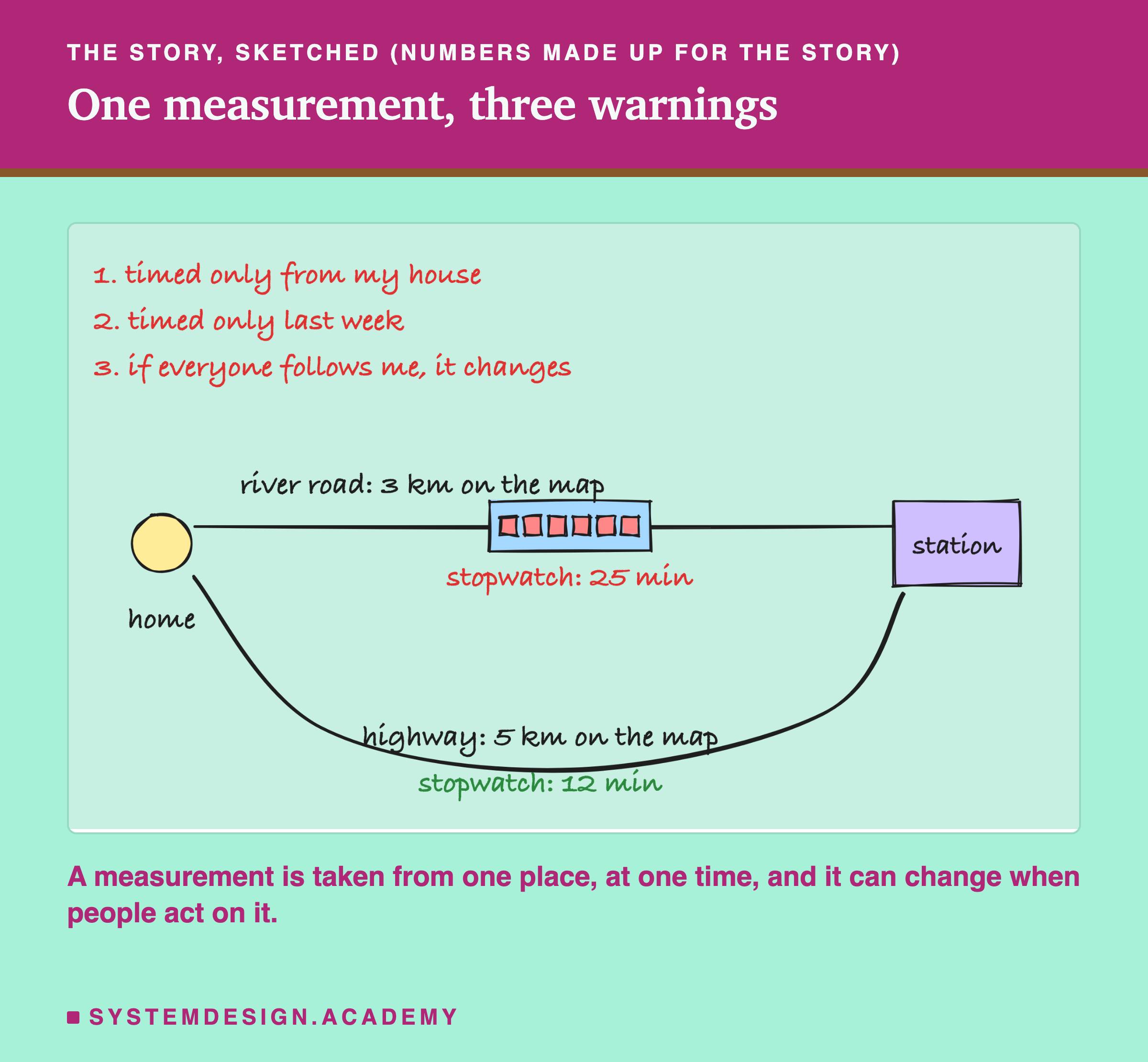
These numbers are made up for the story. The three red notes are the real lesson: a measurement is taken from one place, at one time, and it can change when people act on it.
Remember these three warnings. Computers that send people to servers face exactly the same three problems, and they solve them in the same ways.