A Test With Perfectly Real Input
The last lesson ended on a limit: a canary at five percent has proved nothing about a hundred percent of load. Mirroring is the technique that fixes exactly that.
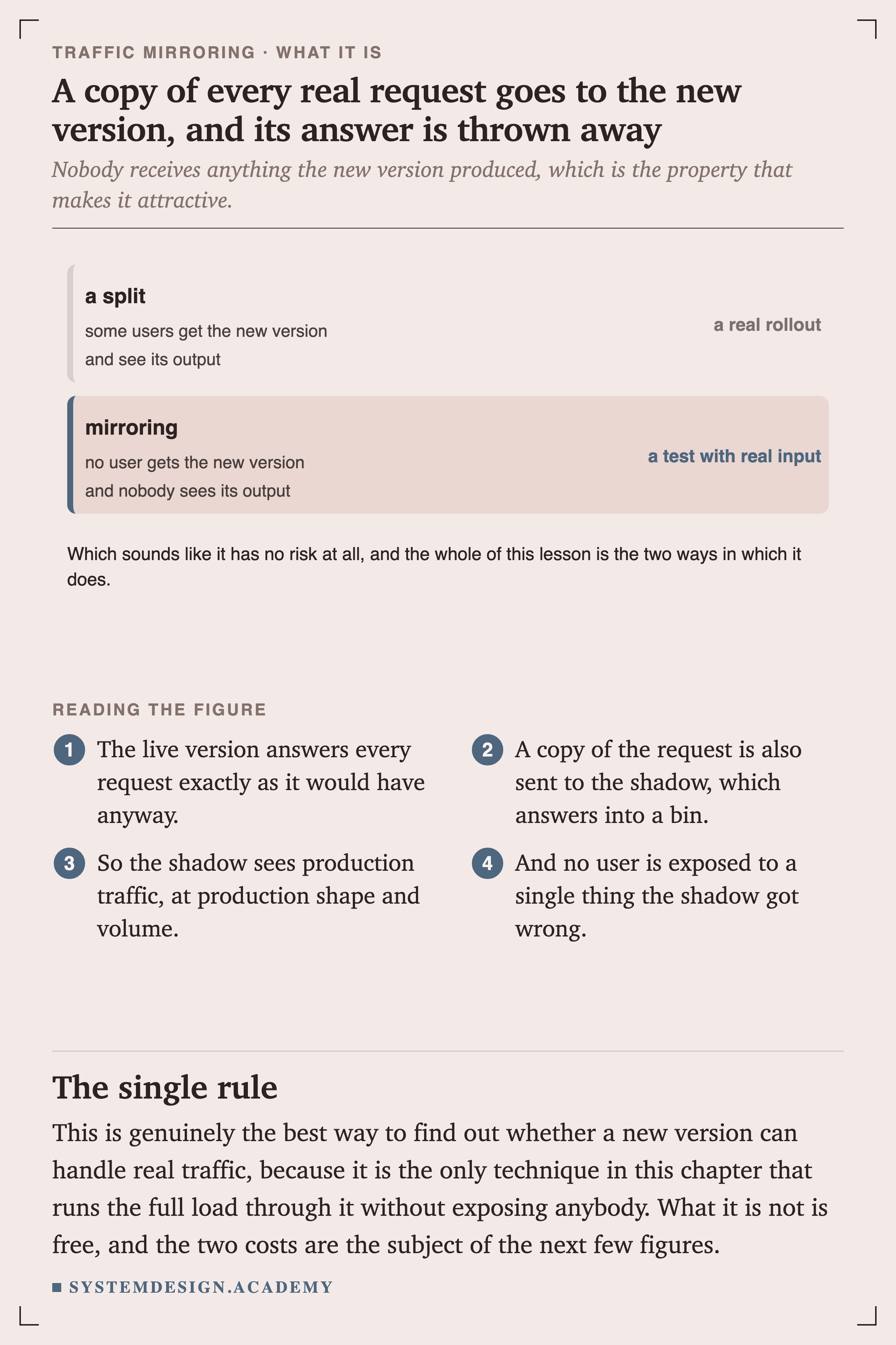
The shadow sees production traffic at production shape and volume, and no user is exposed to a single thing it got wrong.
That is genuinely the best way to find out whether a new version can handle real traffic. It is not free, and the two costs are the whole of this lesson.
The Response Is Discarded. Nothing Else Is
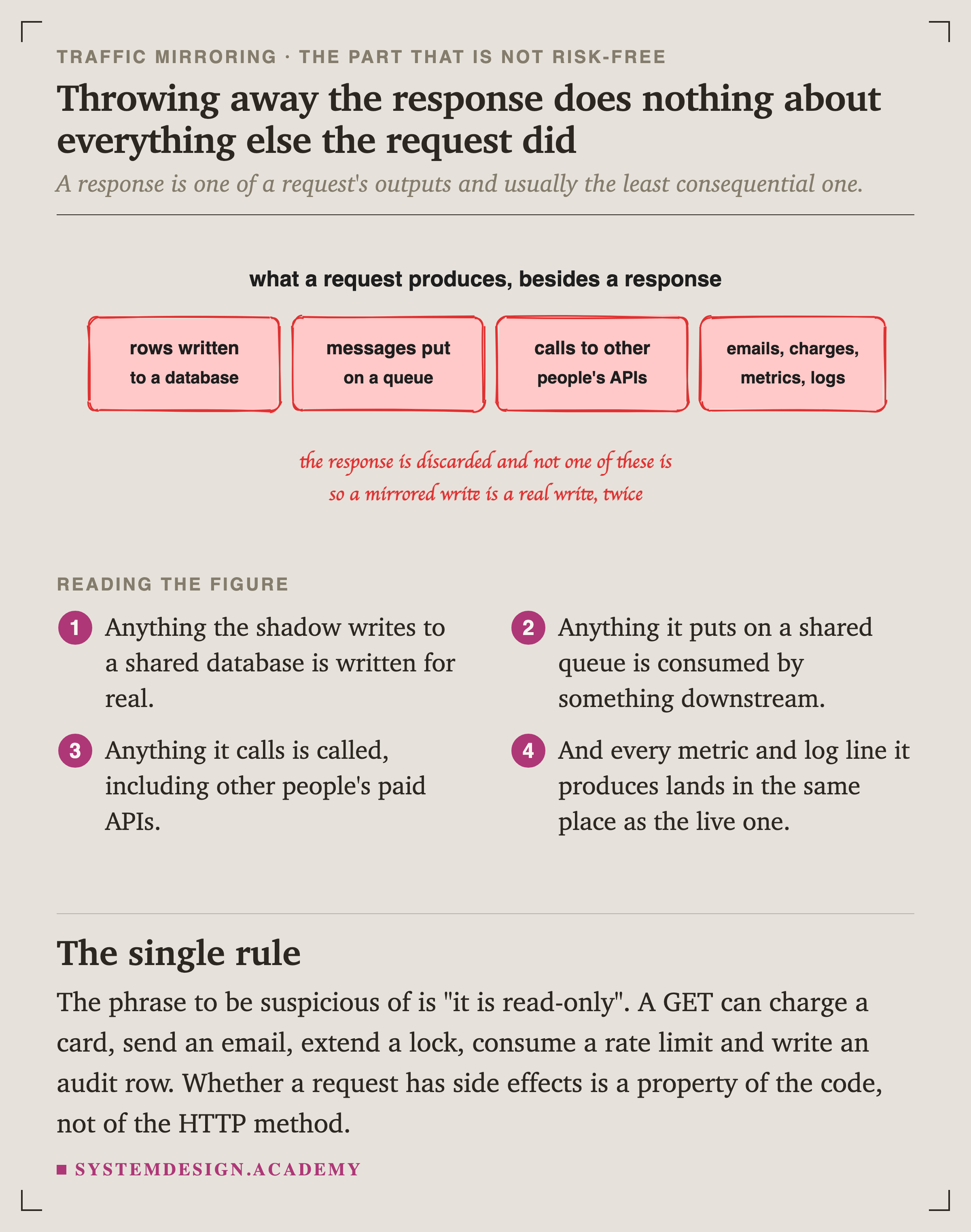
A response is one of a request's outputs and usually the least consequential one.
Here is that measured, on a real with a real shadow.
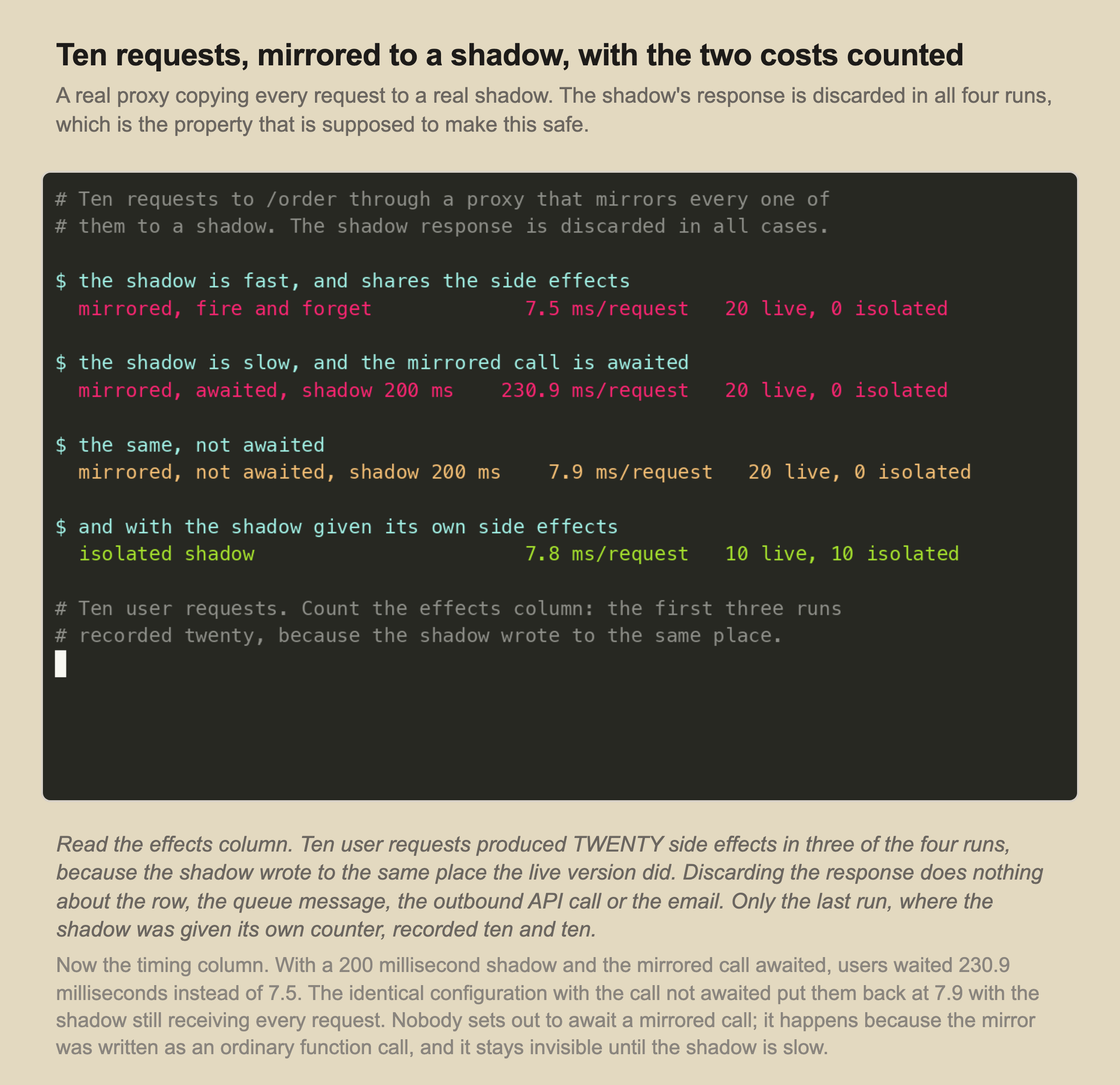
Ten user requests produced twenty side effects in three of the four runs, because the shadow wrote to the same place the live version did.
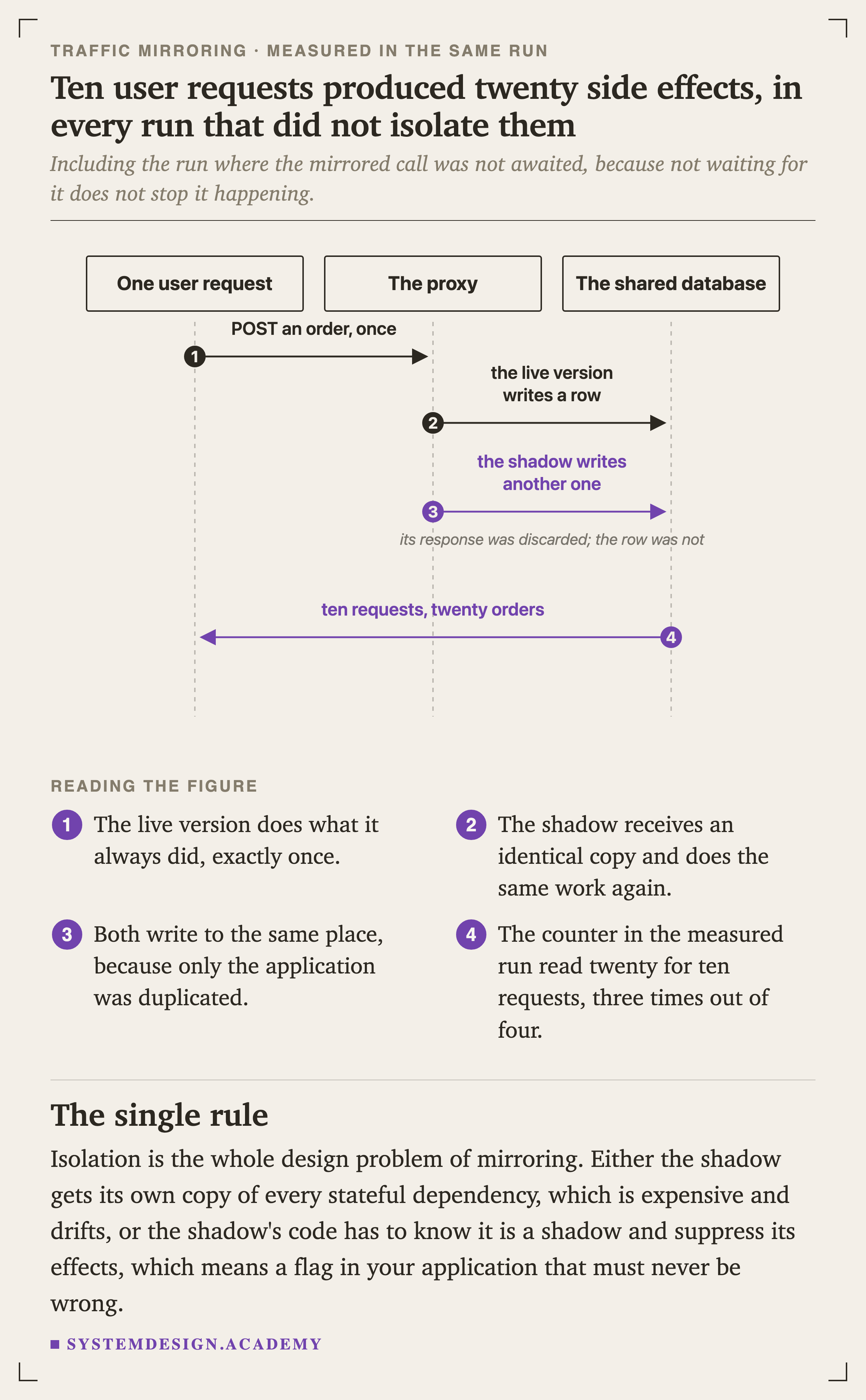
Only the application was duplicated. The database, the queues and the outbound calls were not.
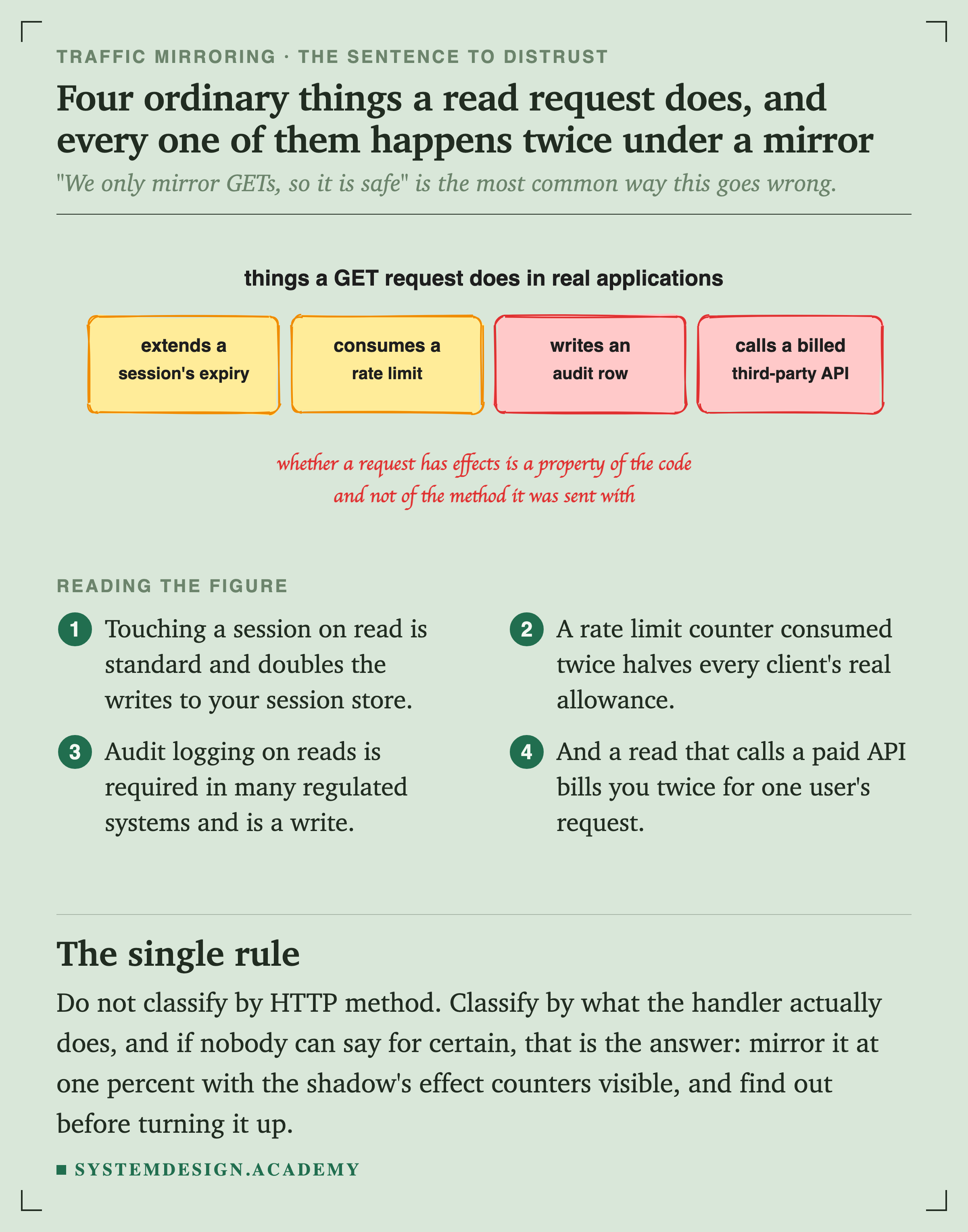
"We only mirror GETs, so it is safe" is the most common way this goes wrong. A GET can extend a session, consume a , write an audit row and call a paid API.
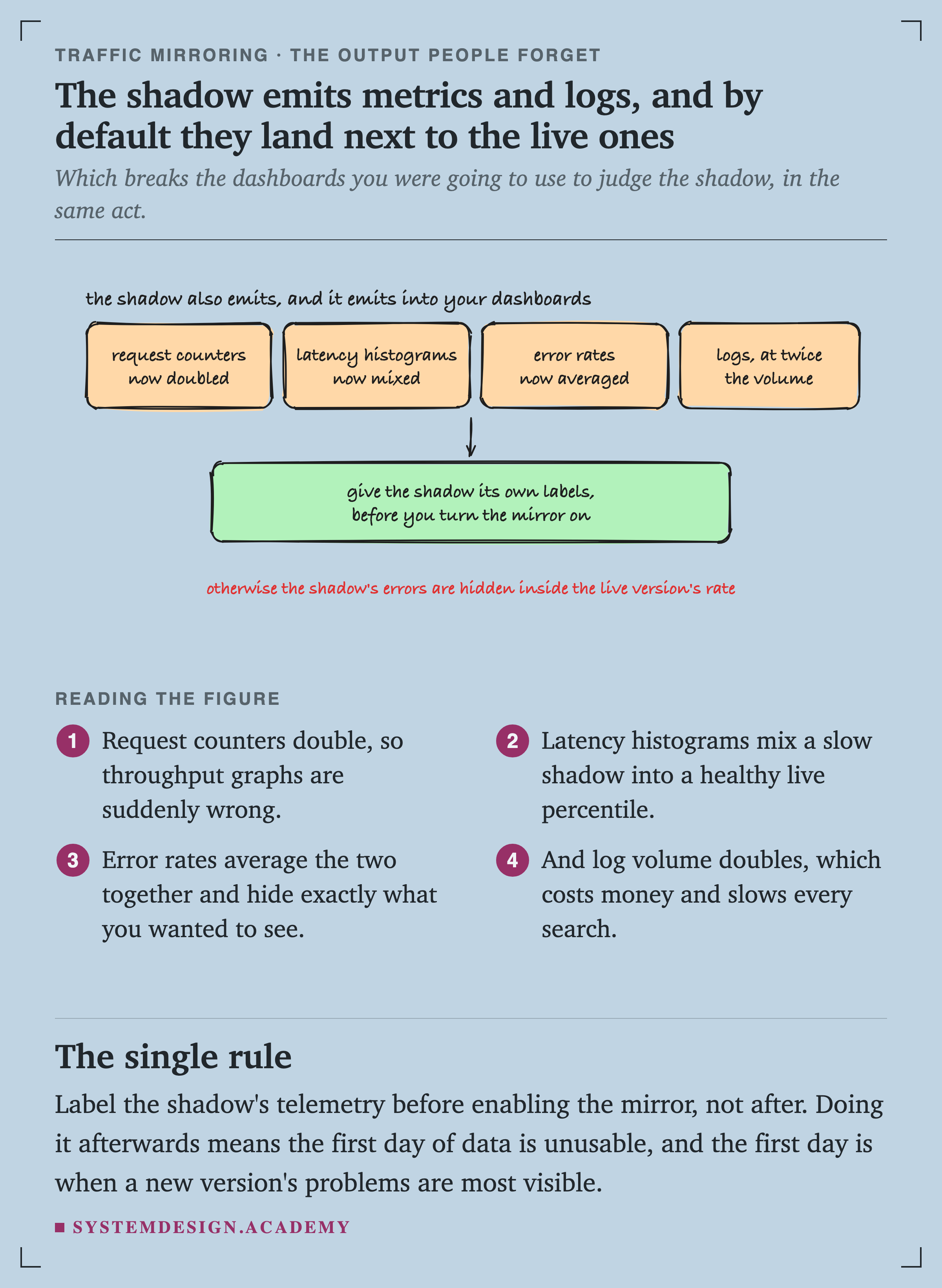
Which breaks the dashboards you were going to use to judge the shadow, in the same act.
Label the shadow's telemetry before enabling the mirror. Doing it afterwards means the first day of data is unusable, and the first day is when a new version's problems are most visible.