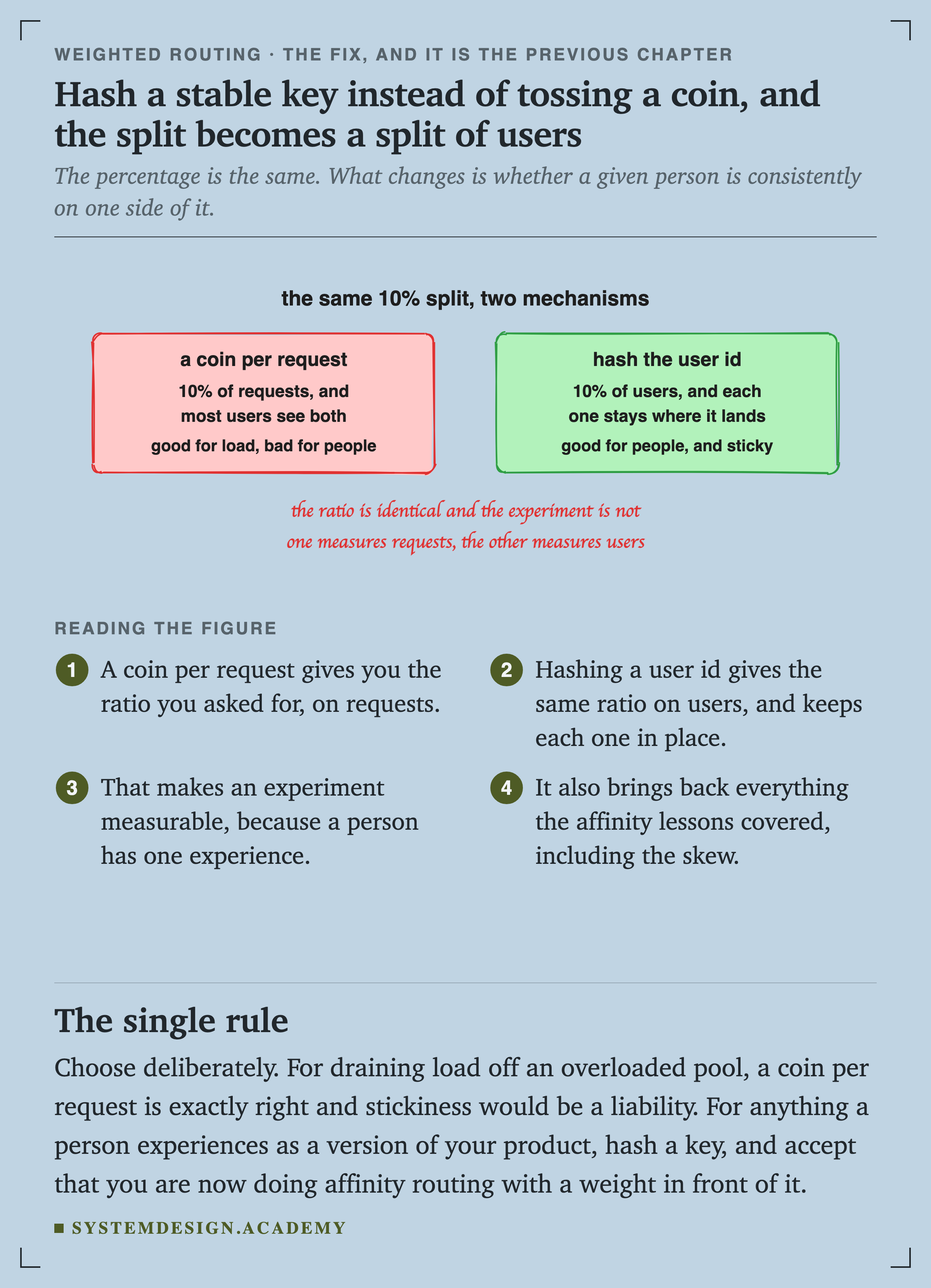
The First Rule That Does Not Look at the Request
Every rule so far in this chapter has been a function of the request. Same path, same backend. Same hostname, same backend. Same header, same backend.
A weight is not a function. It is a coin, tossed once per request.
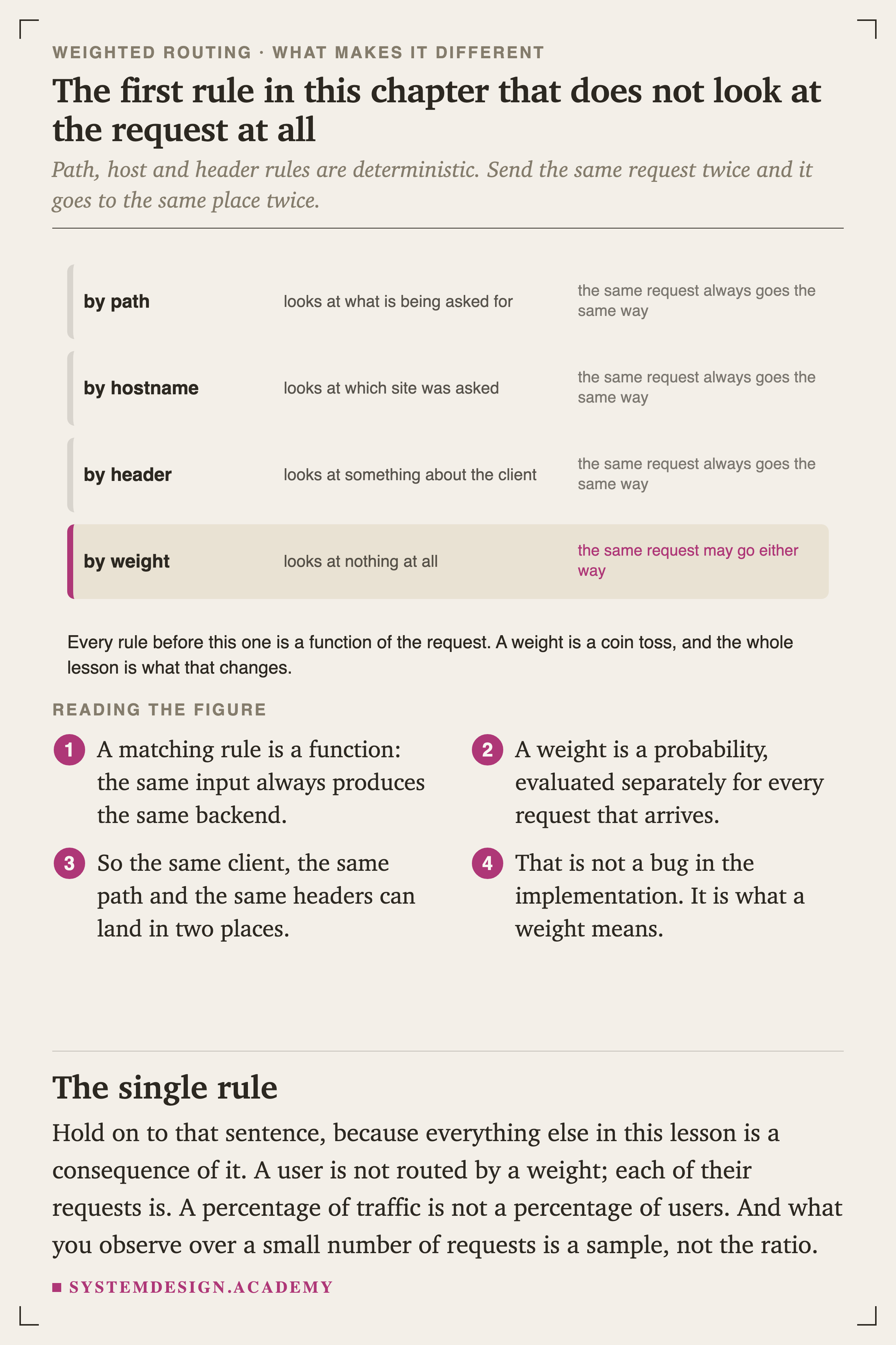
Send the same request twice under a matching rule and it goes to the same place twice. Under a weight it may not.
Everything else in this lesson follows from that one sentence. A user is not routed by a weight; each of their requests is. A percentage of traffic is not a percentage of users. And what you observe over a small number of requests is a sample, not the ratio.
Here is all of that, computed.
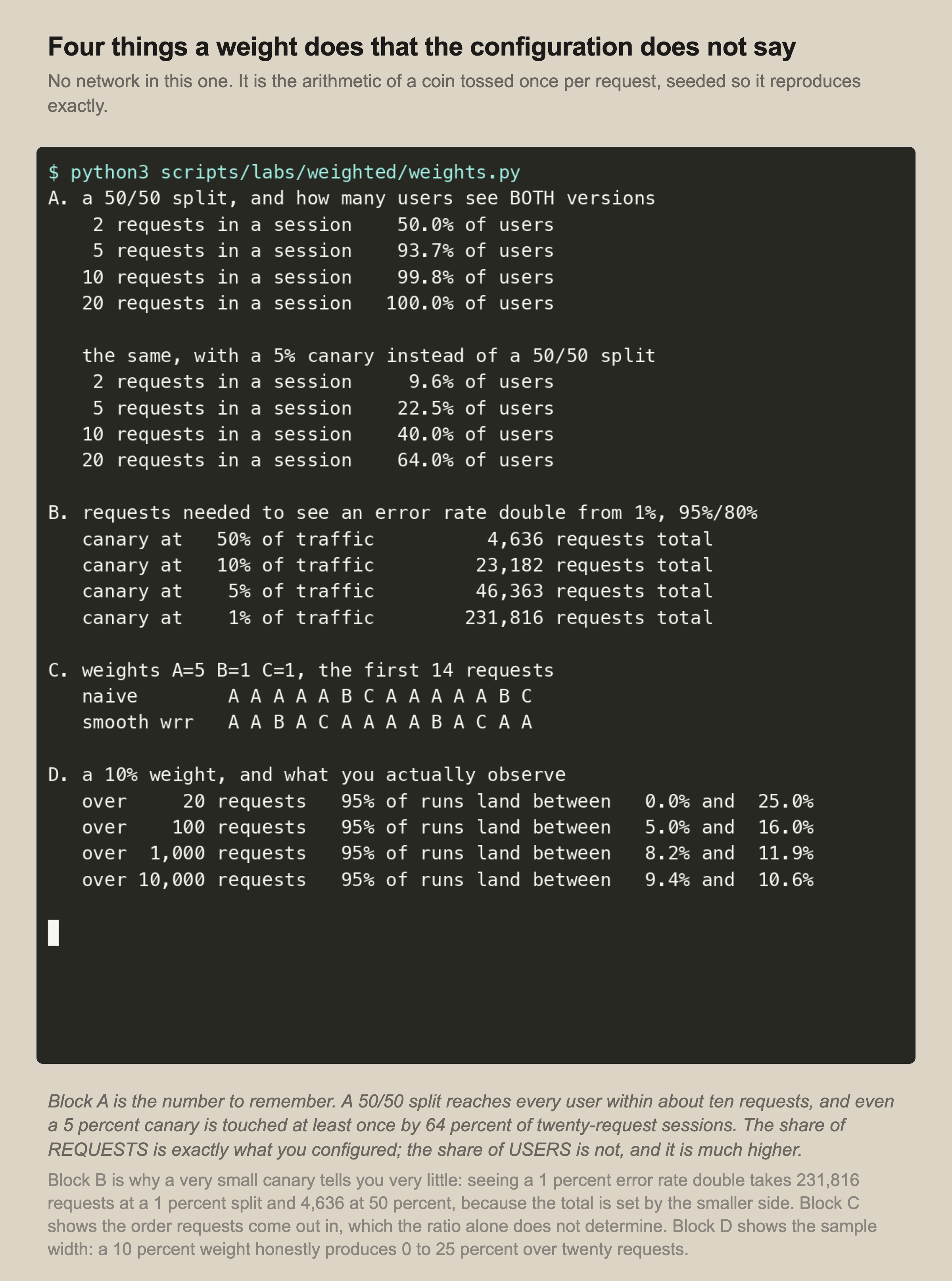
No network in this one. It is the arithmetic of a coin tossed once per request, seeded so it reproduces exactly.
A Percentage of Traffic Is Not a Percentage of Users
Start with block A, because it is the number that changes how people talk about canaries.
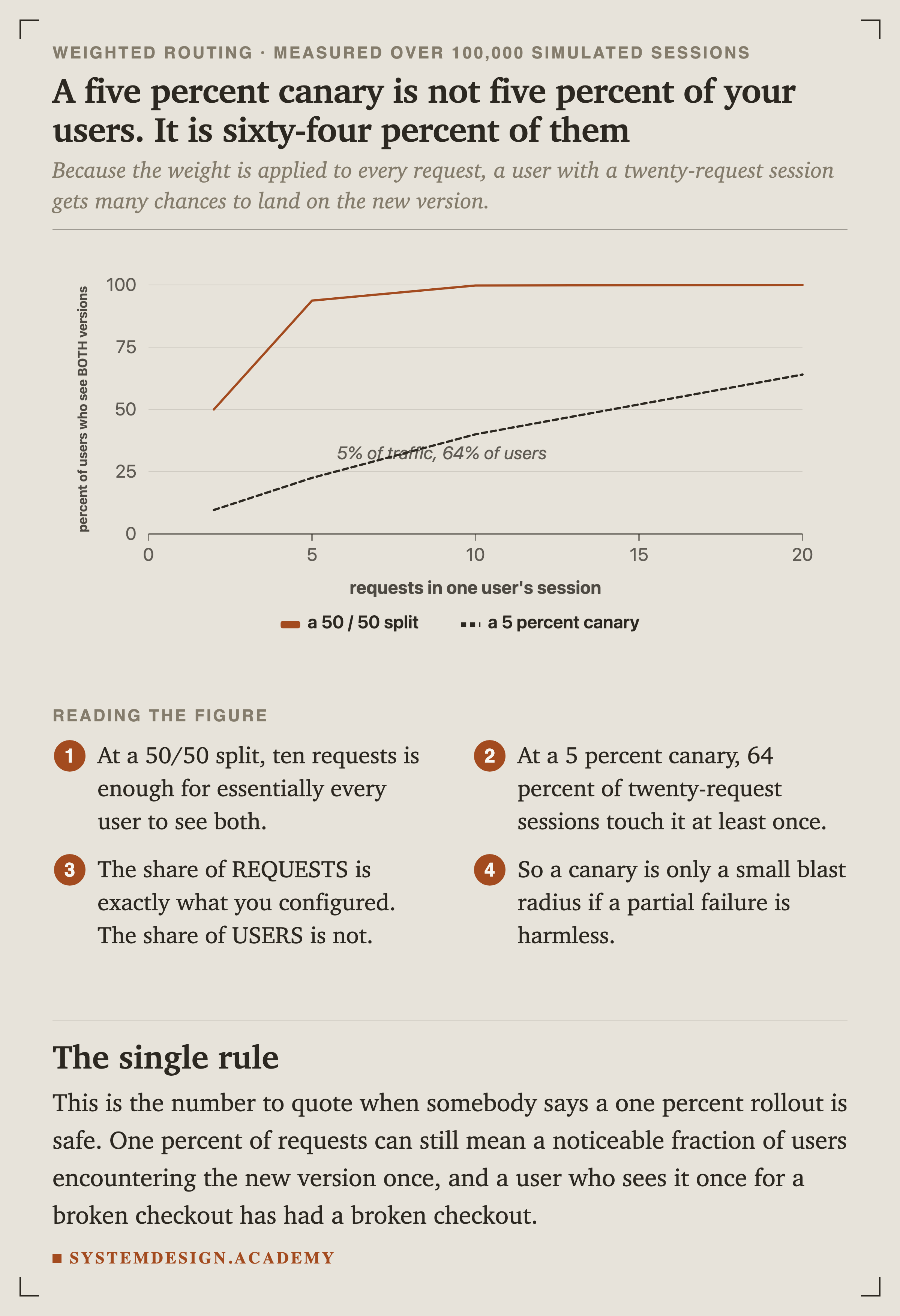
The weight is applied to every request, so a user with a twenty-request session gets twenty chances to land on the new version.
That is the number to quote when somebody says a one percent rollout is safe. One percent of requests still means a noticeable fraction of users encountering the new version at least once, and a user who hits the new version once for a broken checkout has had a broken checkout.
A canary is only a small blast radius if a partial failure is harmless. A page that renders slightly wrong once, fine. A payment that fails once, not fine.