What Happens When Your Agent Crashes at Step 40?
Picture a run that is 40 steps deep. It has read three files, called an internal API twice, drafted an email and sent it, and kicked off a refund. On step 41 the process dies. A deploy rolls the pod, or the node is reclaimed, or the code hits an unhandled exception. The run is gone from memory.
Now what. If you restart the run from the top, you re-read the files (harmless), re-call the API (maybe harmless), send the email again (not harmless), and issue the refund a second time (expensive, and now a support ticket). If you drop the run entirely, the user's task is half done with no record of where it stopped. Neither option is acceptable, and the reason is that an agent run is not a request. It is a long-lived process that changes the outside world as it goes.
The thing to notice before we go further is how ordinary the causes of that crash are. None of them require a bug in your agent. A run that lasts minutes or hours will sit through a routine deploy, a spot-instance reclaim, and a transient tool blip as a matter of course, and any one of them ends the process. Sort those causes and you can see what a recovery mechanism actually has to survive.
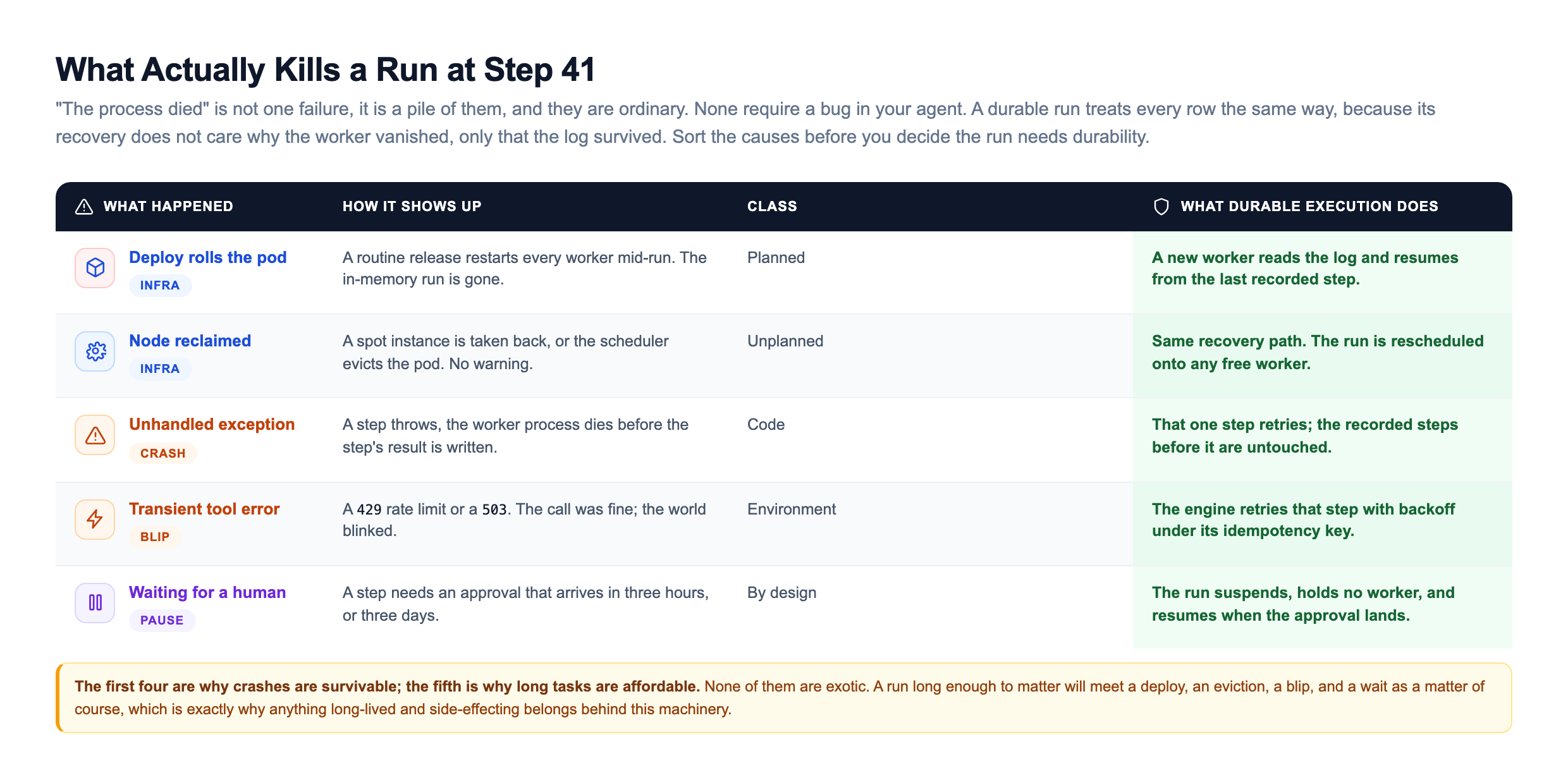
The first four rows are why crashes have to be survivable. The fifth is why a long task has to be affordable to leave running. This is the problem durable execution solves. It is the fourth lever from the first lesson in this chapter, recoverable steps, made concrete. The other three shorten the chain, raise per-step reliability, and add verification so failures are rarer. This one makes the failures that still happen survivable.