One Personal Block Makes A Whole Page Uncacheable
The server-side lesson measured that a page which is 99 percent identical and 1 percent personal is 0 percent cacheable. Fragment caching is the technique that answers exactly that: cache the pieces, and assemble them per request.
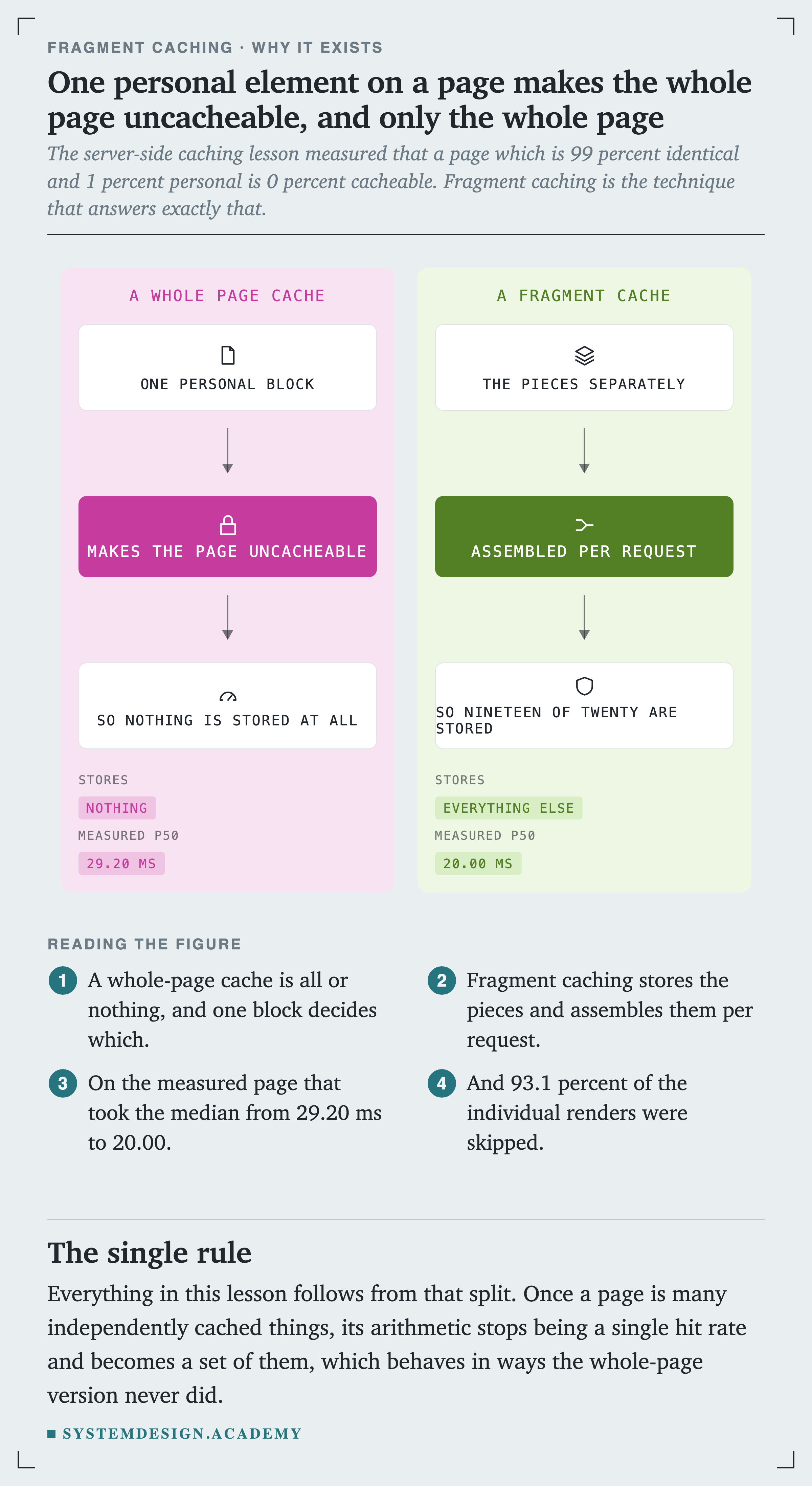
On the measured page, fragmenting took the median from 29.20 milliseconds to 20.00 and skipped 93.1 percent of the individual renders.
Everything in this lesson follows from that split. Once a page is many independently cached things, its arithmetic stops being a single hit rate and becomes a set of them, which behaves in ways the whole-page version never did.
A Page's Hit Rate Is A Product
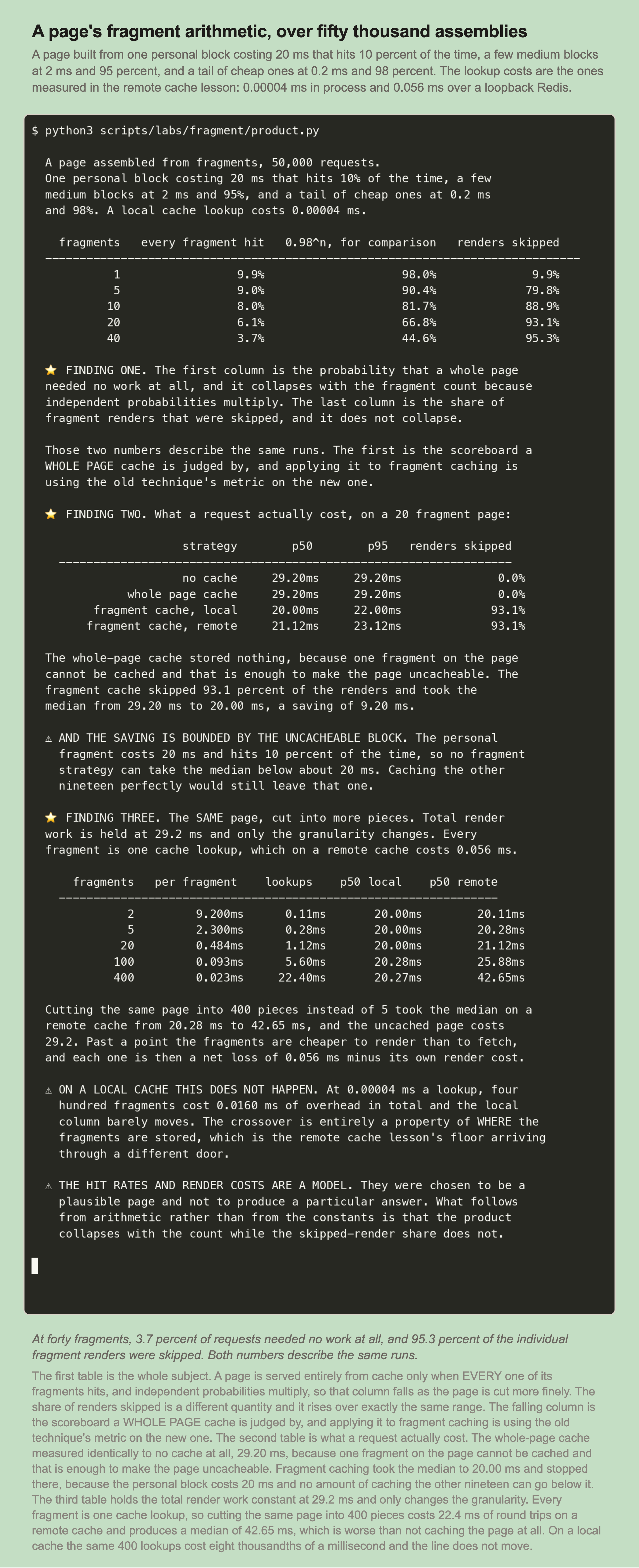
At forty fragments, 3.7 percent of requests needed no work at all, and 95.3 percent of the individual fragment renders were skipped. Both numbers describe the same runs.
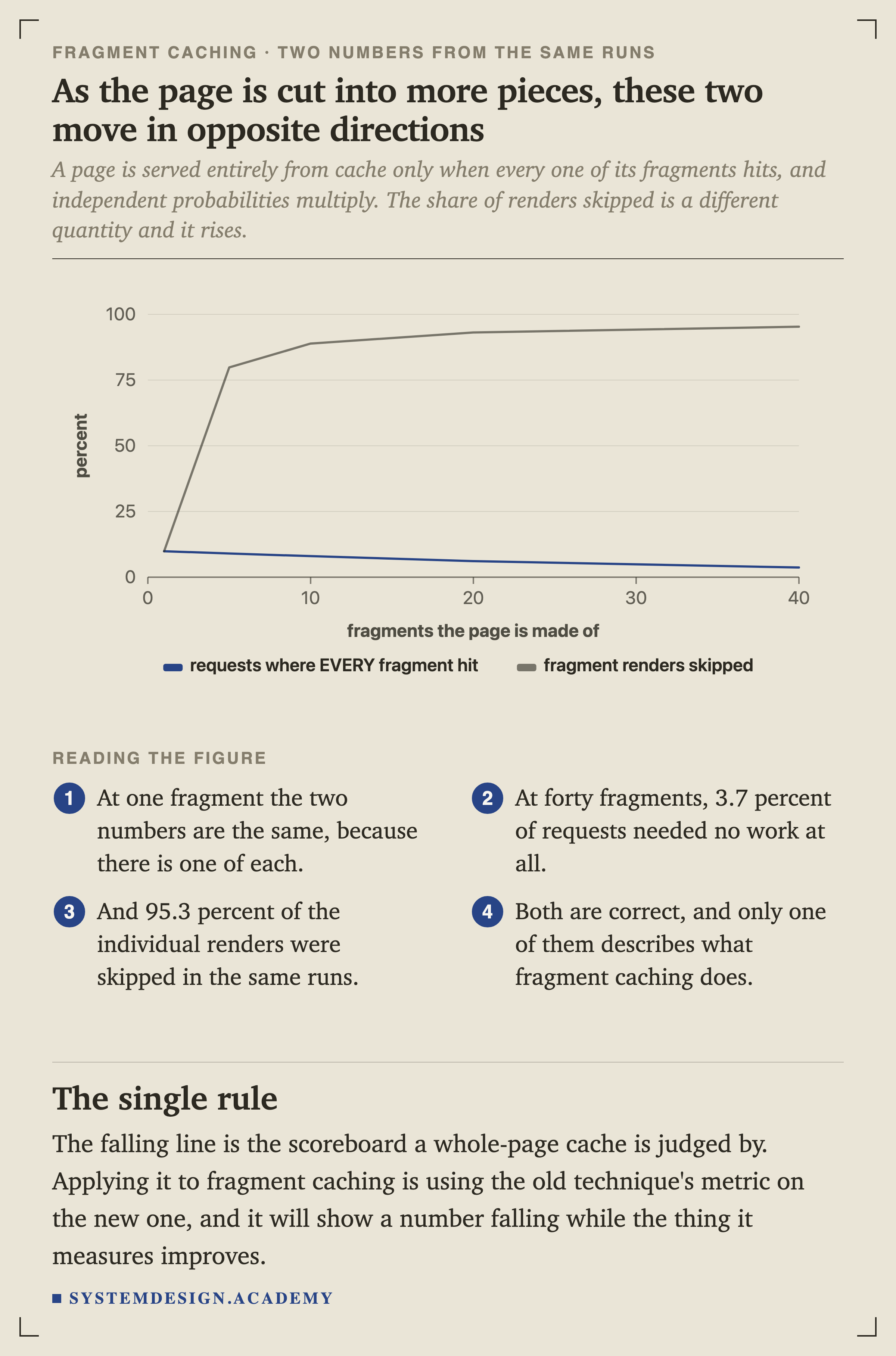
A page is served entirely from cache only when every one of its fragments hits, and independent probabilities multiply. The share of renders skipped is a different quantity and it rises.
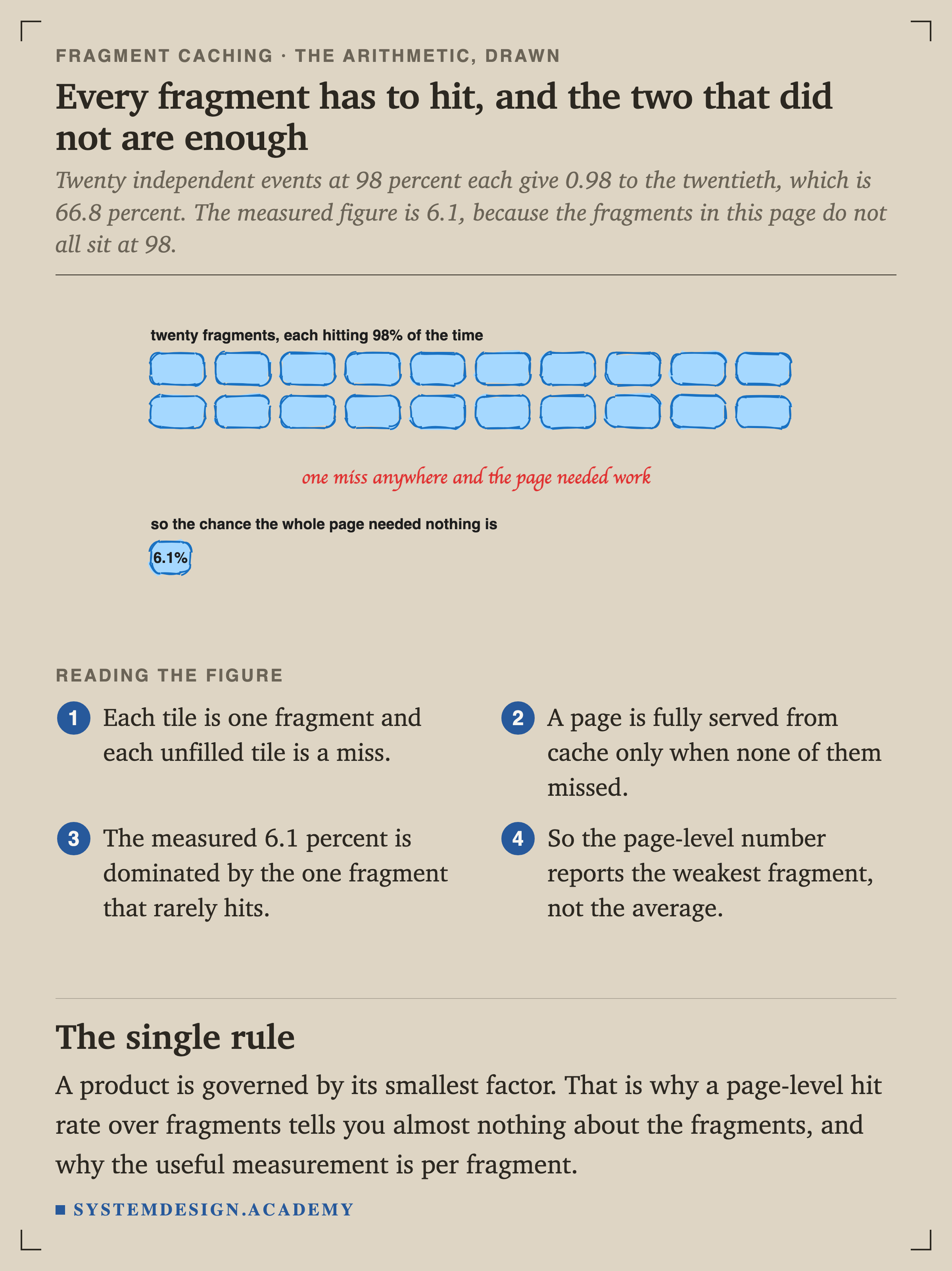
A product is governed by its smallest factor. The measured 6.1 percent is dominated by the one fragment that rarely hits, so the page-level number reports the weakest fragment rather than the average.
The falling line is the scoreboard a whole-page cache is judged by. Applying it to fragment is using the old technique's metric on the new one, and it will show a number falling while the thing it measures improves.