Why Modulo Does Not Work
When one cache node is no longer enough, the keys are spread over several. The obvious way to decide which node holds which key is a remainder, and it fails for a specific reason.
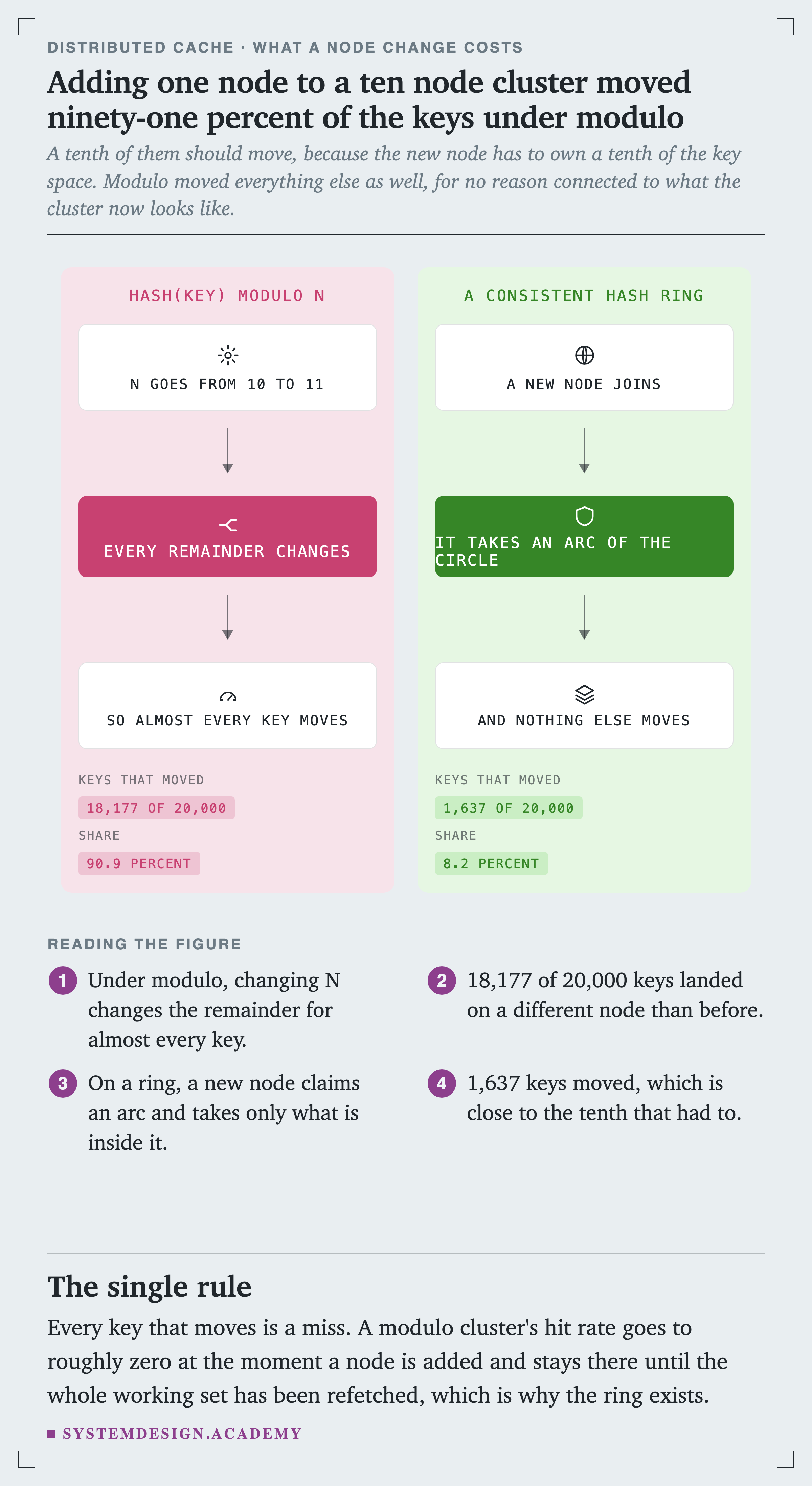
A tenth of them should move, because the new node has to own a tenth of the key space. Modulo moved everything else as well, for no reason connected to what the cluster now looks like.
Every key that moves is a miss. A modulo cluster's hit rate goes to roughly zero at the moment a node is added and stays there until the whole working set has been refetched, which is why the ring exists.
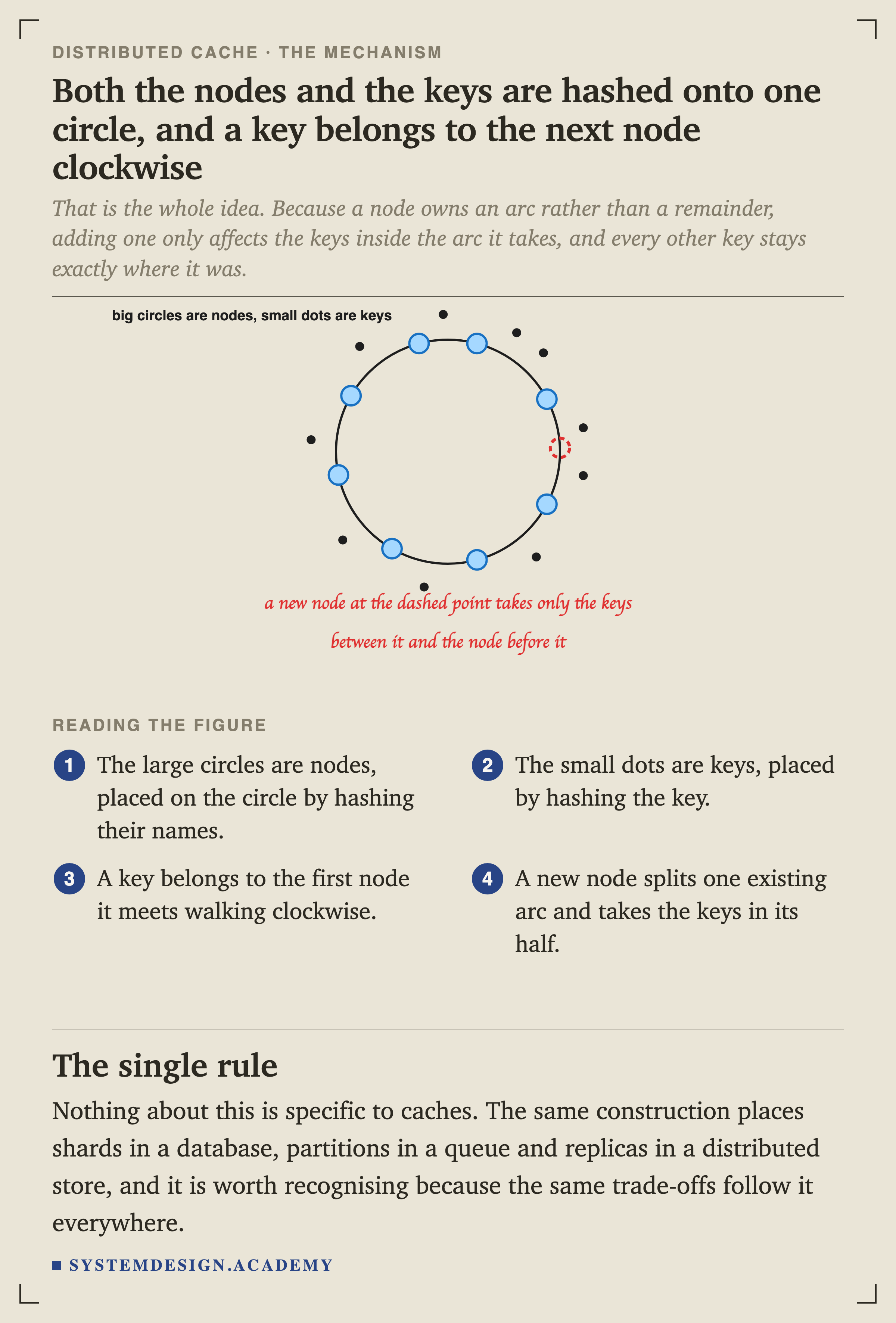
Because a node owns an arc rather than a remainder, adding one only affects the keys inside the arc it takes, and every other key stays exactly where it was.
Ten Points Do Not Divide A Circle Evenly
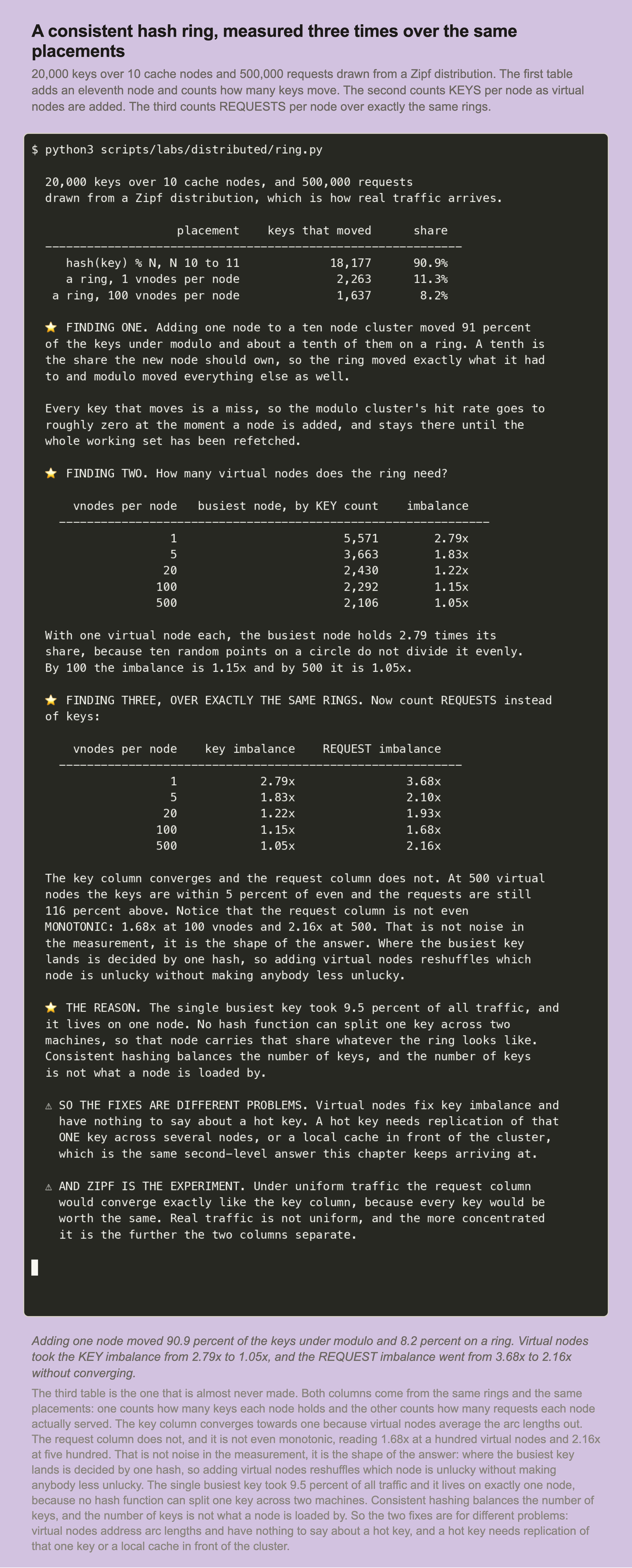
Virtual nodes took the key imbalance from 2.79 times to 1.05, and the request imbalance from 3.68 to 2.16 without converging.
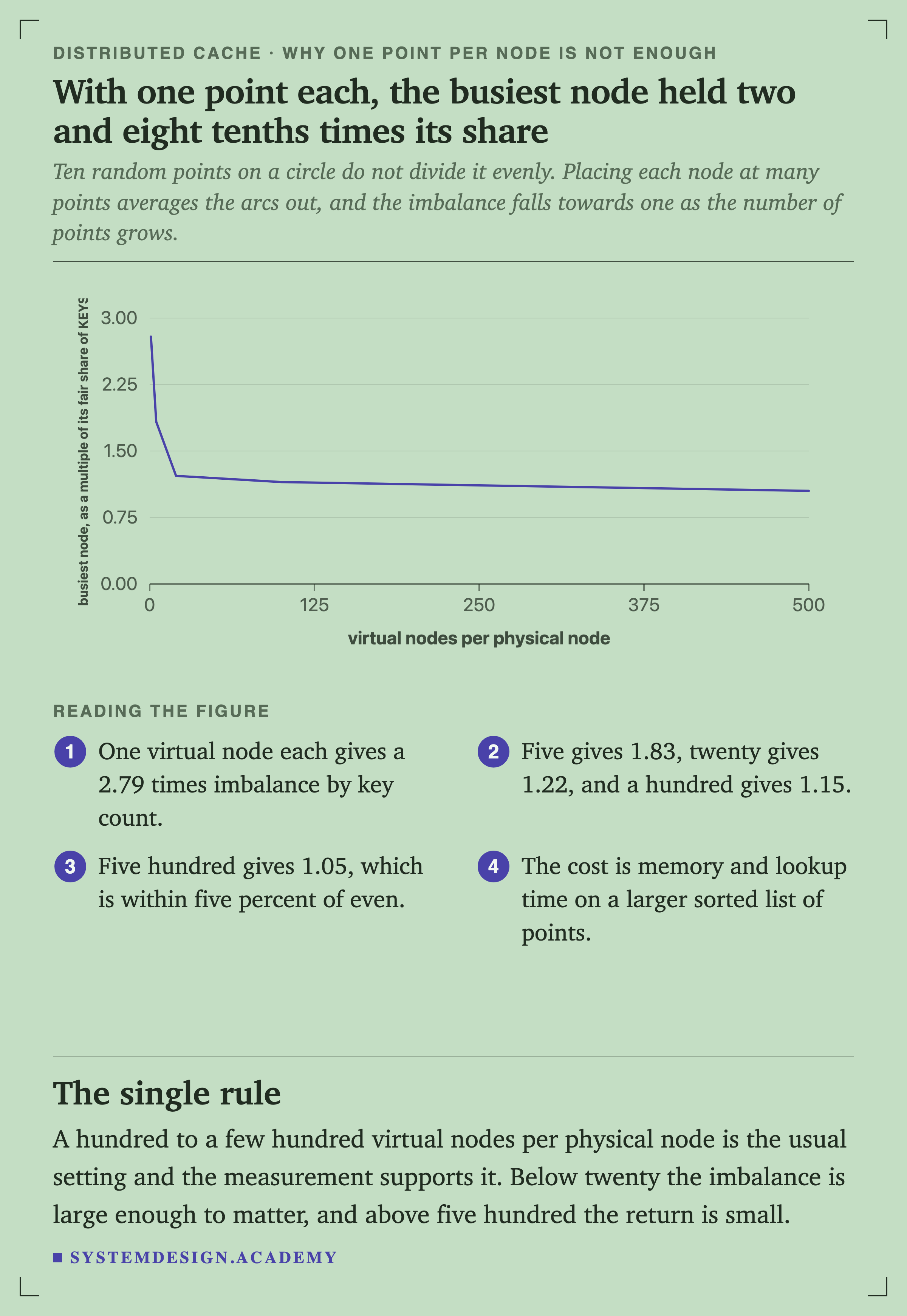
Ten random points on a circle do not divide it evenly. Placing each node at many points averages the arcs out, and the imbalance falls towards one as the number of points grows.
A hundred to a few hundred virtual nodes per physical node is the usual setting and the measurement supports it. Below twenty the imbalance is large enough to matter, and above five hundred the return is small.