The Opposite Choice, Measured
The last lesson ended with a claim: memcached decided differently on nearly every question, and the two designs are both coherent, not one modern and one dated. A claim like that has to be measured or it is a table copied from a comparison post.
So a real memcached and a real redis-server were started side by side on one machine and asked the same three questions.
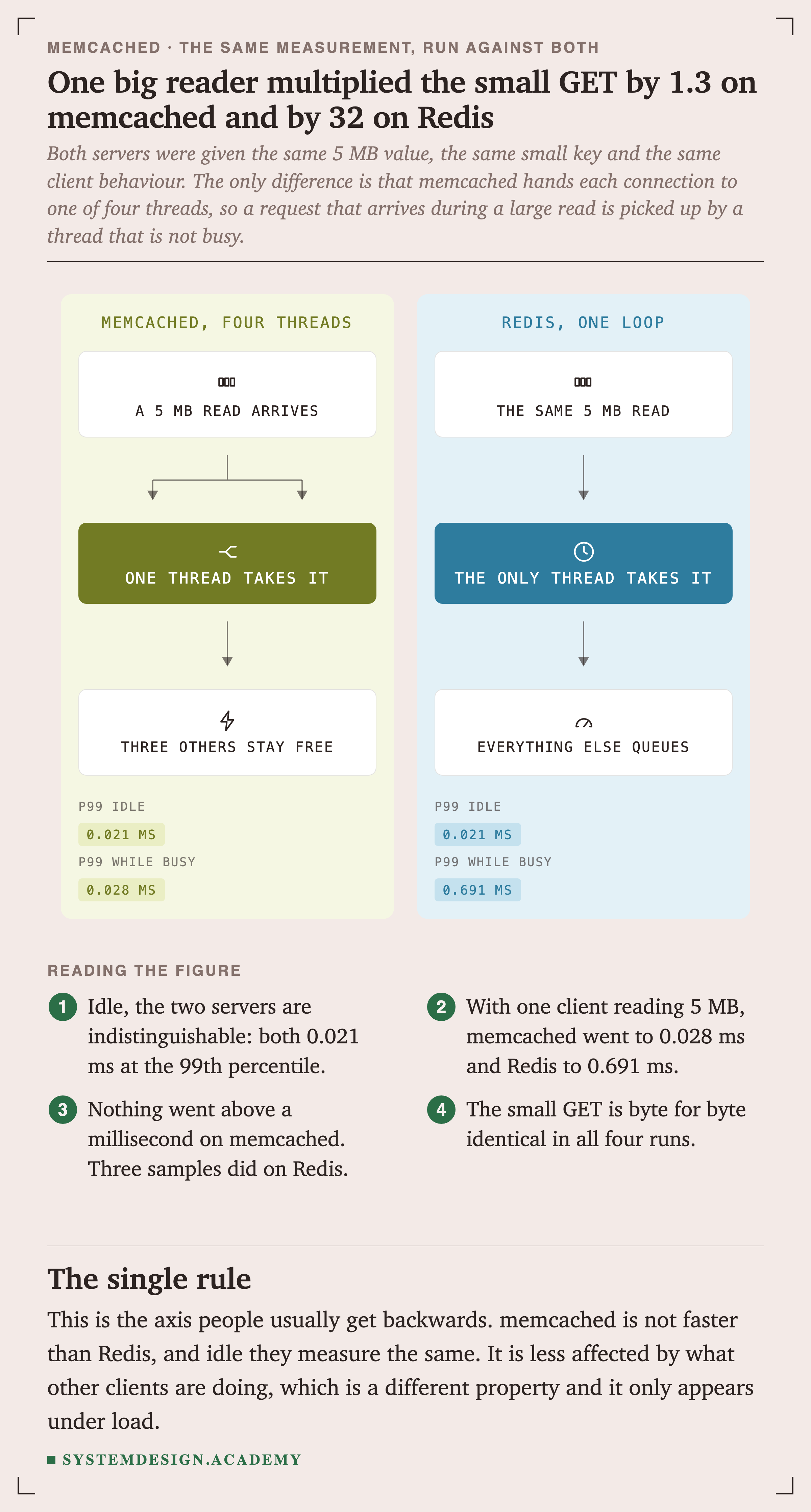
Both servers were given the same 5 MB value, the same small key and the same client behaviour. The only difference is that memcached hands each connection to one of four threads.
This is the axis people usually get backwards. memcached is not faster than , and idle they measured the same to three decimal places. It is less affected by what other clients are doing, which is a different property and it only appears under load.
What The Two Servers Actually Measured
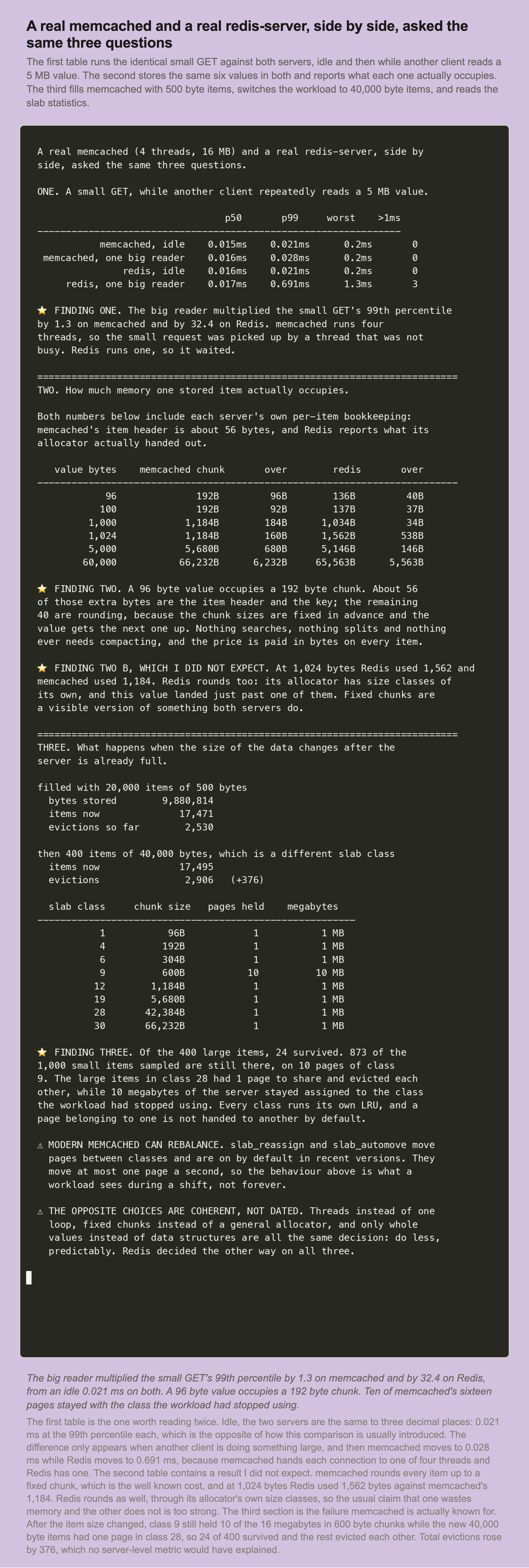
The big reader multiplied the small GET's 99th percentile by 1.3 on memcached and by 32.4 on , from an idle 0.021 ms on both.
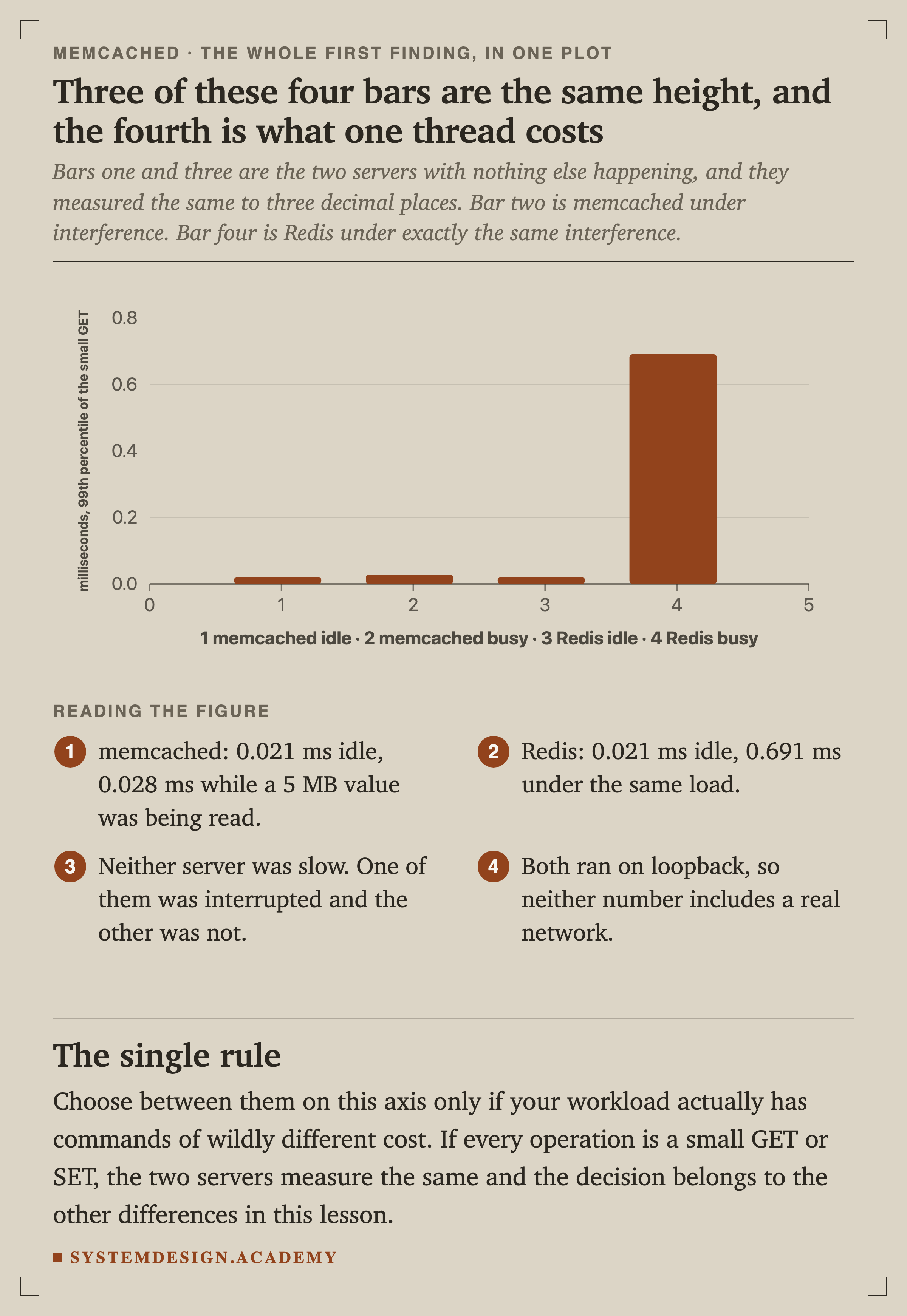
Bars one and three are the two servers with nothing else happening. Bar two is memcached under interference, and bar four is Redis under exactly the same interference.
Choose between them on this axis only if your workload actually has commands of wildly different cost. If every operation is a small GET or SET, the two servers measure the same and the decision belongs to the other differences in this lesson.
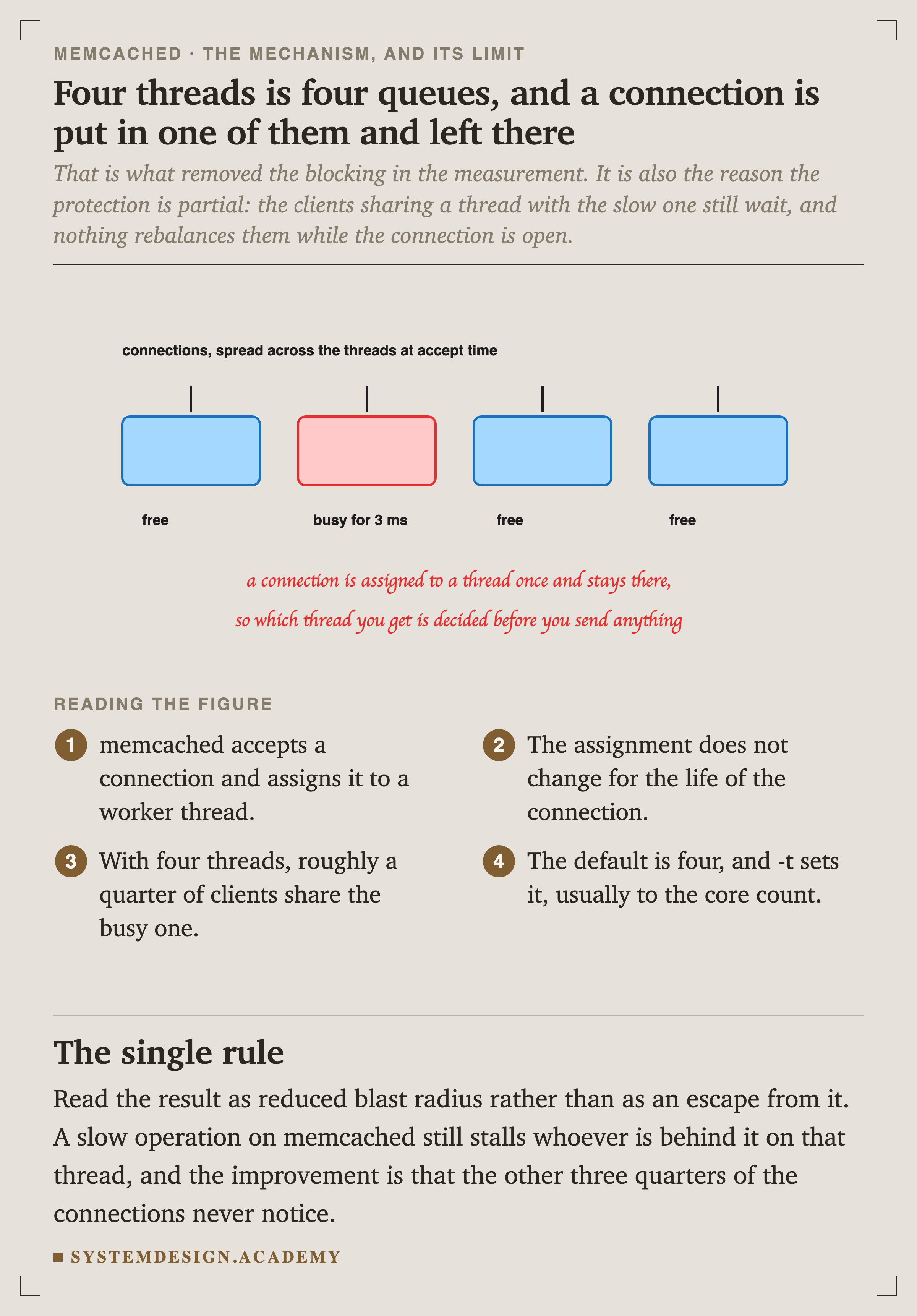
That is what removed the blocking in the measurement. It is also the reason the protection is partial: the clients sharing a thread with the slow one still wait.
Read the result as a reduced blast radius, not an escape from it. A slow operation on memcached still stalls whoever is behind it on that thread, and the improvement is that the other three quarters of the connections never notice.