One Loader Instead Of Many Call Sites
The previous lesson measured what cache-aside costs: the key computed at every call site, the value shape assumed at every call site, and a failure path that only exists where somebody wrote it. Read-through moves the fetch inside the cache. The application asks for a key, and the cache loads it if it is not there.
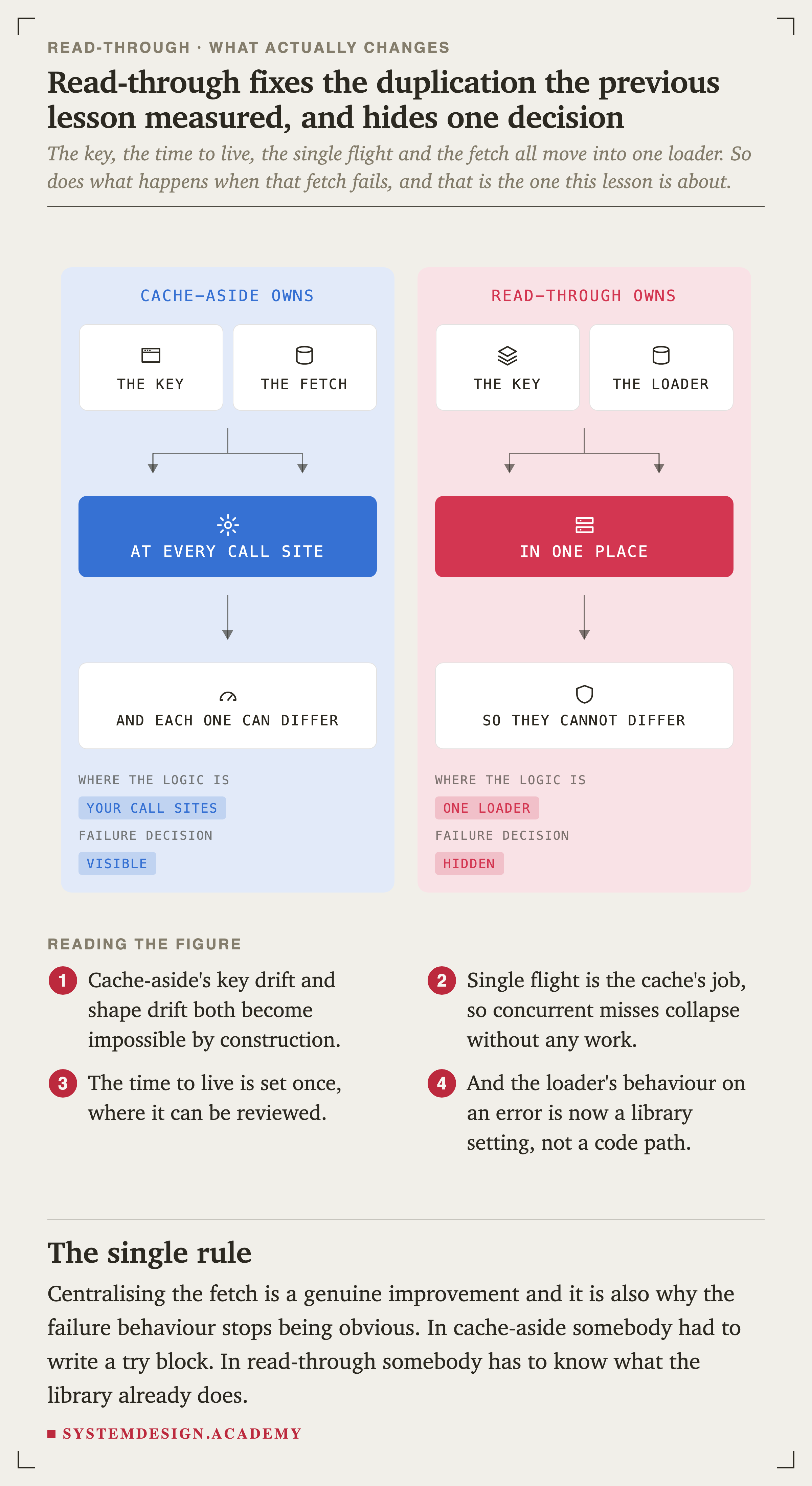
The key, the time to live, the single flight and the fetch all move into one loader. So does what happens when that fetch fails, and that is the one this lesson is about.
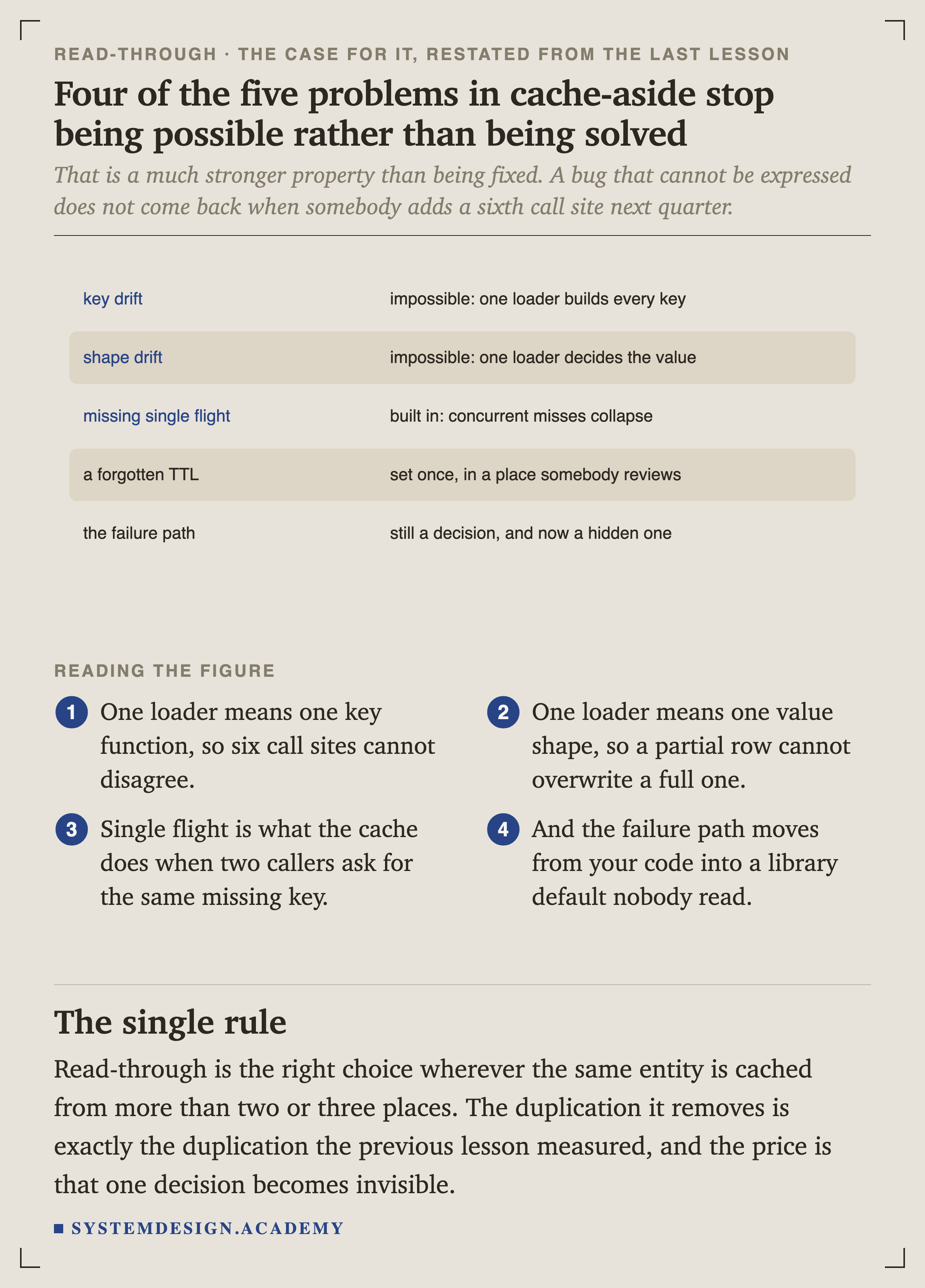
That is a much stronger property than being fixed. A bug that cannot be expressed does not come back when somebody adds a sixth call site next quarter.
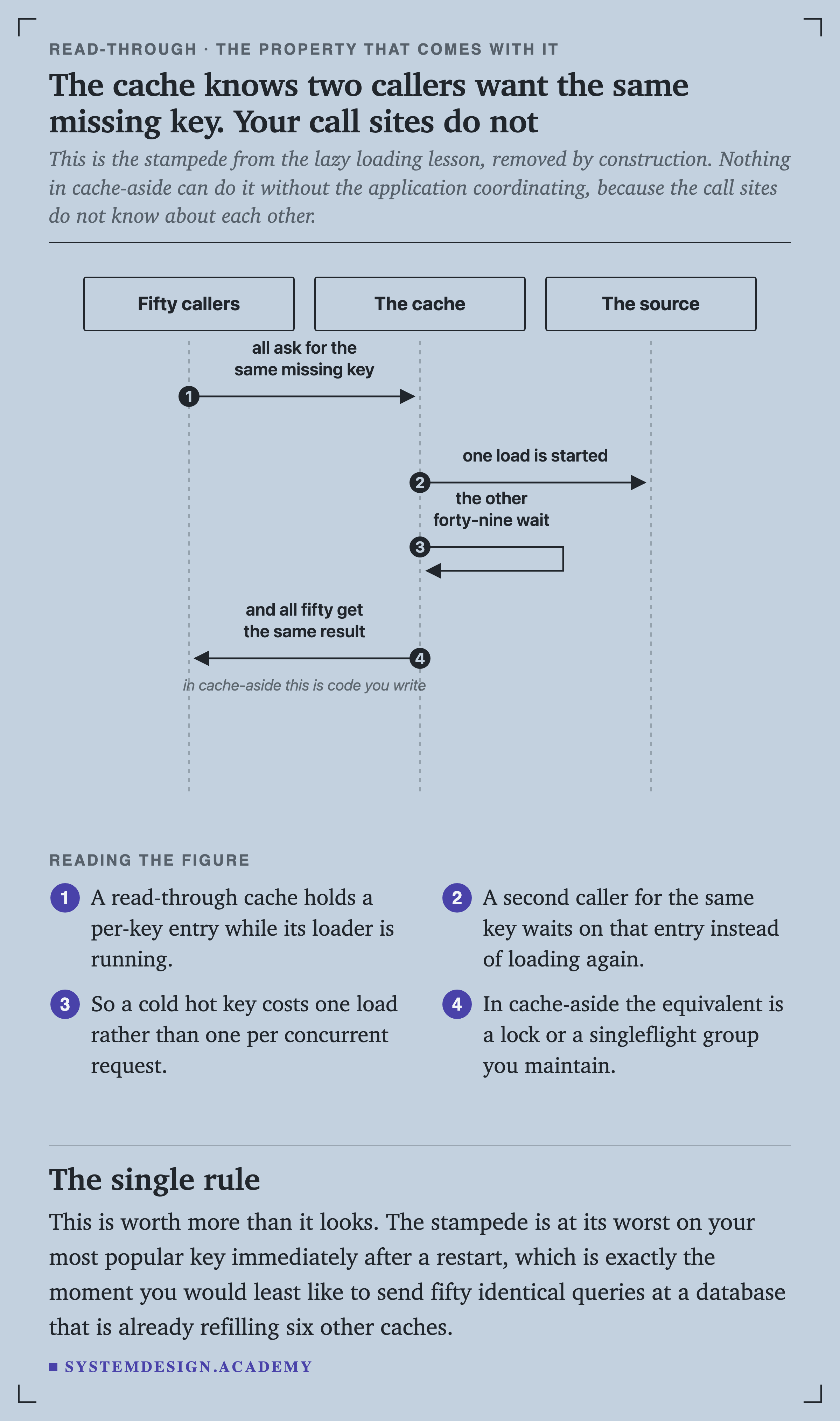
This is the stampede from the lazy loading lesson, removed by construction. It is worth more than it looks, because the stampede is worst on your most popular key immediately after a restart.
The Decision That Moved Out Of Sight
Centralising the fetch is a genuine improvement and it is also why the failure behaviour stops being obvious. In cache-aside somebody had to write a try block. In read-through somebody has to know what the library already does.
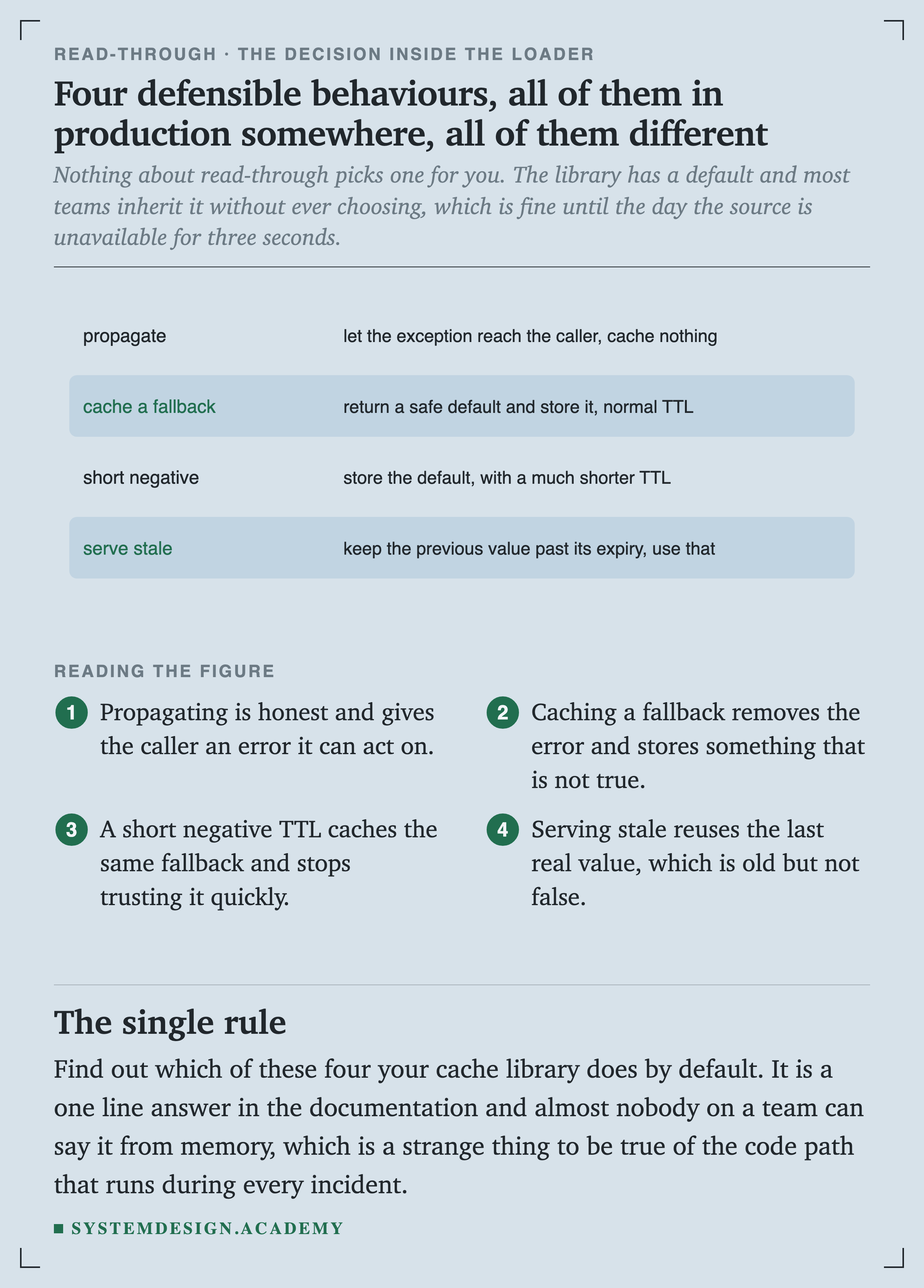
Nothing about read-through picks one for you. The library has a default and most teams inherit it without ever choosing, which is fine until the day the source is unavailable for three seconds.
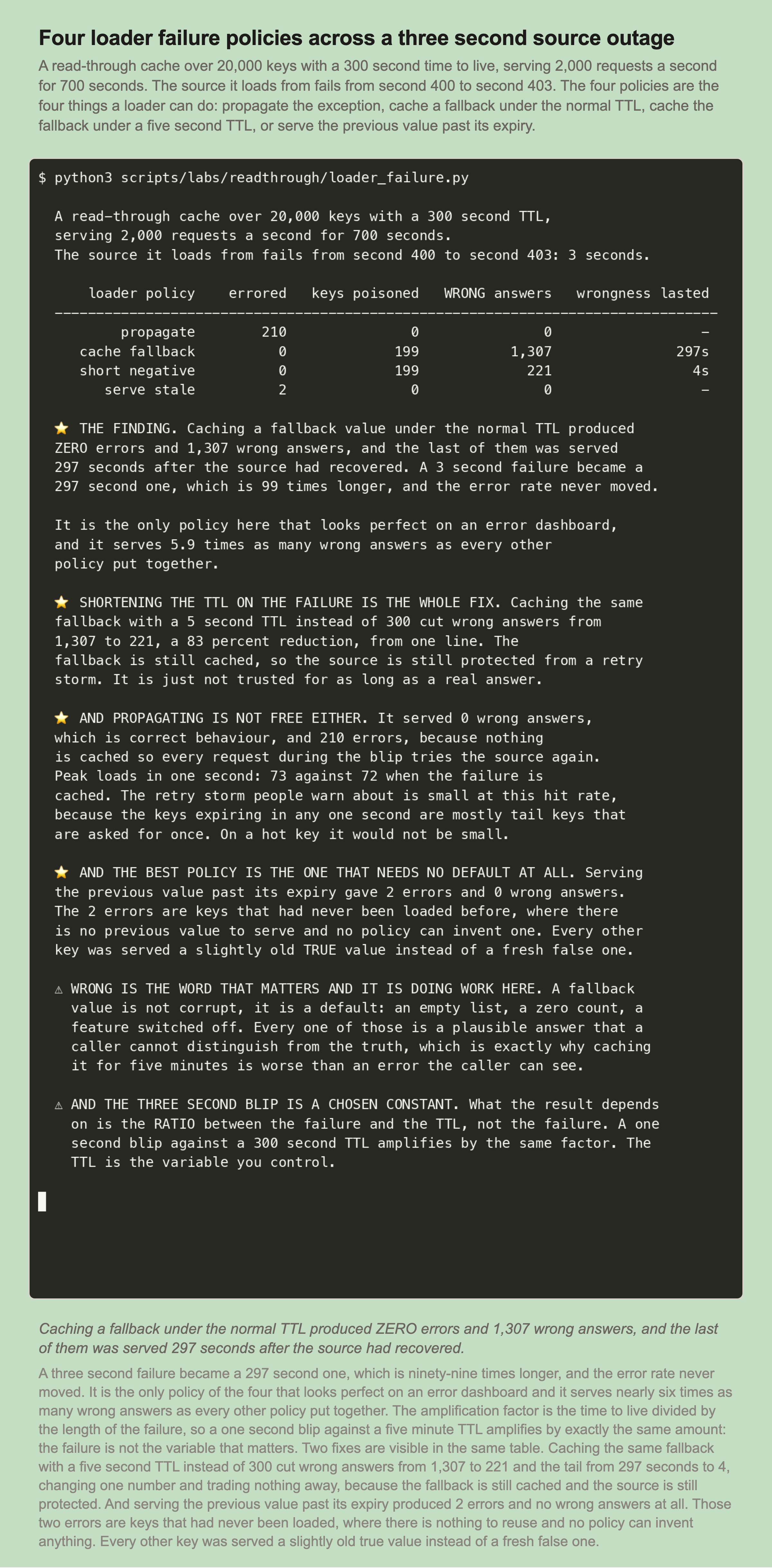
a fallback under the normal time to live produced zero errors and 1,307 wrong answers, and the last of them was served 297 seconds after the source had recovered.