The Application Does All Four Steps
Cache-aside is how nearly every cache in nearly every codebase is used. The application checks the cache, and on a miss it fetches from the source and stores the result itself. Nothing sits between the application and either the cache or the database.
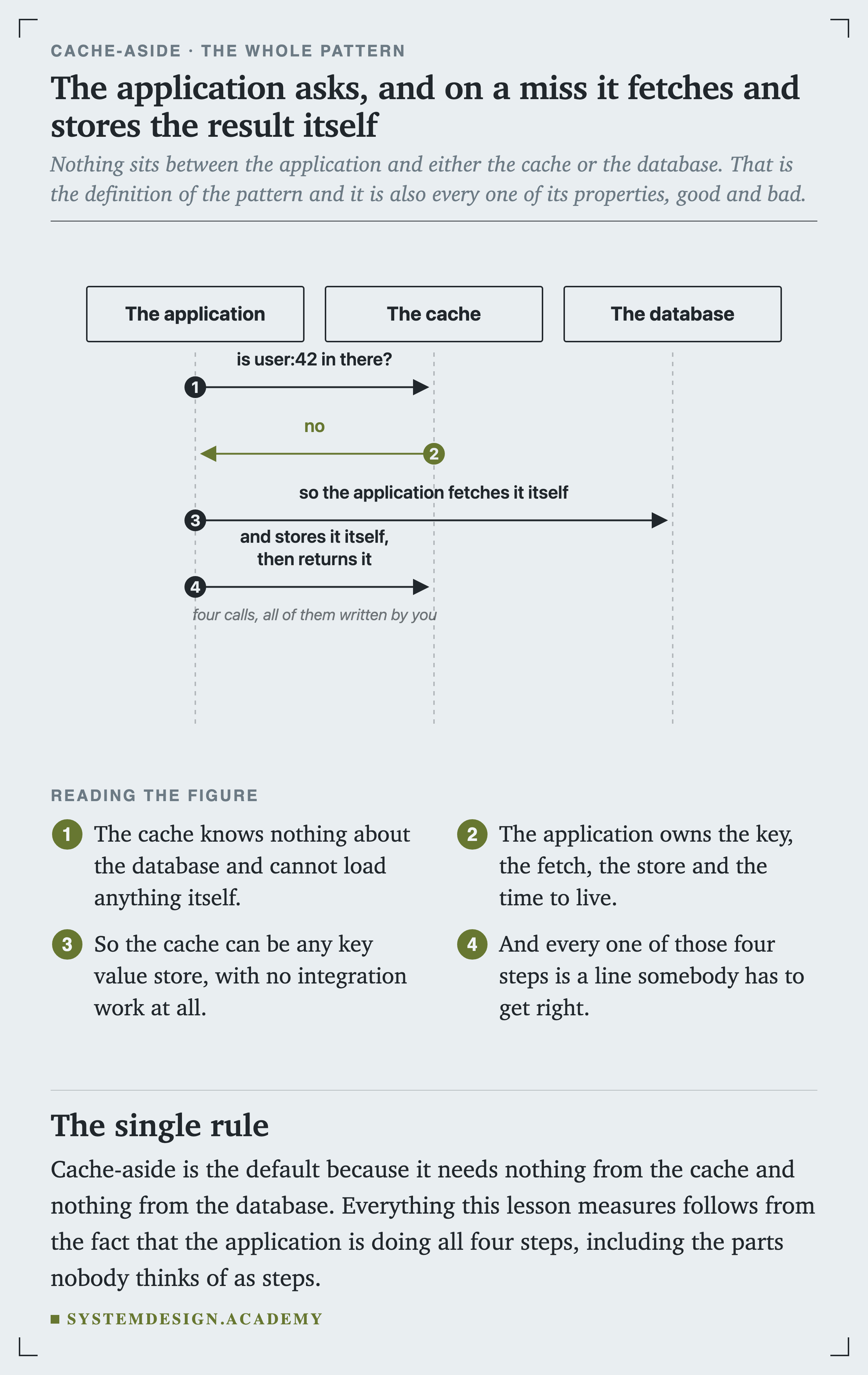
That is the definition of the pattern and it is also every one of its properties, good and bad. The cache knows nothing about the database and cannot load anything on its own.
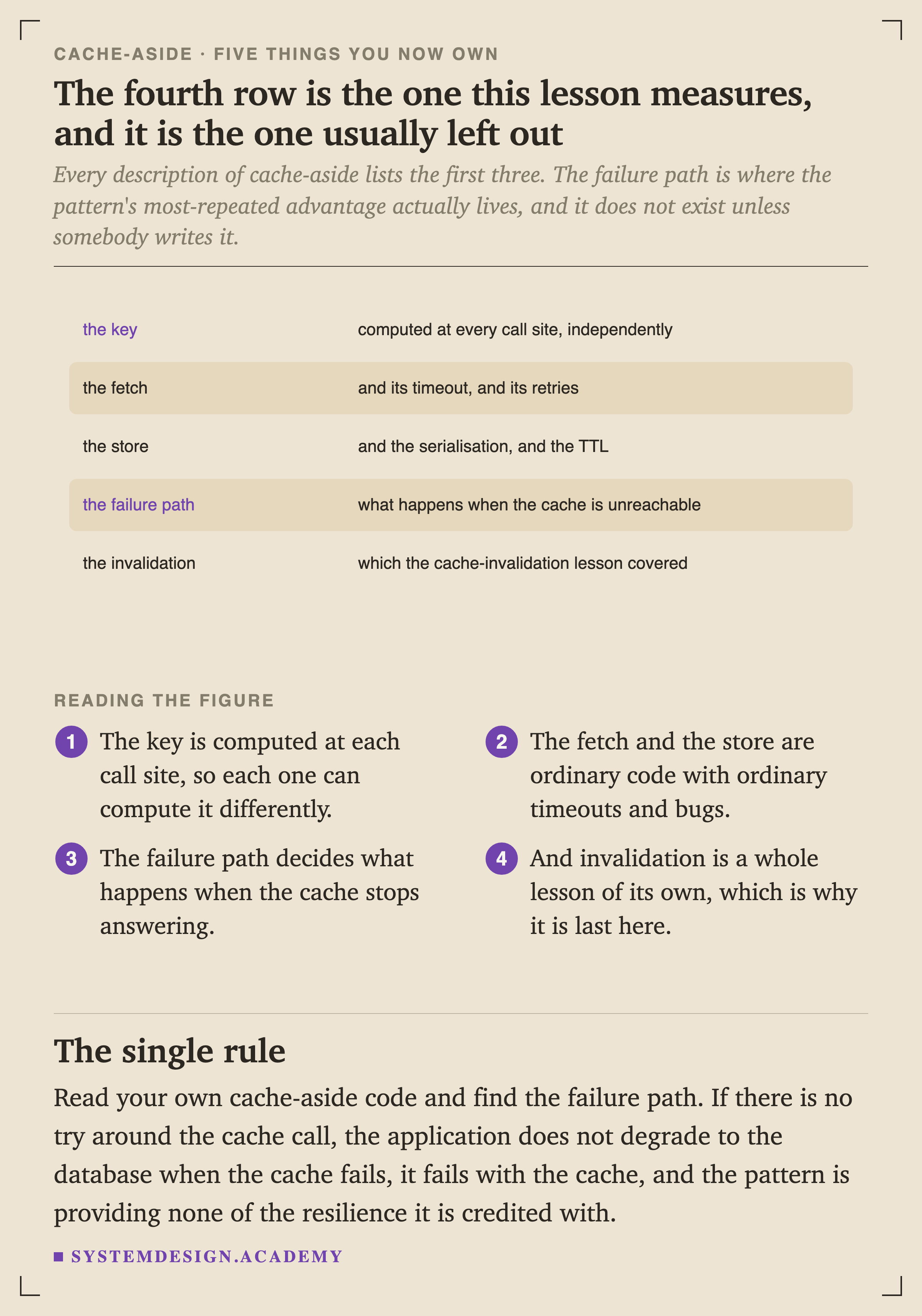
Every description of cache-aside lists the first three. The fourth is where the pattern's most-repeated advantage actually lives, and it does not exist unless somebody writes it.
The Advantage It Is Sold On, Measured
The claim is that cache-aside degrades gracefully when the cache fails, because the cache is not on the critical path. The application simply talks to the database and carries on.
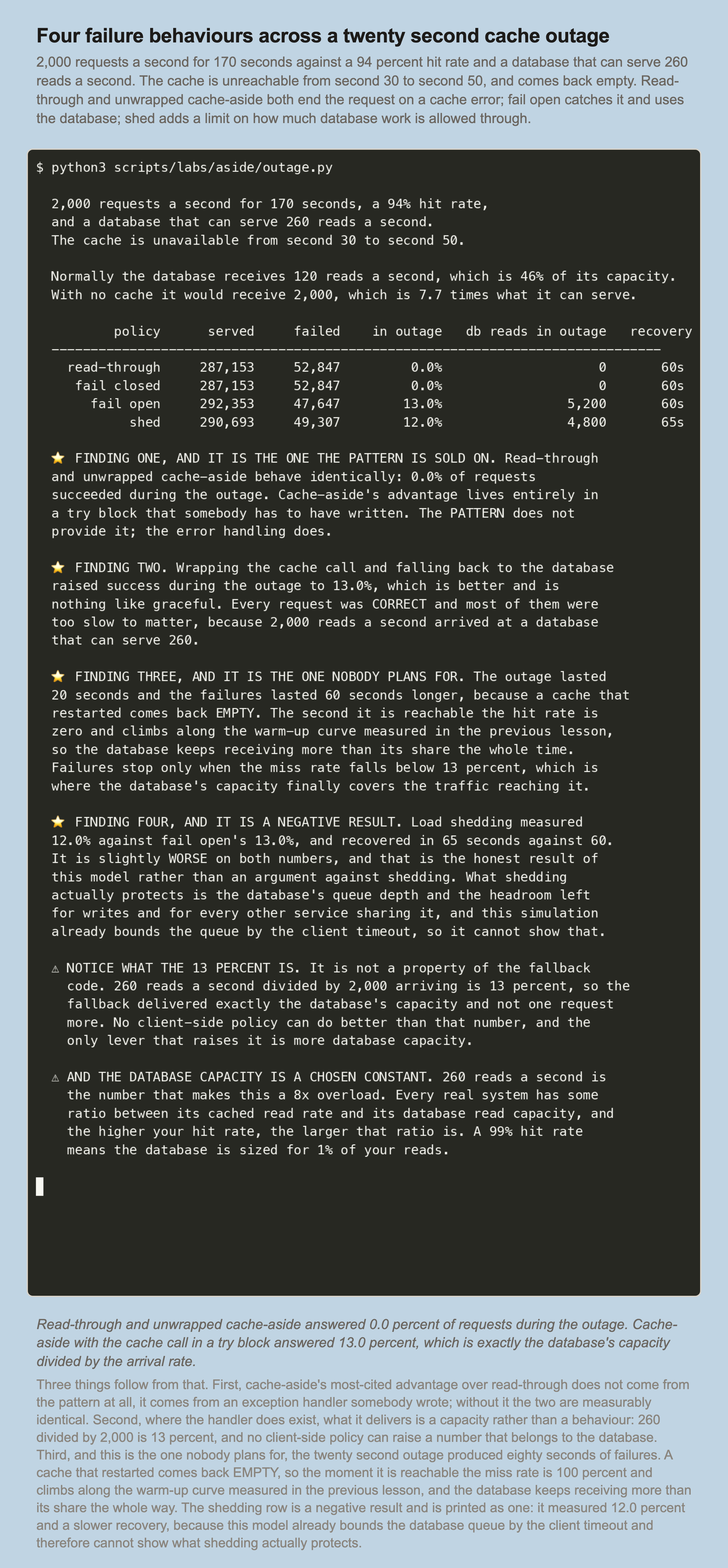
Read-through and unwrapped cache-aside answered nothing at all. Cache-aside with the cache call in a try block answered 13.0 percent of requests.
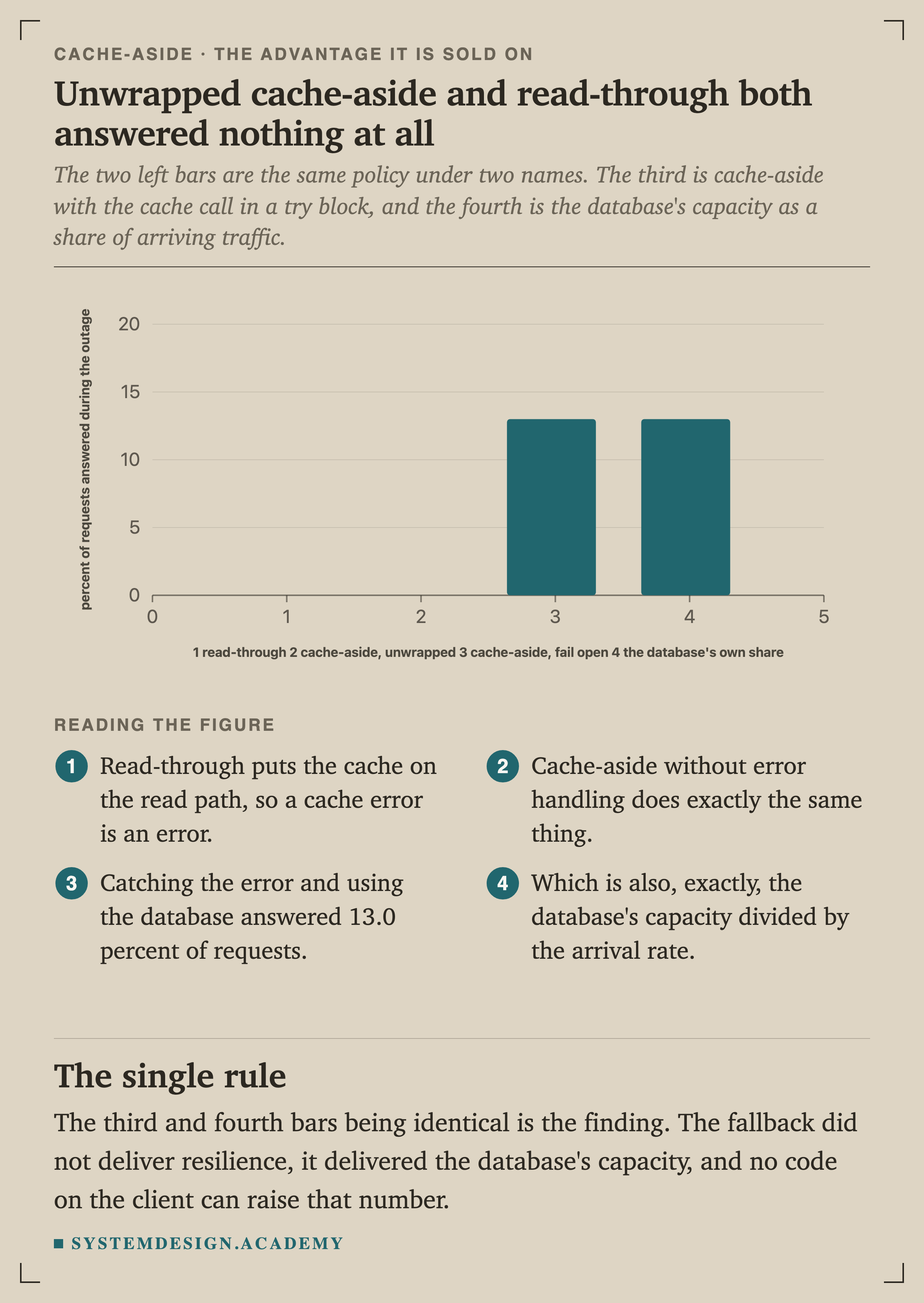
The third and fourth bars being identical is the finding. The fallback did not deliver resilience, it delivered the database's capacity.
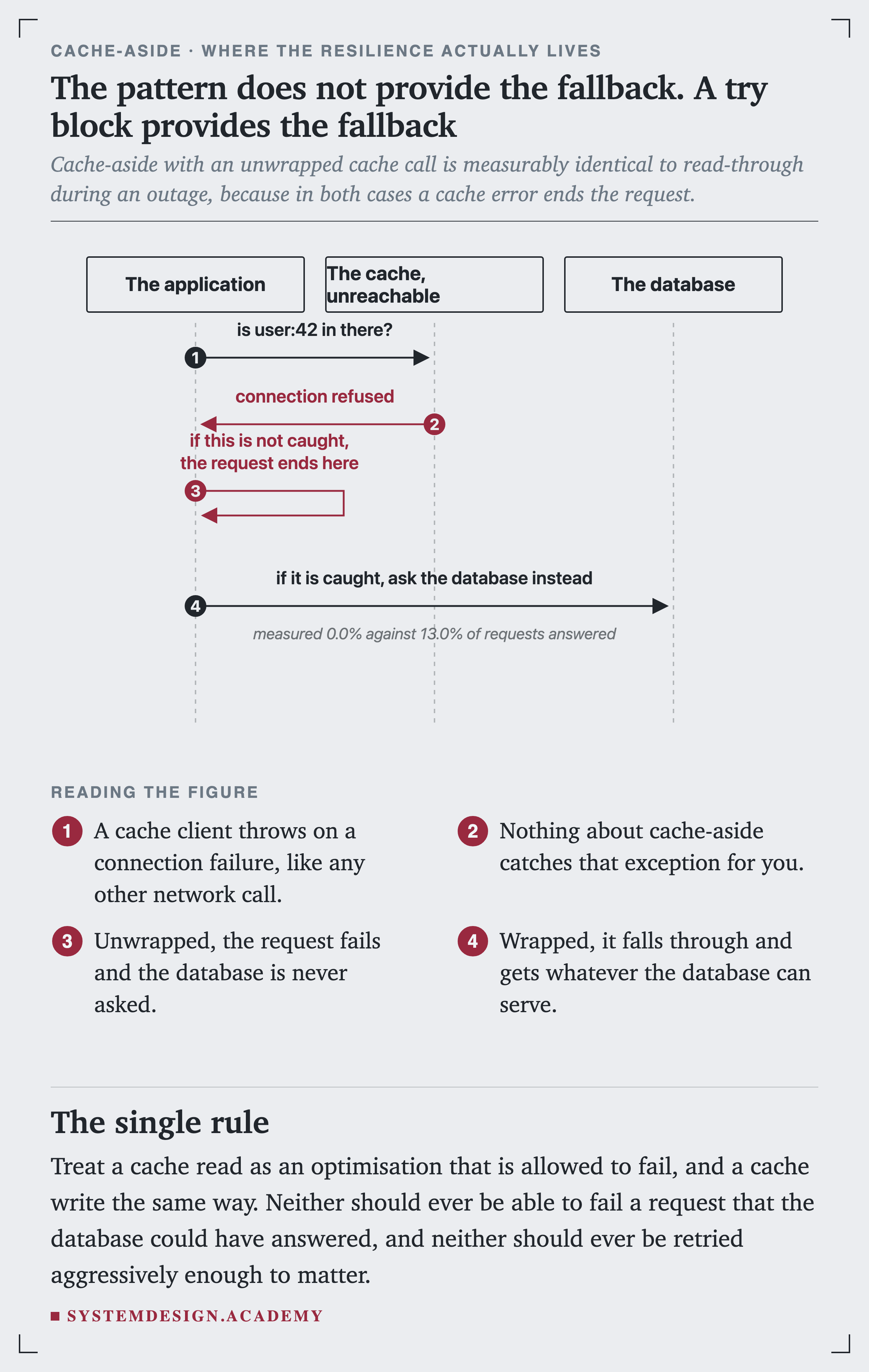
A cache client throws on a connection failure like any other network call, and nothing about cache-aside catches that exception for you.
Read your own cache-aside code and find the failure path. If there is no try around the cache call, the application does not degrade to the database when the cache fails, it fails with the cache.