One Word In The Definition
A view is a rewrite the planner can see through. A function is code, and how much the planner can see through it depends on two things the author chose: the volatility category and the language.
Both are one word, both are usually left at the default, and both change the plan by orders of magnitude.
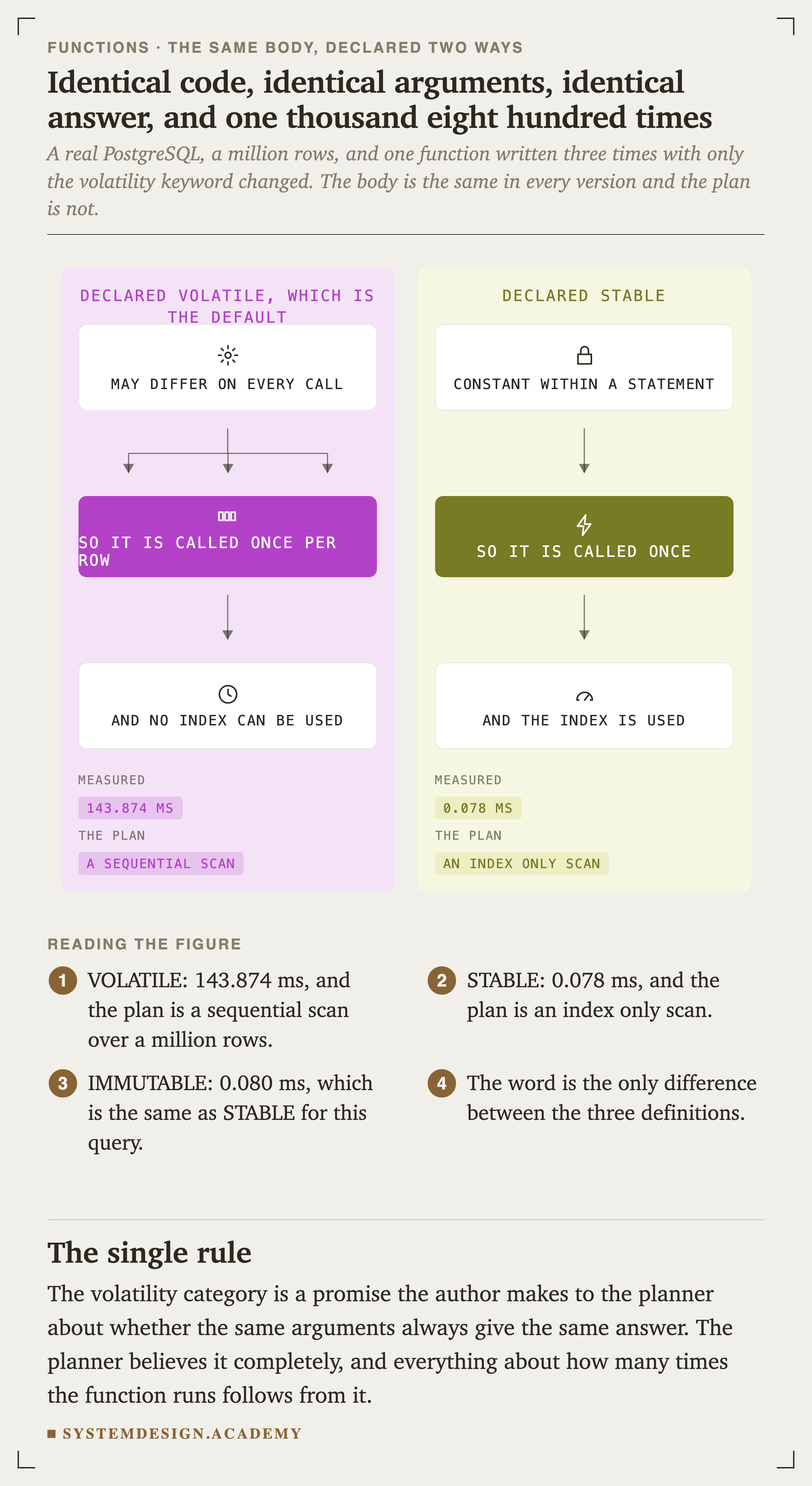
A real PostgreSQL, a million rows, and one function written three times with only the volatility keyword changed.
The volatility category is a promise the author makes to the planner about whether the same arguments always give the same answer. The planner believes it completely, and everything about how many times the function runs follows from it.
What The Plans Say
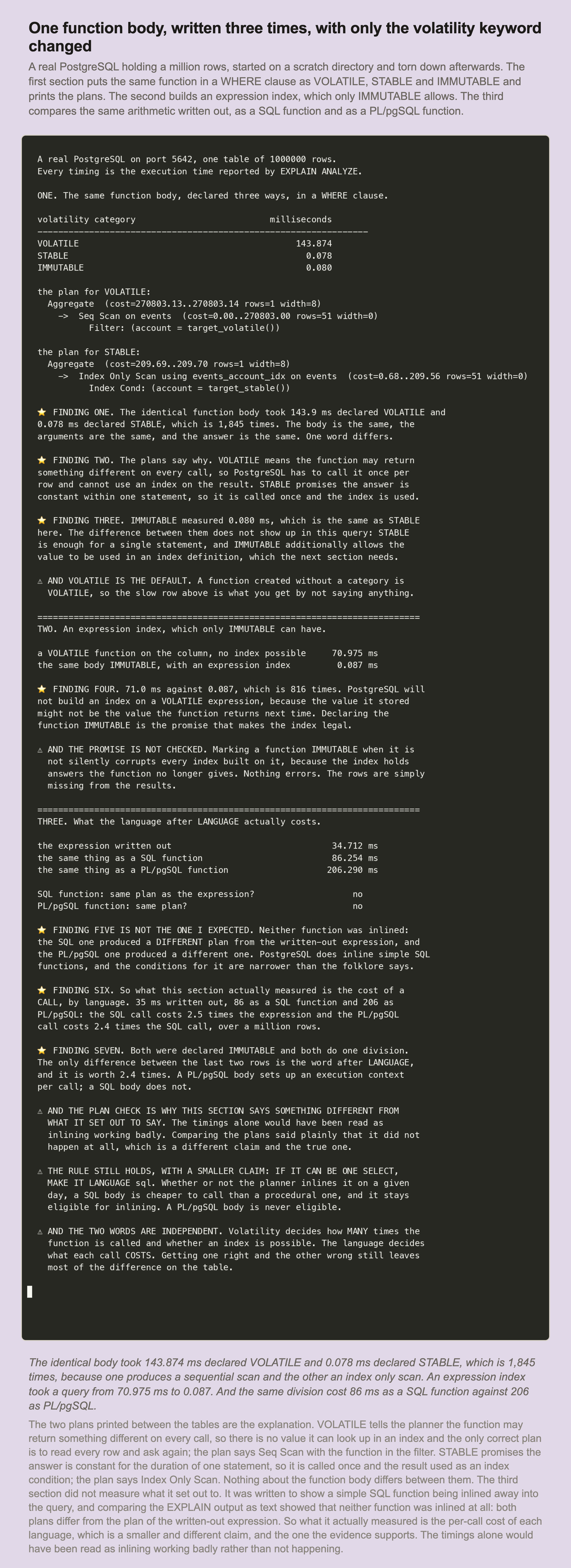
Every timing is the execution time reported by EXPLAIN ANALYZE against a database this lab started and tore down.
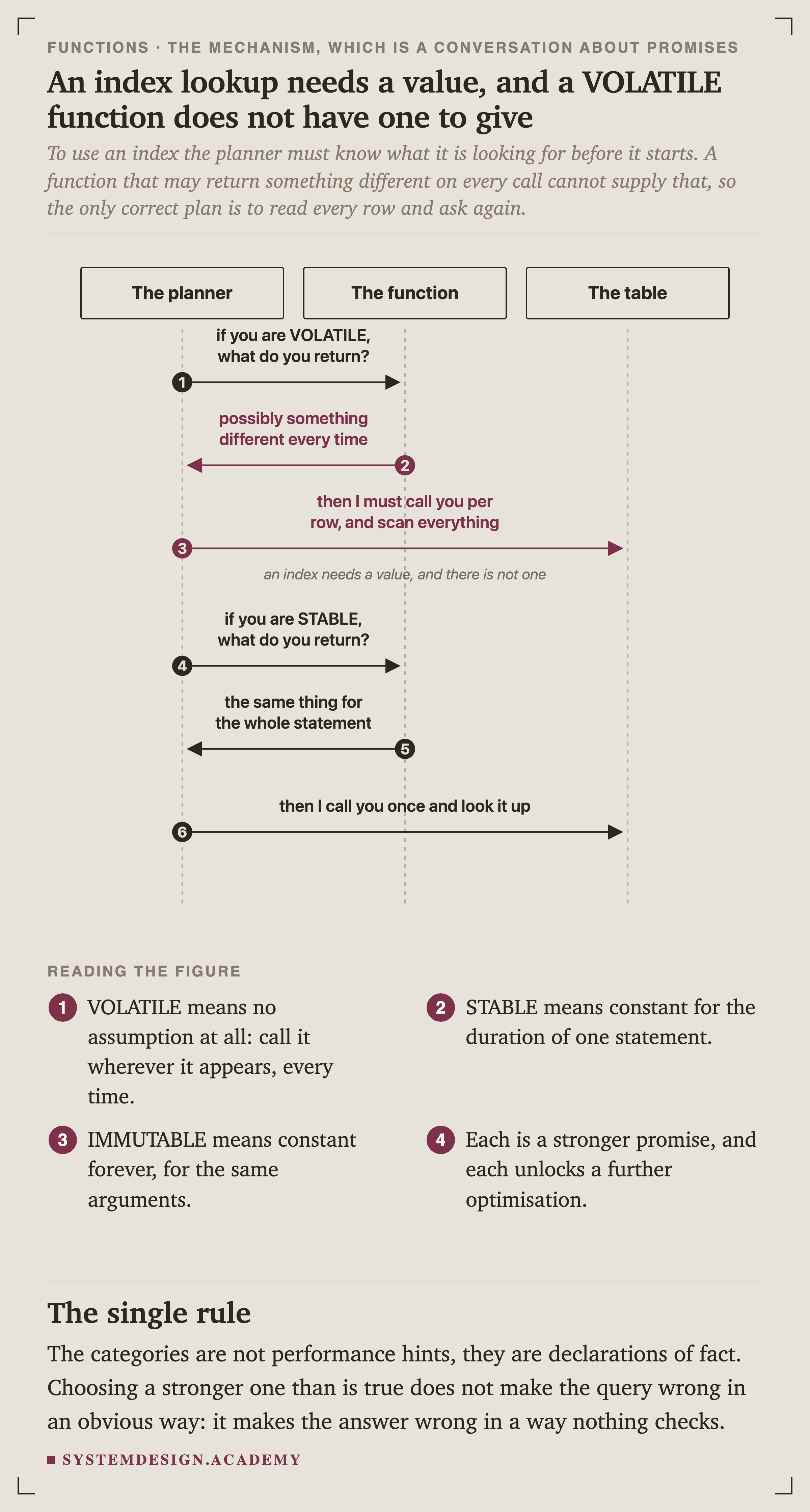
To use an index the planner must know what it is looking for before it starts. A function that may return something different on every call cannot supply that.
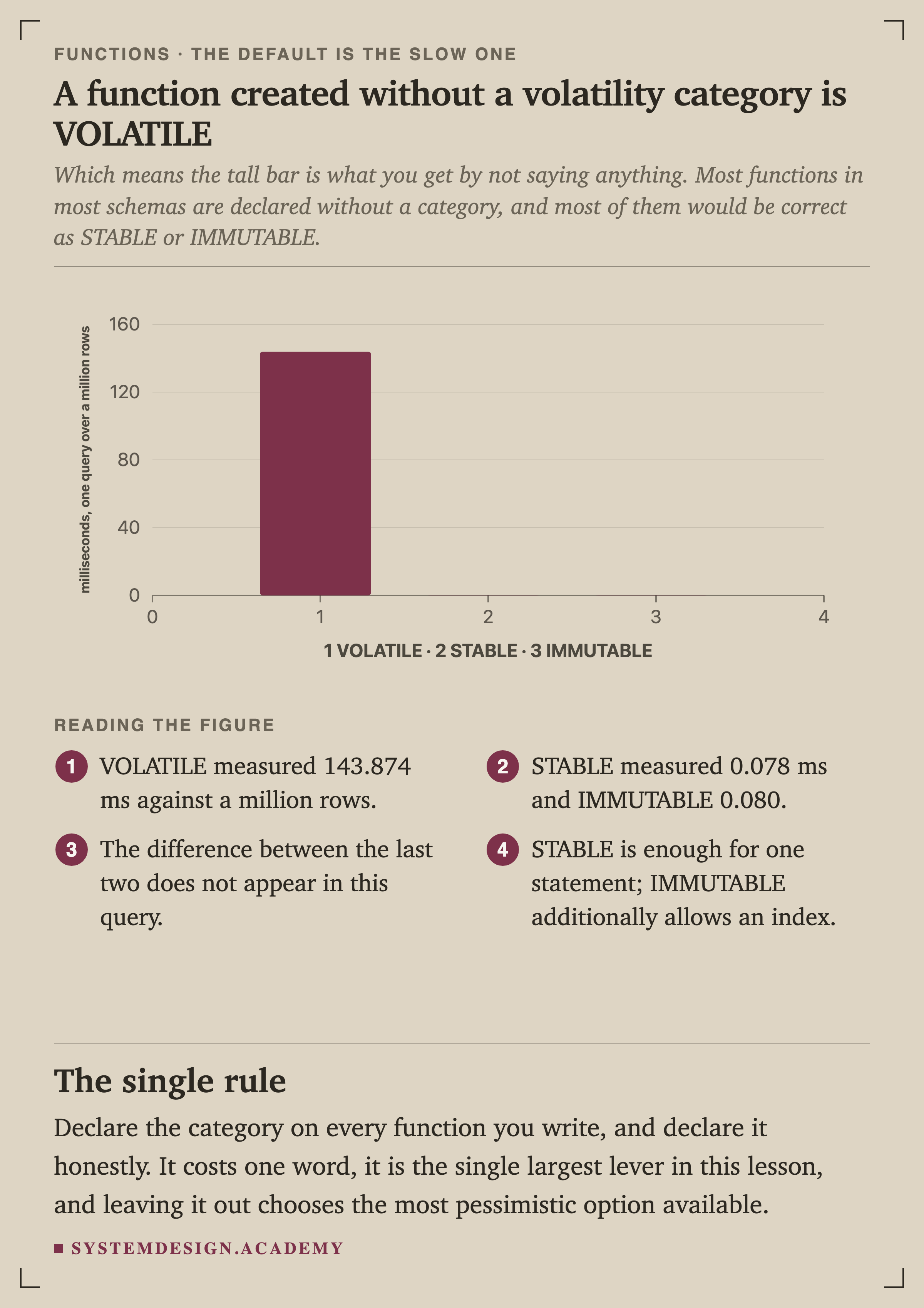
Which means the tall bar is what you get by not saying anything. Most functions in most schemas are declared without a category, and most of them would be correct as STABLE or IMMUTABLE.
Declare the category on every function you write, and declare it honestly. It costs one word, it is the single largest lever in this lesson, and leaving it out chooses the most pessimistic option available.