Two Features Whose Names Differ By One Word
The chapter ended with nine products and one axis: where the copy lives. A materialised view is a cache that lives in the database, and an ordinary view stores nothing at all.
That difference is the single most common misunderstanding about views, and it matters because the feature that does store something behaves like every cache in the previous chapter.
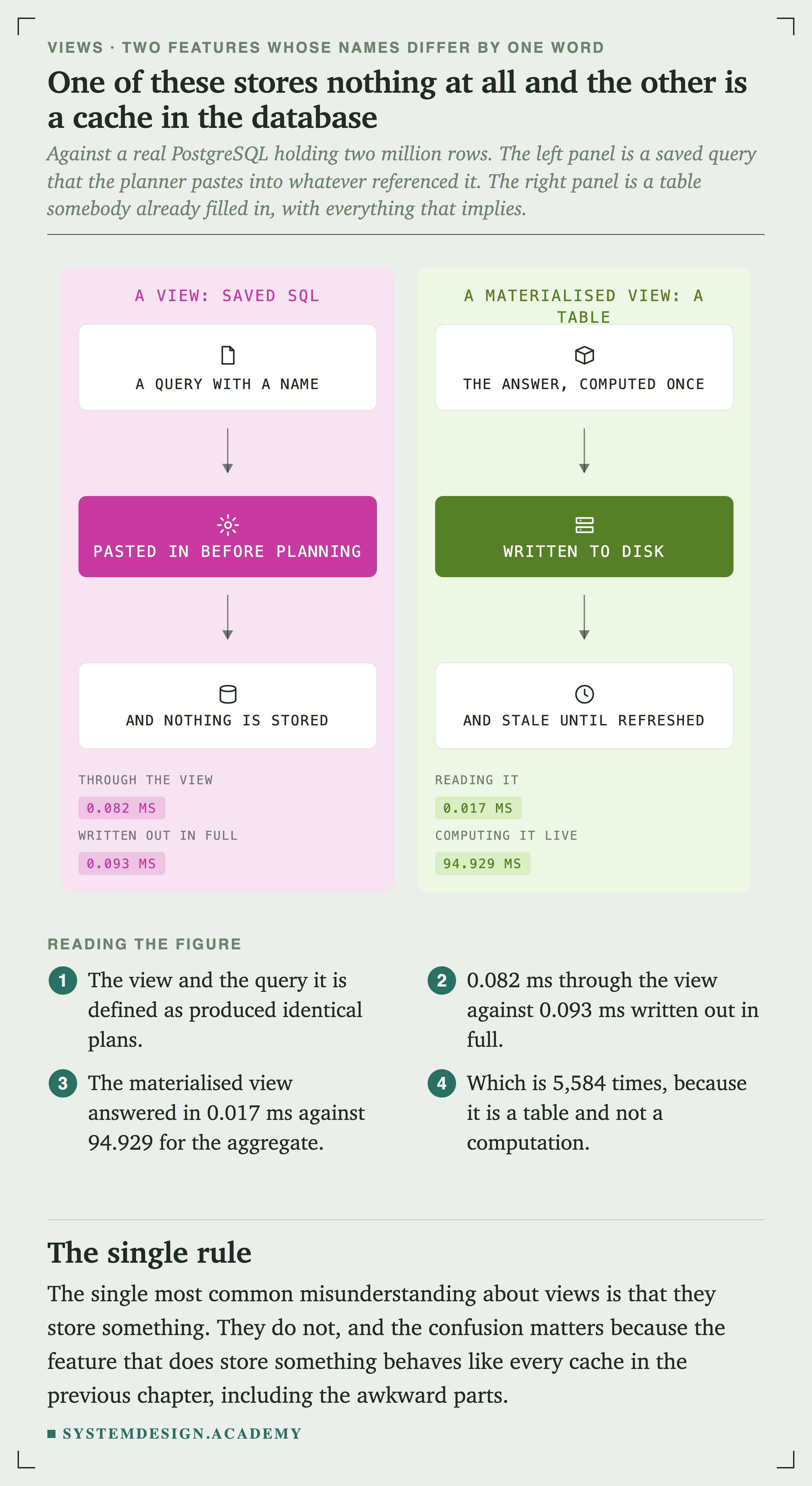
Against a real PostgreSQL holding two million rows. The left panel is a saved query the planner pastes into whatever referenced it. The right is a table somebody already filled in.
What A View Actually Is
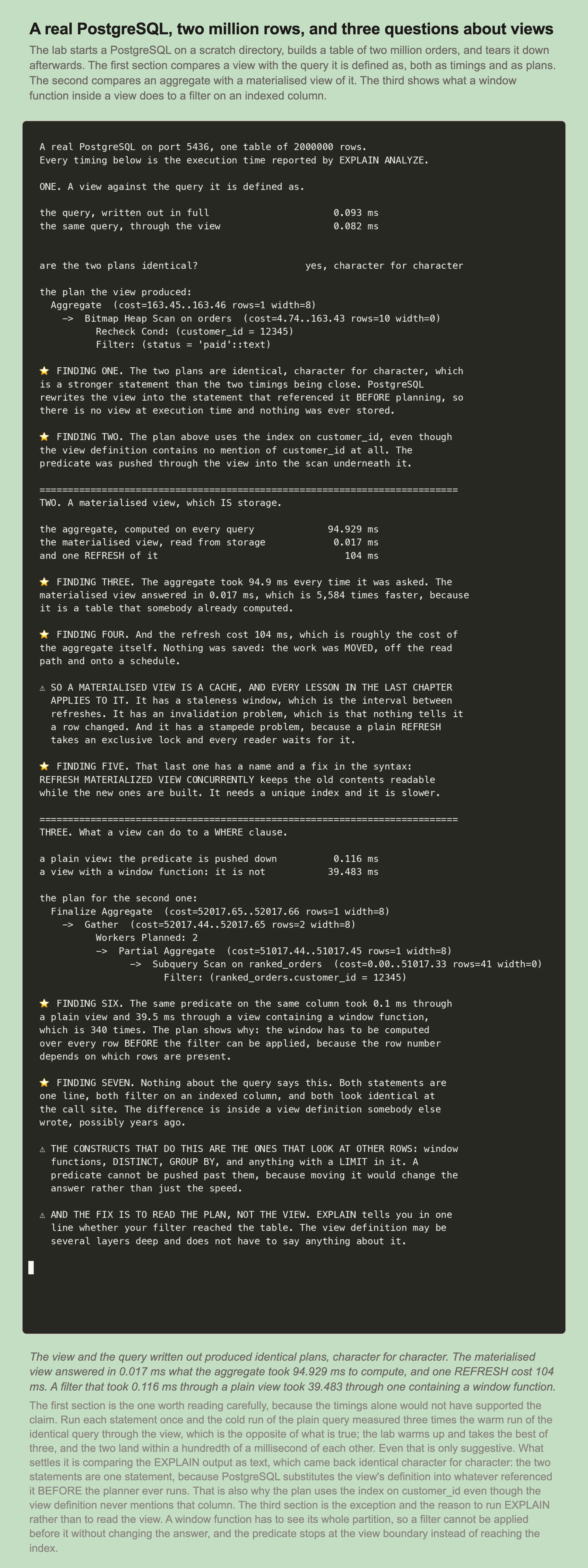
Every timing is the execution time reported by EXPLAIN ANALYZE against a database this lab started and tore down.
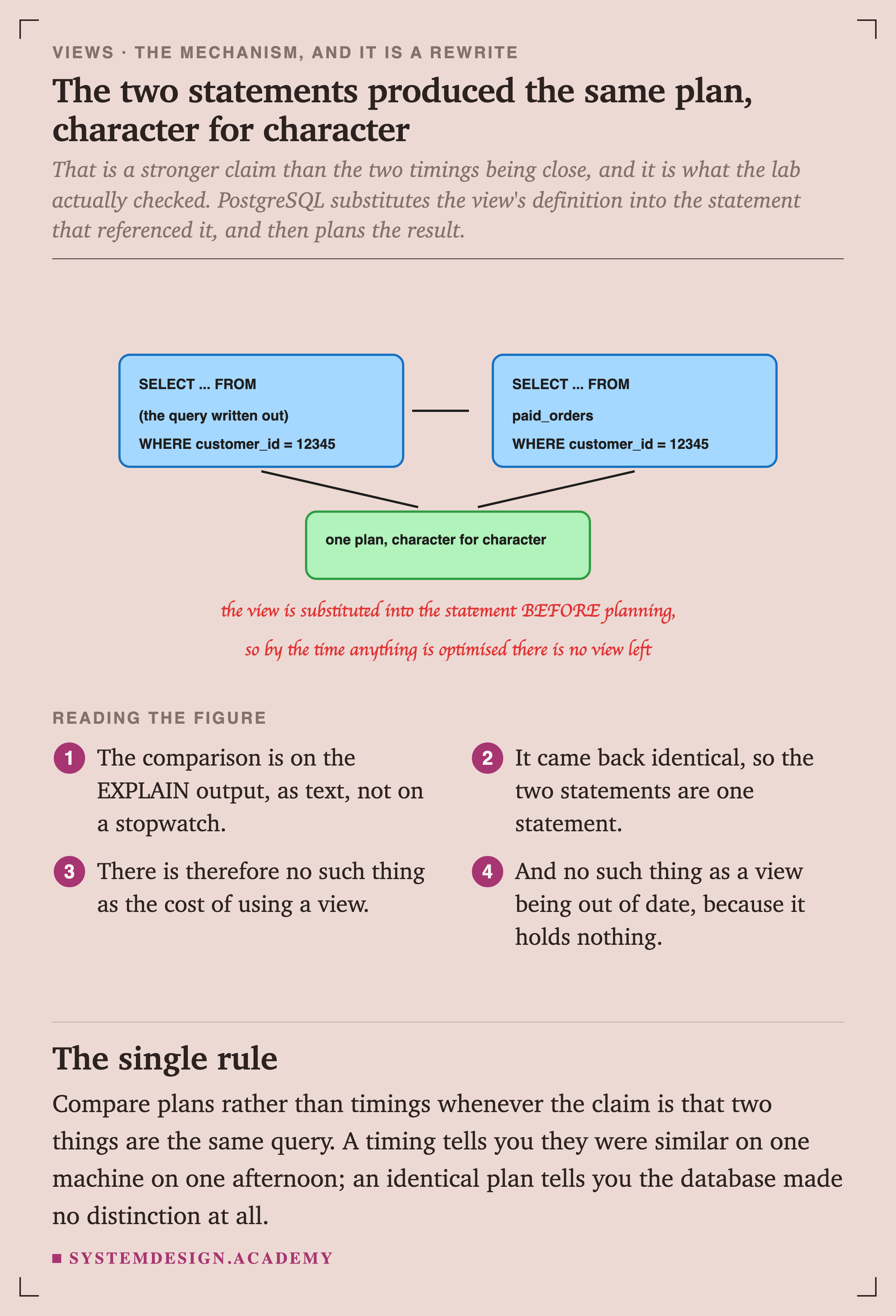
That is a stronger claim than the two timings being close, and it is what the lab actually checked.
Compare plans, not timings, whenever the claim is that two things are the same query. A timing tells you they were similar on one machine on one afternoon; an identical plan tells you the database made no distinction at all.
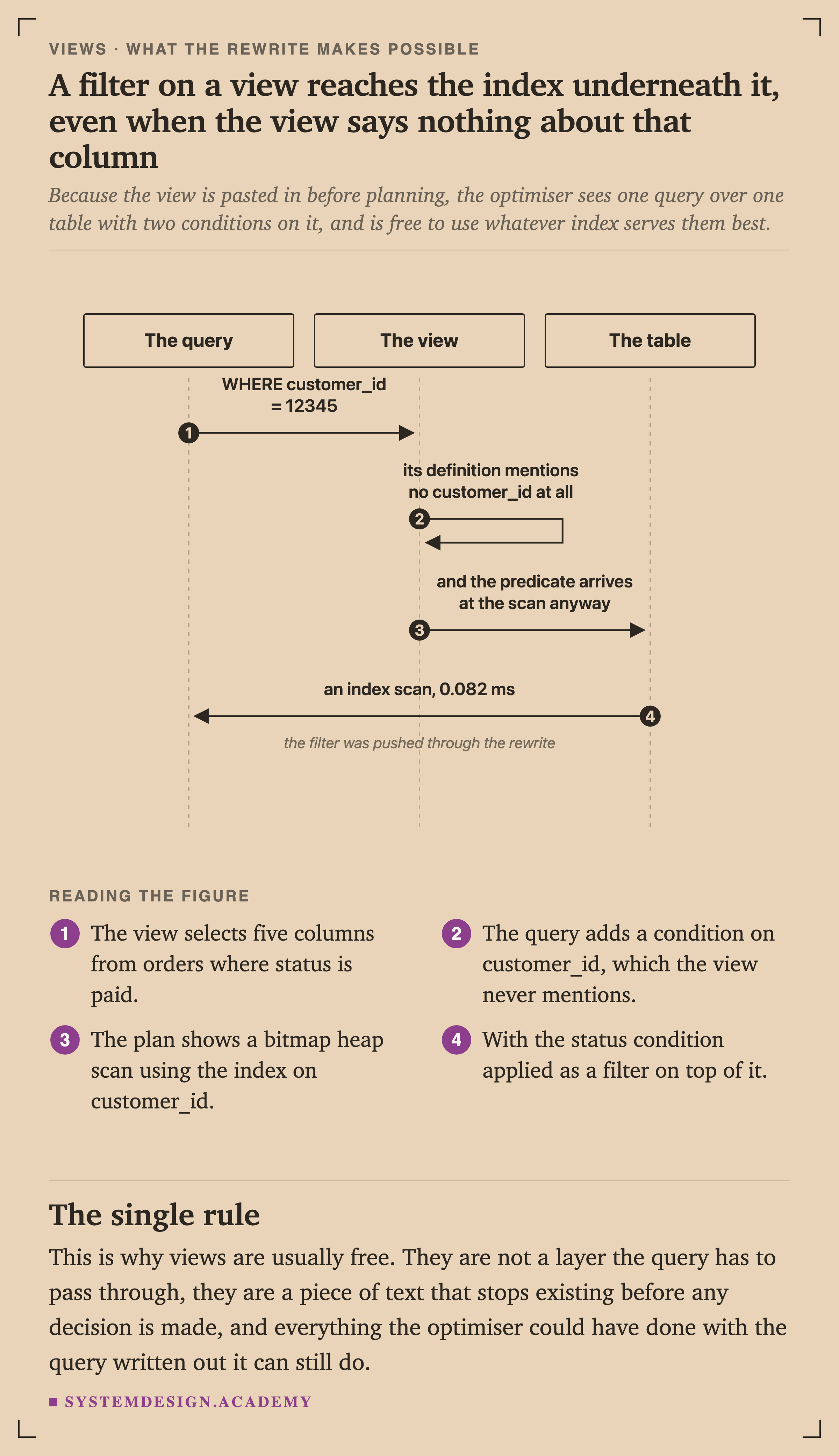
Because the view is pasted in before planning, the optimiser sees one query over one table with two conditions on it, and is free to use whatever index serves them best.
This is why views are usually free. They are not a layer the query passes through, they are a piece of text that stops existing before any decision is made.