One Idea Wearing Three Names
Normal forms are usually taught as definitions to memorise, which is why almost nobody can say what actually breaks when you ignore them. Every one of the three is the same instruction: record each fact in exactly one place.
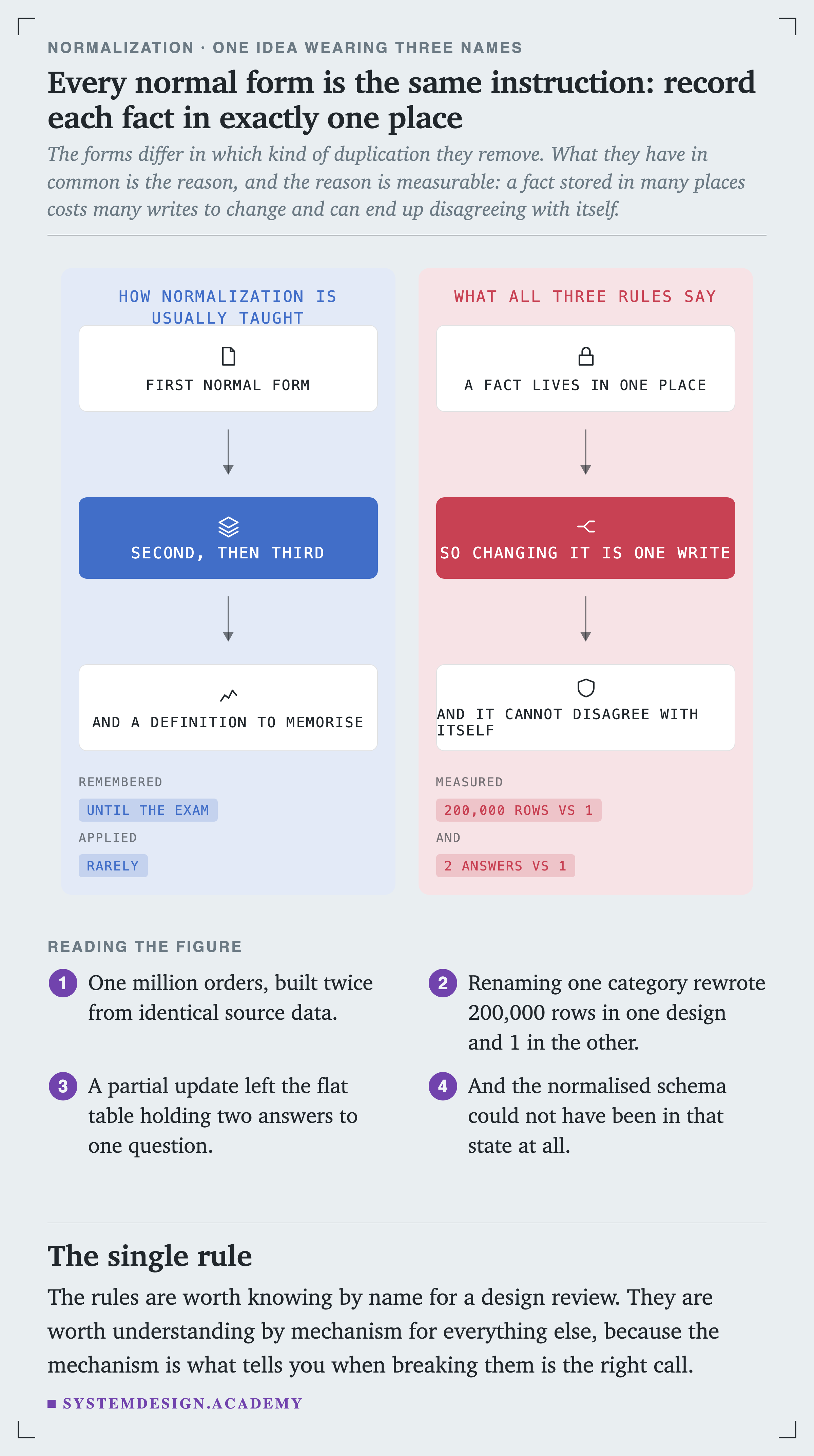
One million orders built twice from identical source data, once flat and once normalised, in a real PostgreSQL.
The reason is measurable, which is what makes the rules usable. A fact stored in many places costs many writes to change and can end up disagreeing with itself.
The Same Facts, Two Schemas
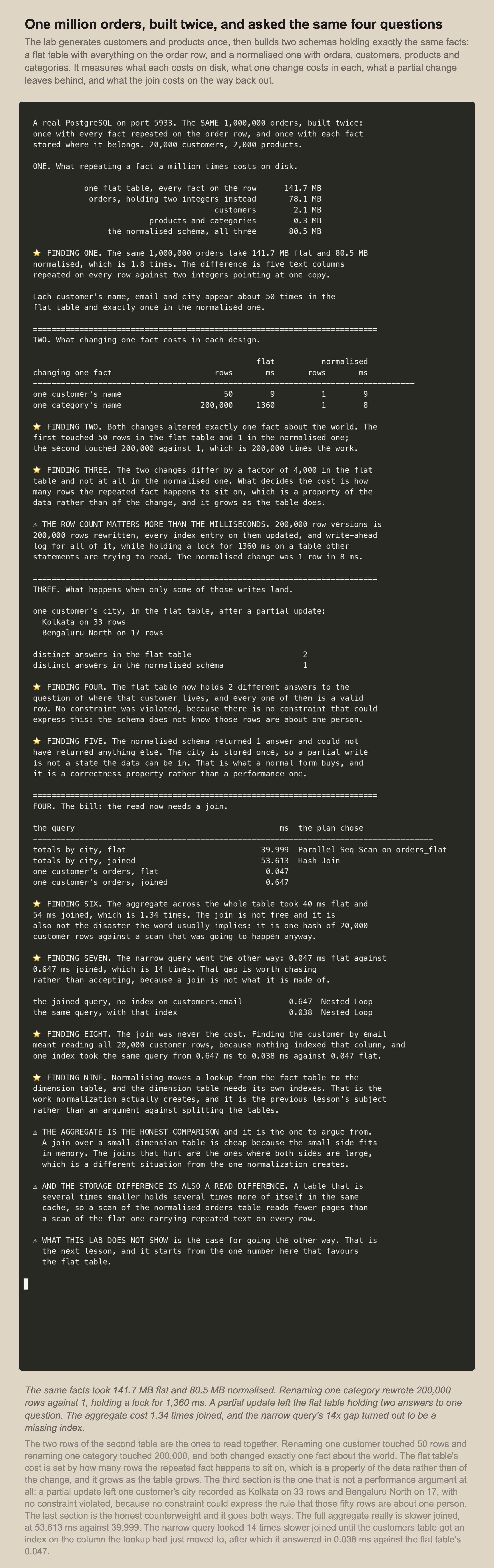
The customers and products are generated once and both schemas are built from them, so nothing about the comparison depends on the data being different.
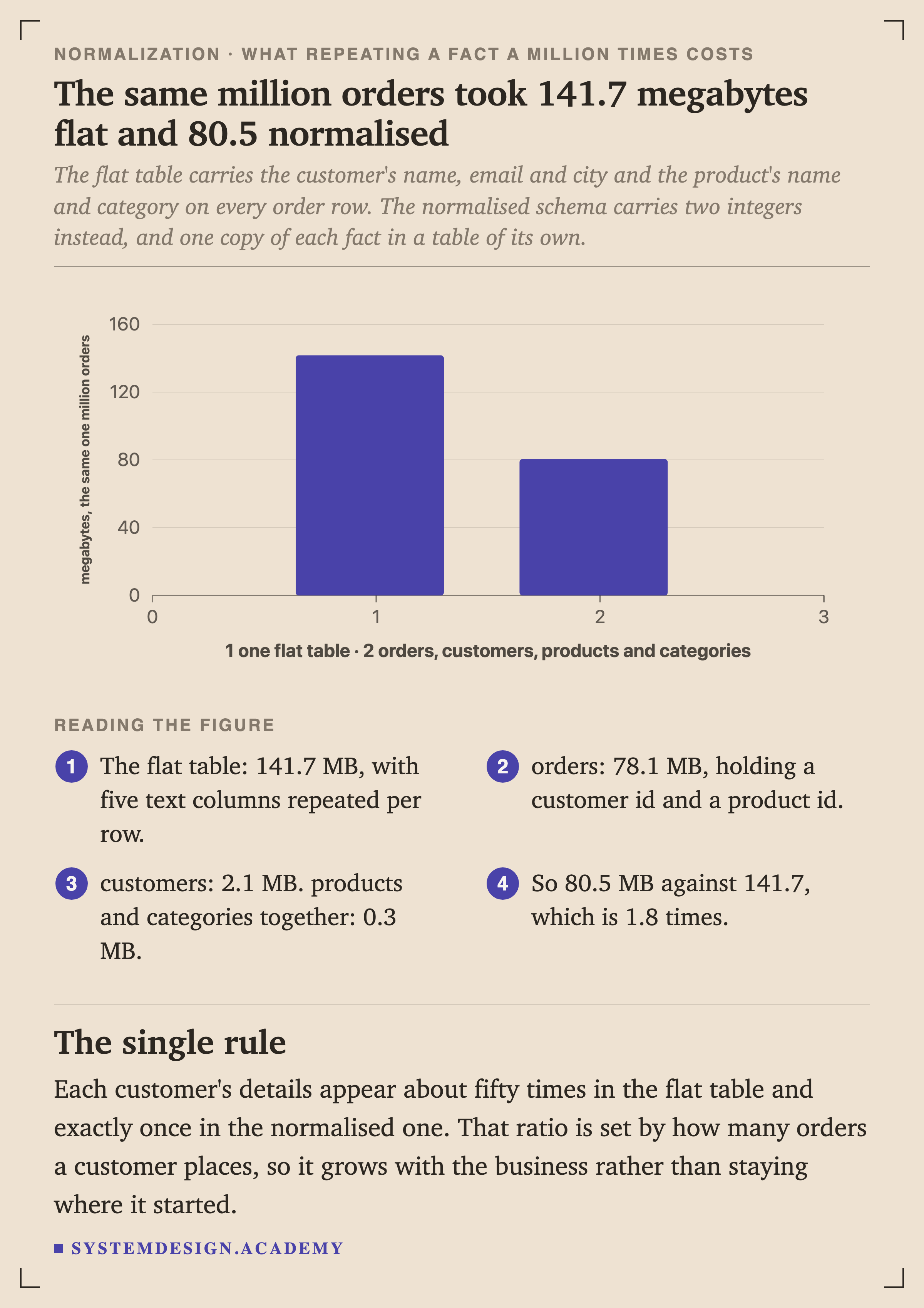
The flat table carries the customer's name, email and city and the product's name and category on every order row. The normalised schema carries two integers instead.
Each customer's details appear about fifty times in the flat table and exactly once in the normalised one. That ratio is set by how many orders a customer places, so it grows with the business.
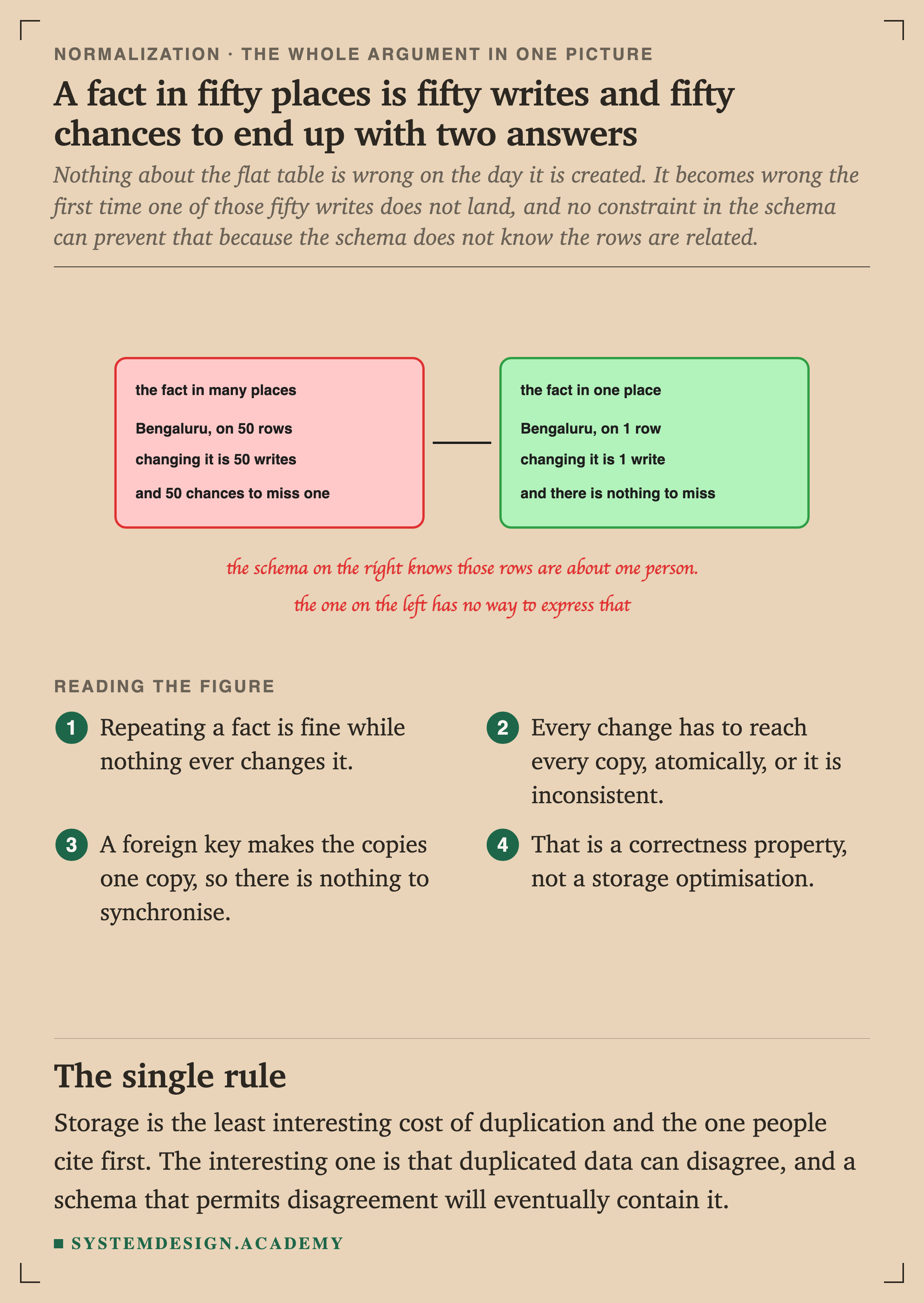
Nothing about the flat table is wrong on the day it is created. It becomes wrong the first time one of those fifty writes does not land.