The Case Is Not The One People Cite
The previous lesson ended with one measurement that favoured the flat table: a join cost 1.34 times. That is a real cost and it is a weak argument for keeping a second copy of anything.
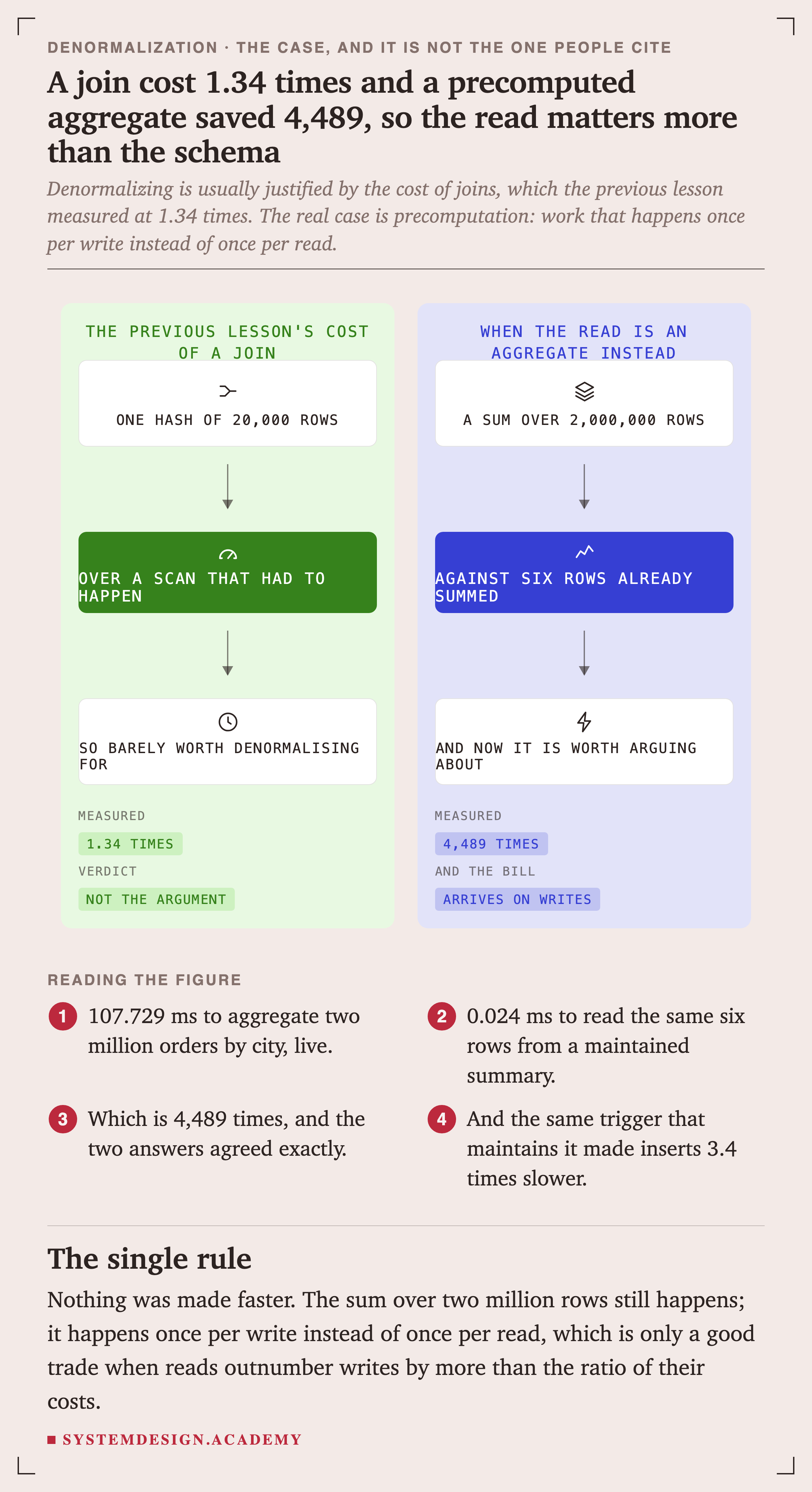
Denormalizing is usually justified by the cost of joins. The real case is precomputation: work that happens once per write instead of once per read.
Nothing in this lesson makes anything faster. The sum over two million rows still happens; it happens at a different moment, and the whole trade is how often each moment occurs.
Four Questions, And Two Of Them Need Real Concurrency
The lab starts a PostgreSQL on a scratch directory, builds two million orders, and tears the whole thing down afterwards.
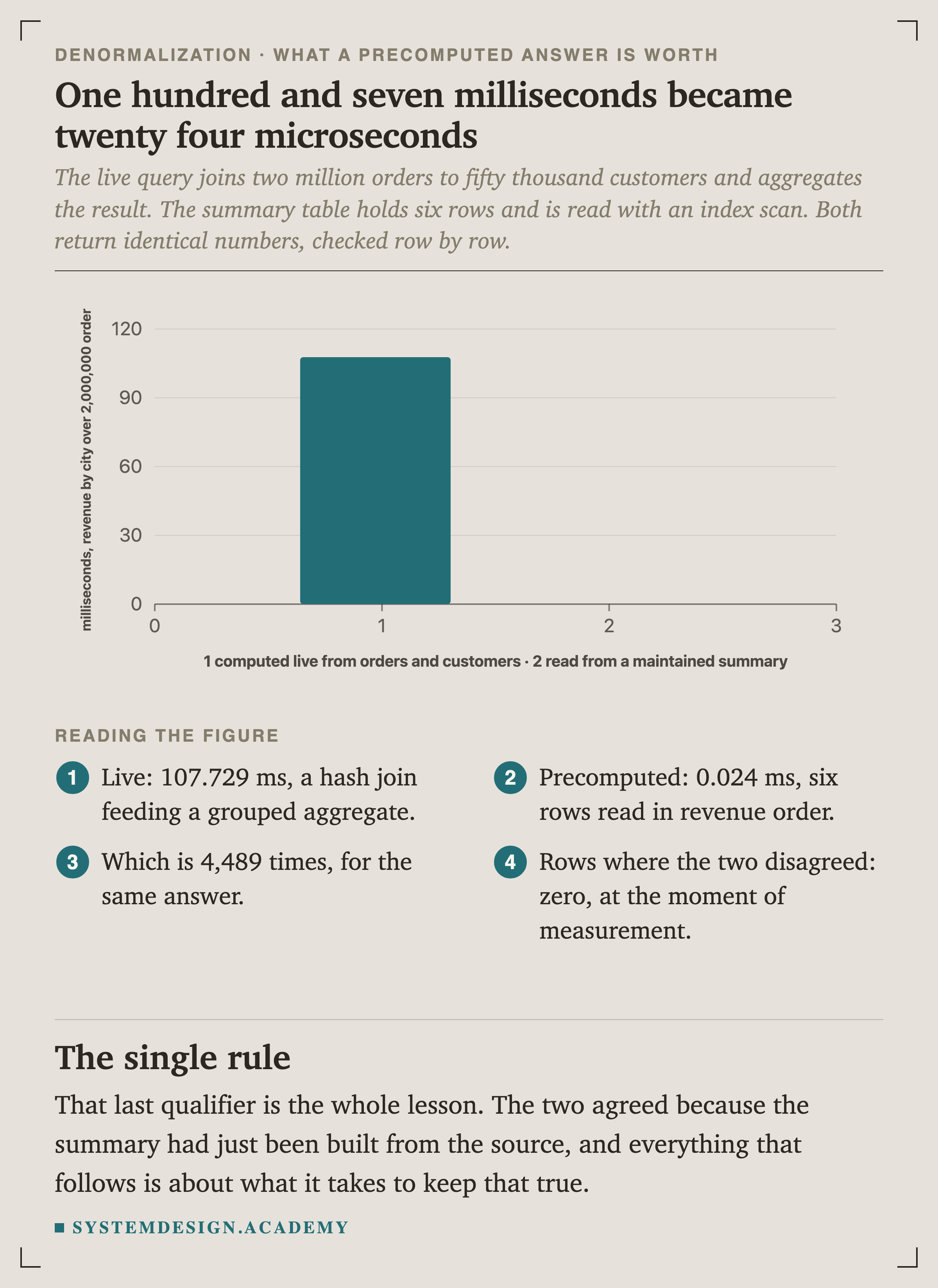
The live query joins two million orders to fifty thousand customers and aggregates. The summary holds six rows. Both return identical numbers, checked row by row.
That last check matters more than the ratio. The two agreed because the summary had just been built from the source, and everything else in this lesson is about what it takes to keep that true.
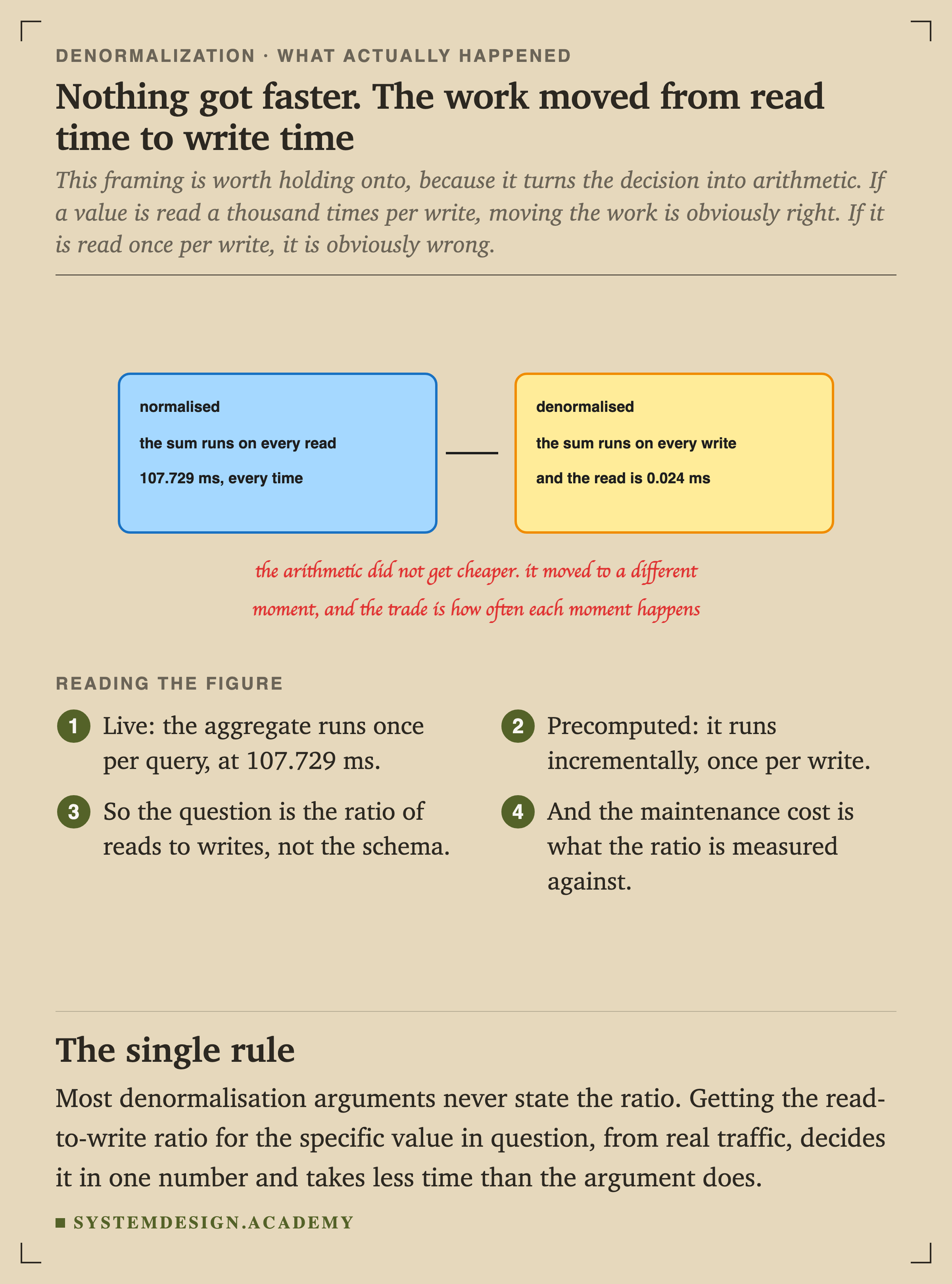
This framing turns the decision into arithmetic. A value read a thousand times per write is obviously worth precomputing, and a value read once per write is obviously not.