Code That Runs When Nobody Called It
Two earlier lessons measured what a trigger costs. This one is about what a trigger does, because every finding here is a behaviour and not a number, and not one of them raises an error.
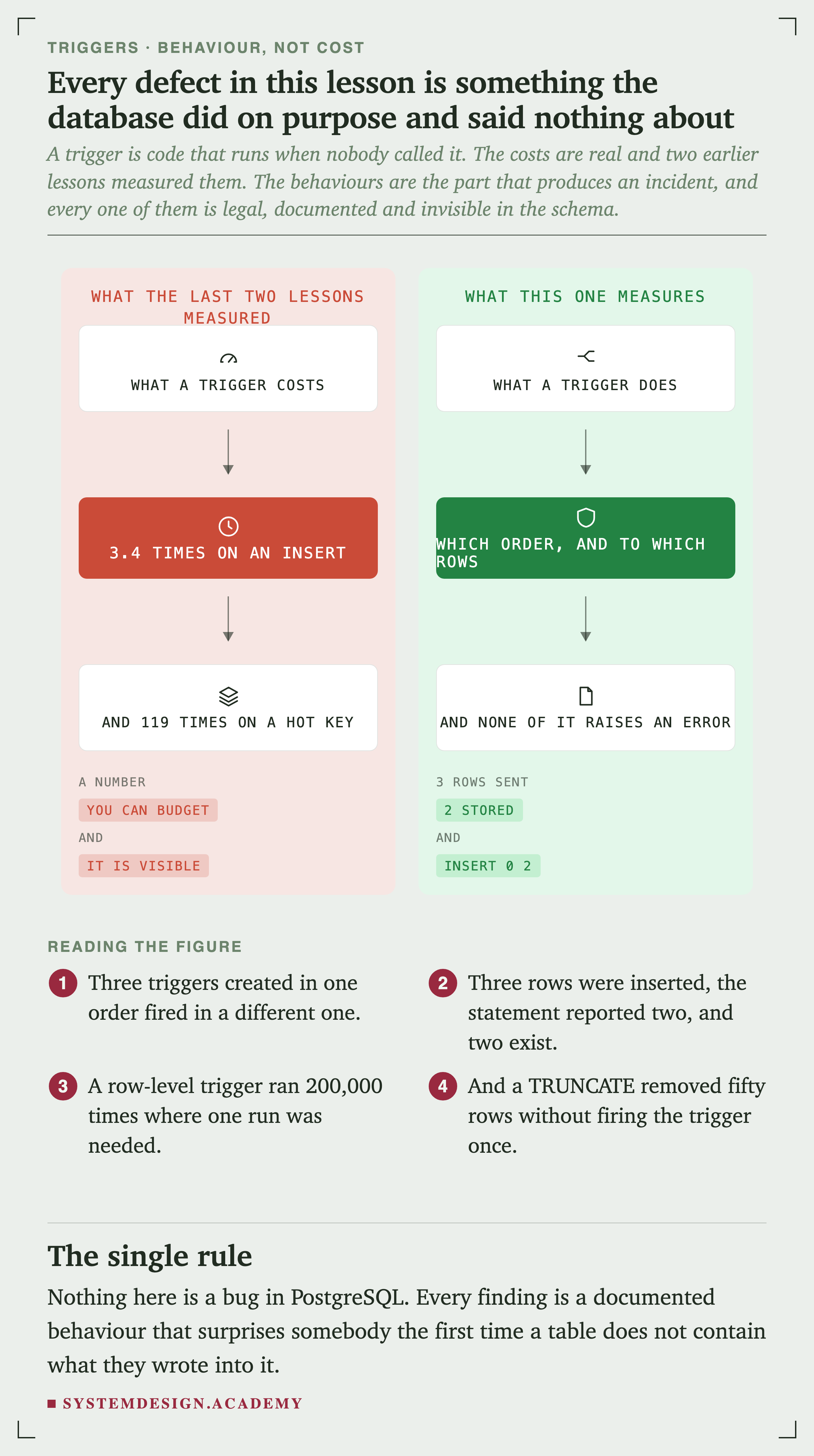
Every defect in this lesson is something the database did on purpose and said nothing about.
Four Behaviours, Observed
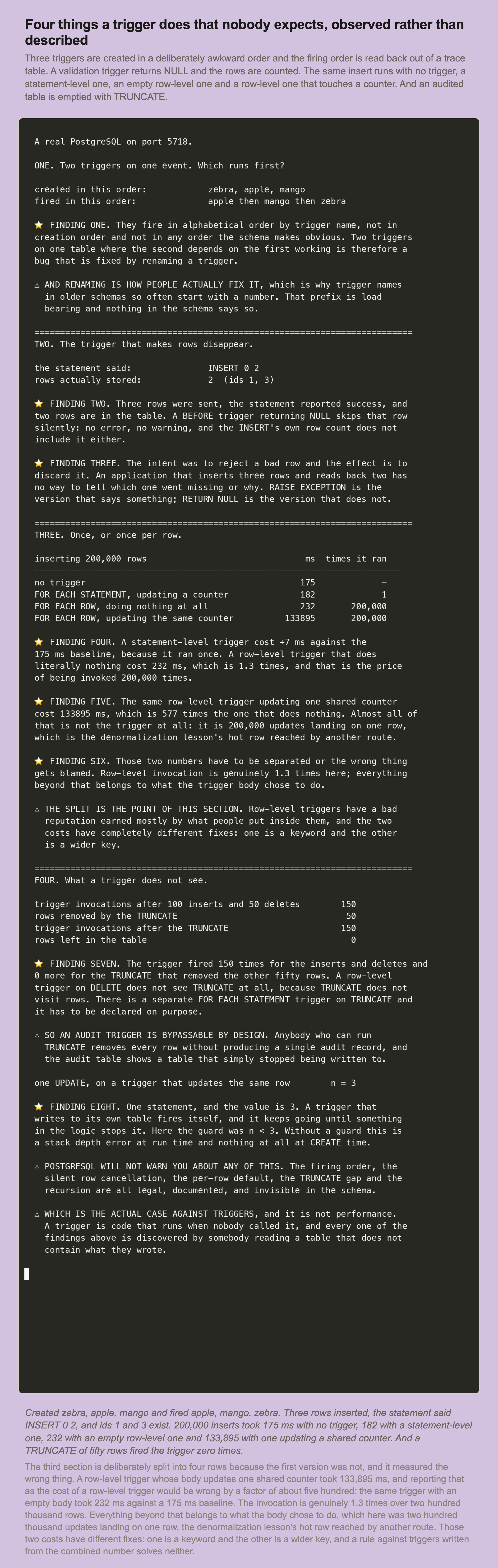
Nothing here is described from the documentation. Each result was produced and then queried.
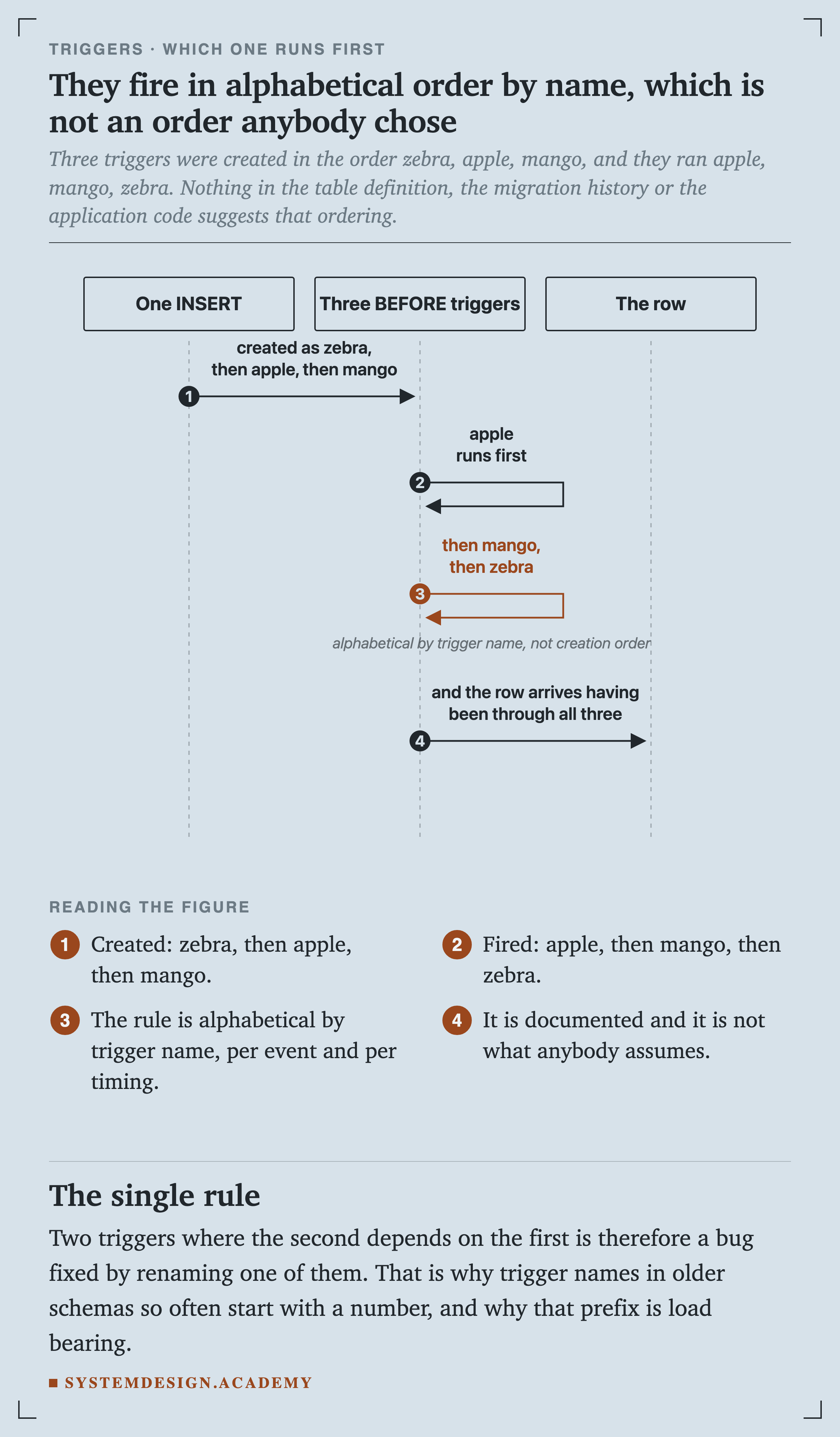
Nothing in the table definition, the migration history or the application code suggests that ordering.
Two triggers where the second depends on the first is therefore a bug fixed by renaming one of them. That is why trigger names in older schemas so often start with a number, and why that prefix is load bearing.
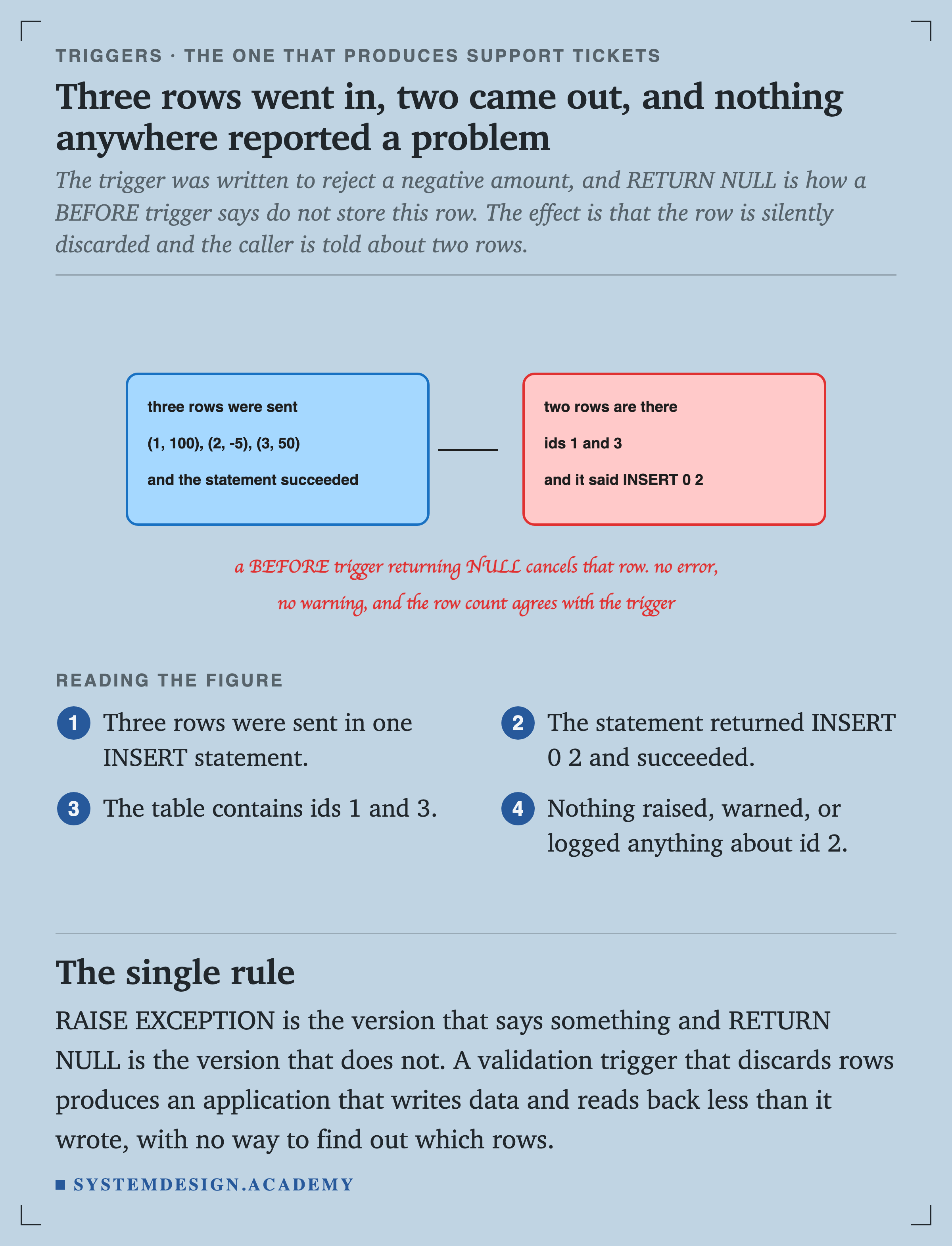
The trigger was written to reject a negative amount, and RETURN NULL is how a BEFORE trigger says do not store this row.
RAISE EXCEPTION is the version that says something and RETURN NULL is the version that does not. A validation trigger that discards rows produces an application that writes data and reads back less than it wrote.