Most Of This Argument Has No Numbers In It
Where business logic should live is a real question and it is decided by how a team works. Four narrower questions have answers that can be produced in an afternoon, and three of them are not the ones usually cited.
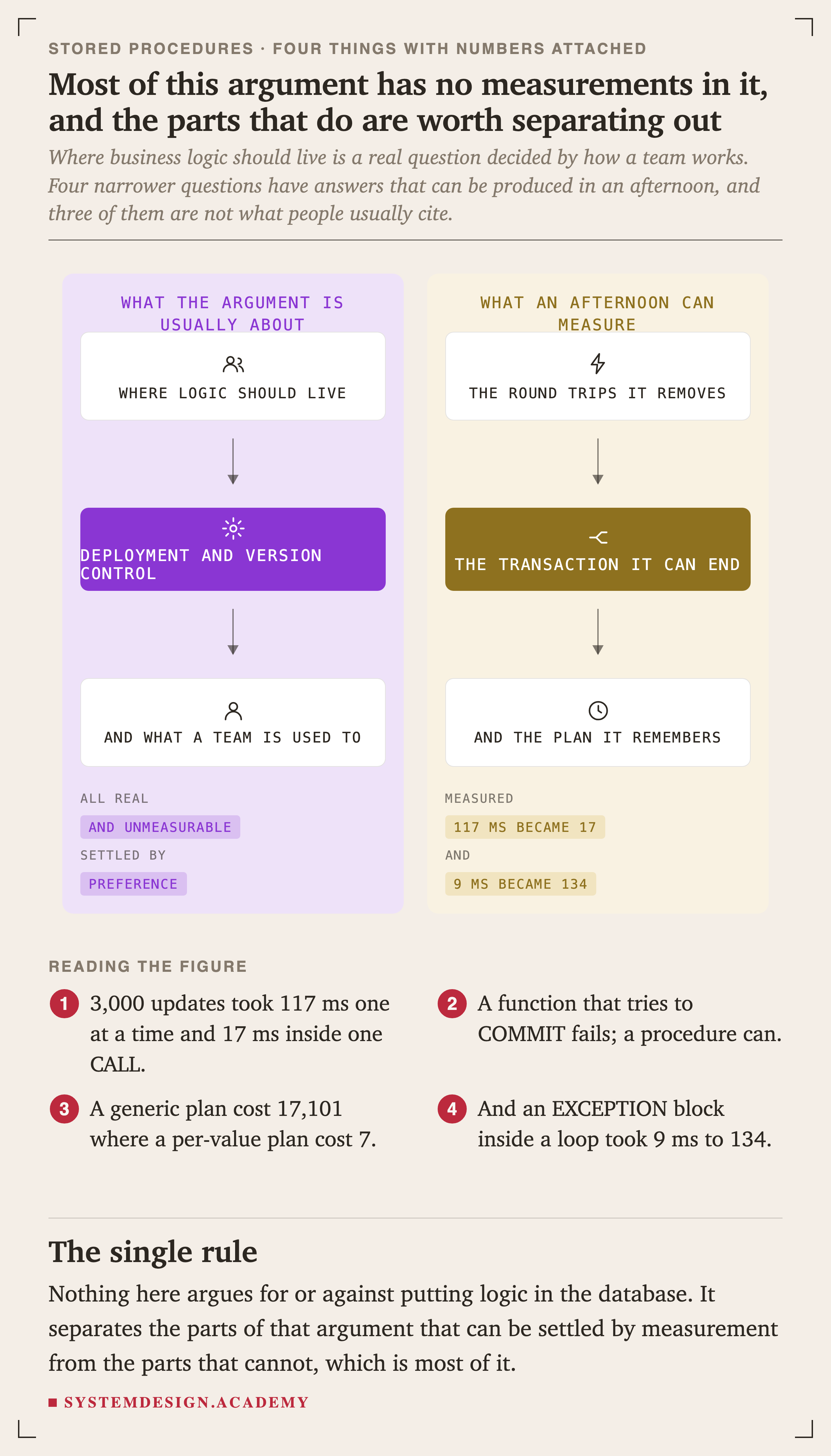
Nothing in this lesson argues for or against putting logic in the database. It settles the parts that measurement can settle.
The Case That Is Actually About Procedures
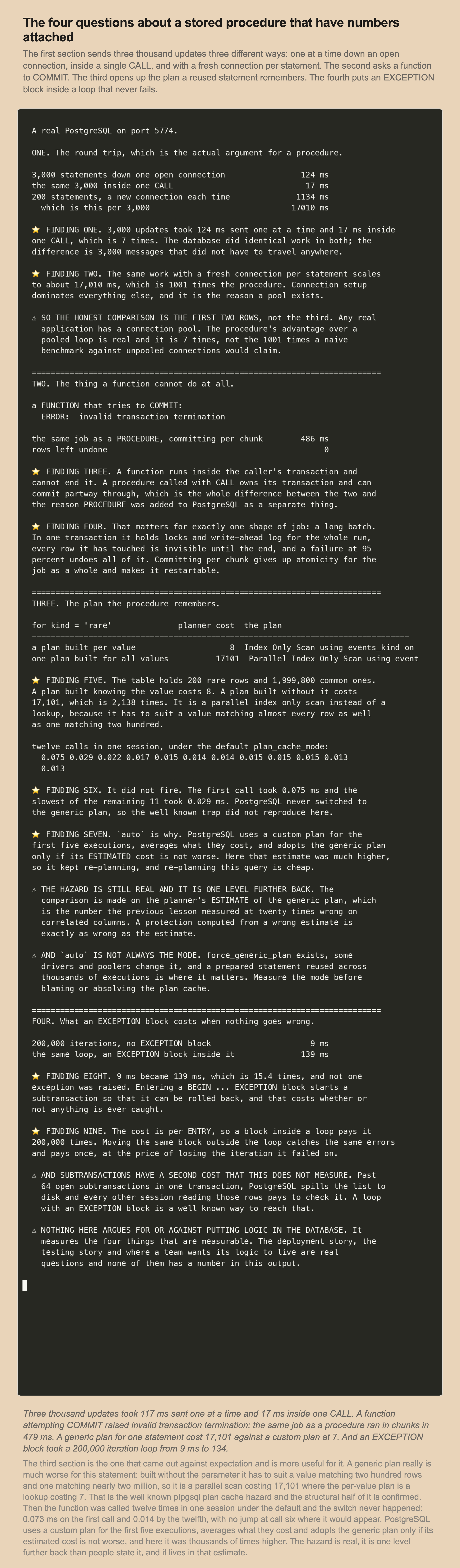
The round trips are real round trips over a real socket, and the plans are read out of EXPLAIN instead of assumed.
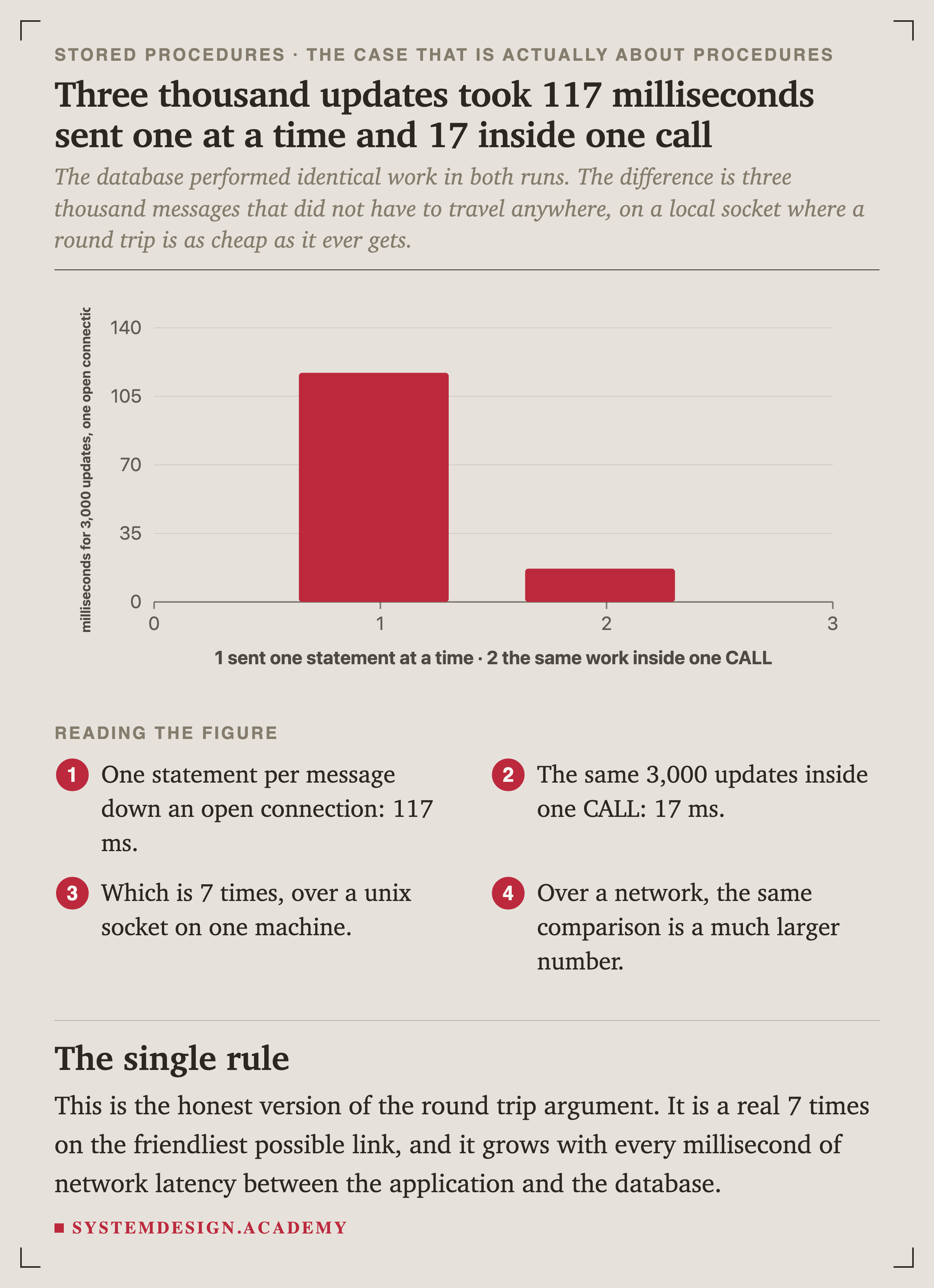
The difference is three thousand messages that did not have to travel anywhere, on a local socket where a round trip is as cheap as it ever gets.
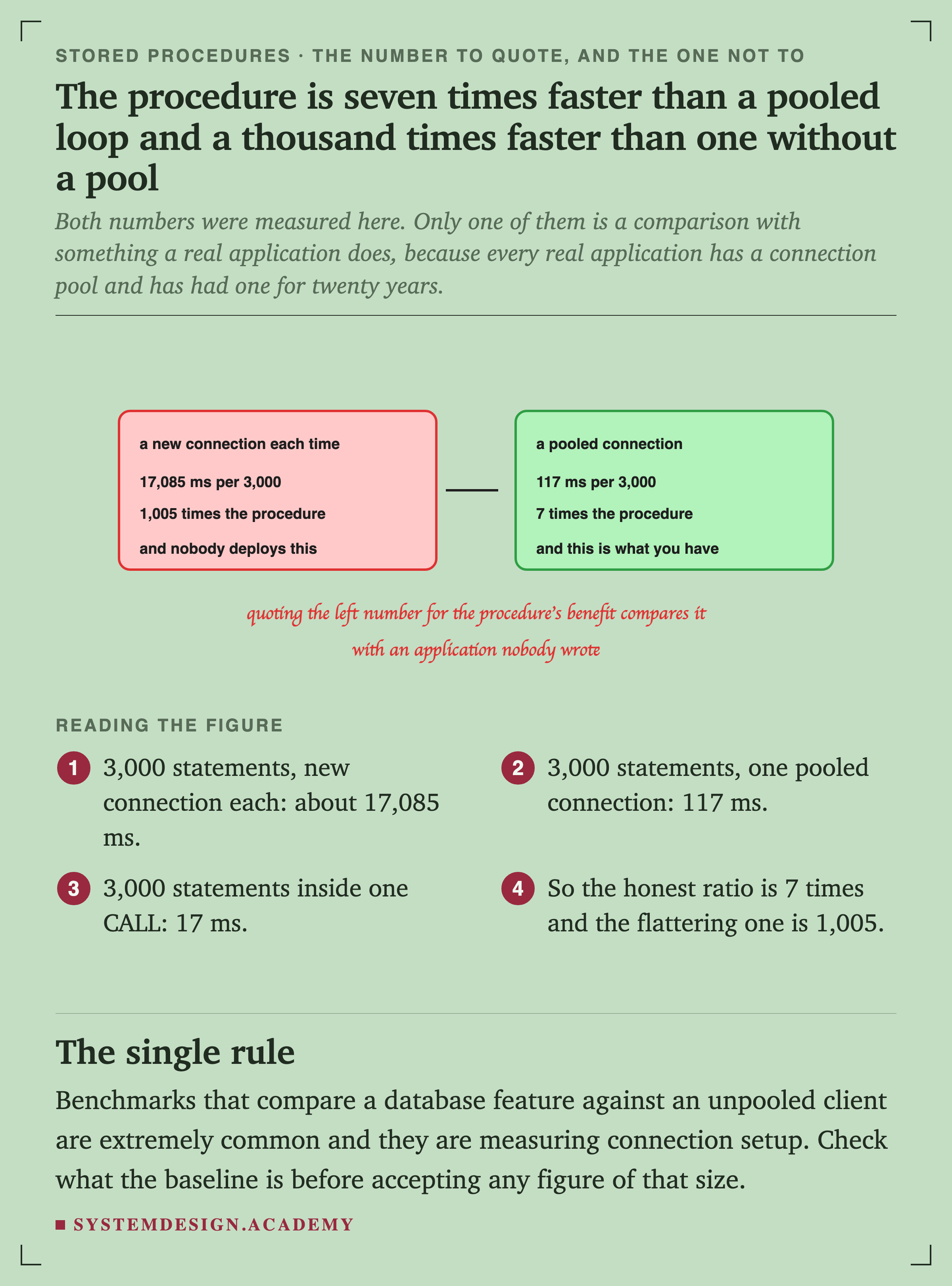
Every real application has a connection pool and has had one for twenty years. The honest ratio is seven times.
Benchmarks comparing a database feature against an unpooled client are common and they are measuring connection setup. Check what the baseline is before accepting any figure of that size.