The Merge Looks Like Housekeeping. It Changed the Answer.
You have a pile of free-text codes from open coding. Thirteen of them, from one grader, describing ten failed traces.
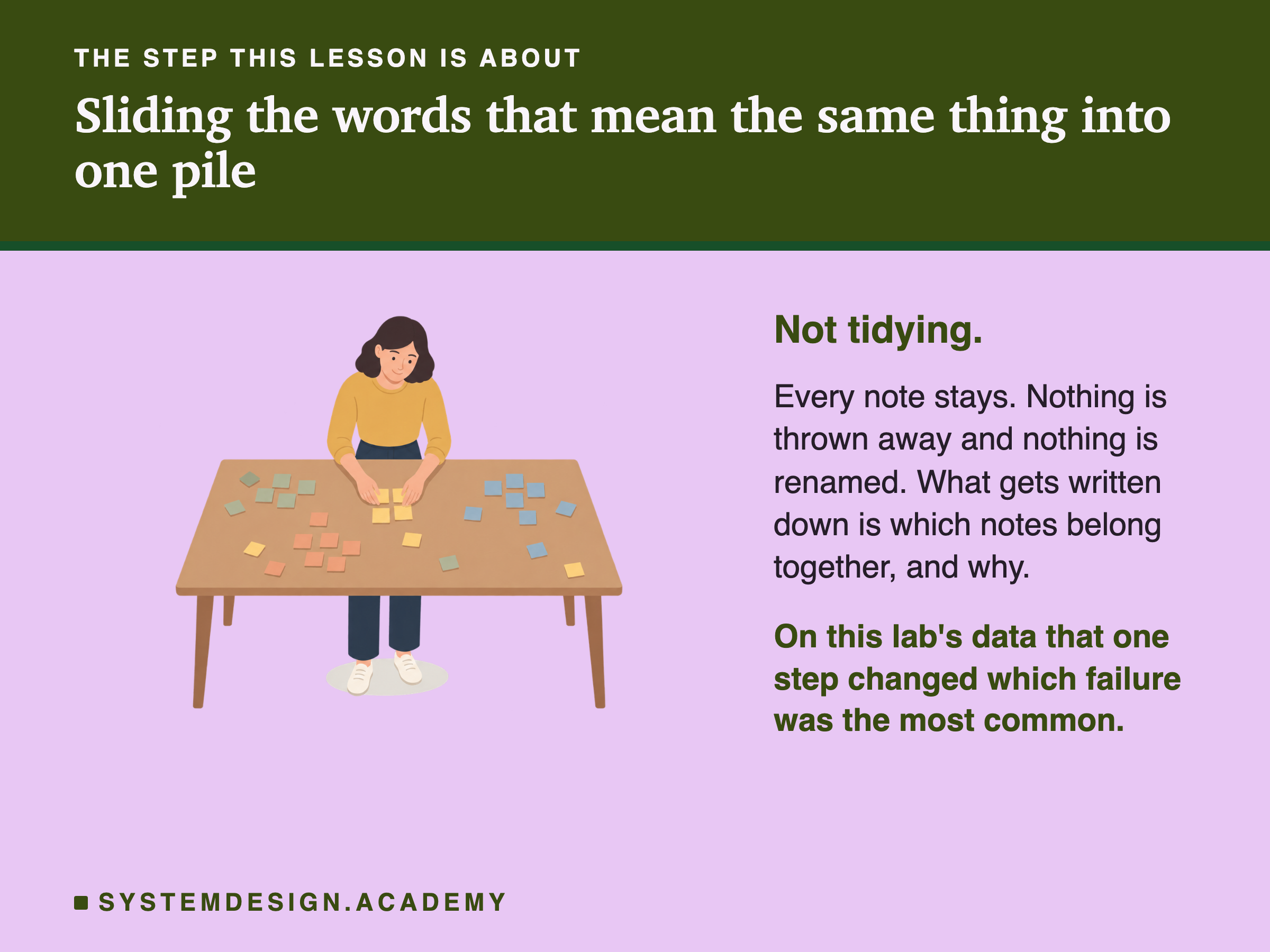
Nothing on the table is thrown away and nothing is renamed. What gets written down is which notes belong together, and why. That is the whole operation, and on this lab's data it changed which failure was the most common.
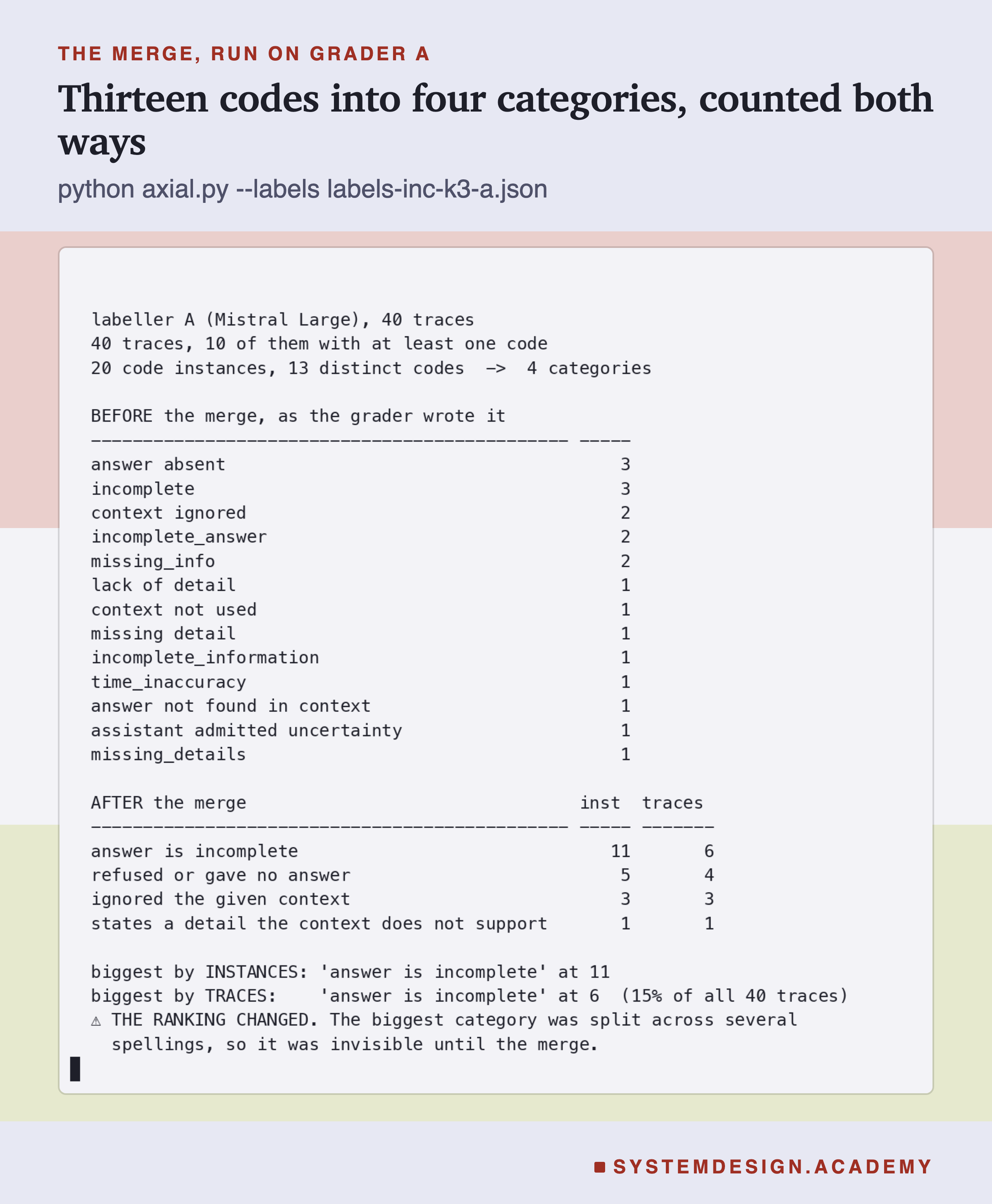
Read the two tables against each other. Before the merge the largest single code is a tie: "answer absent" at 3 and "incomplete" at 3. A team reading that would probably have gone to work on refusals.
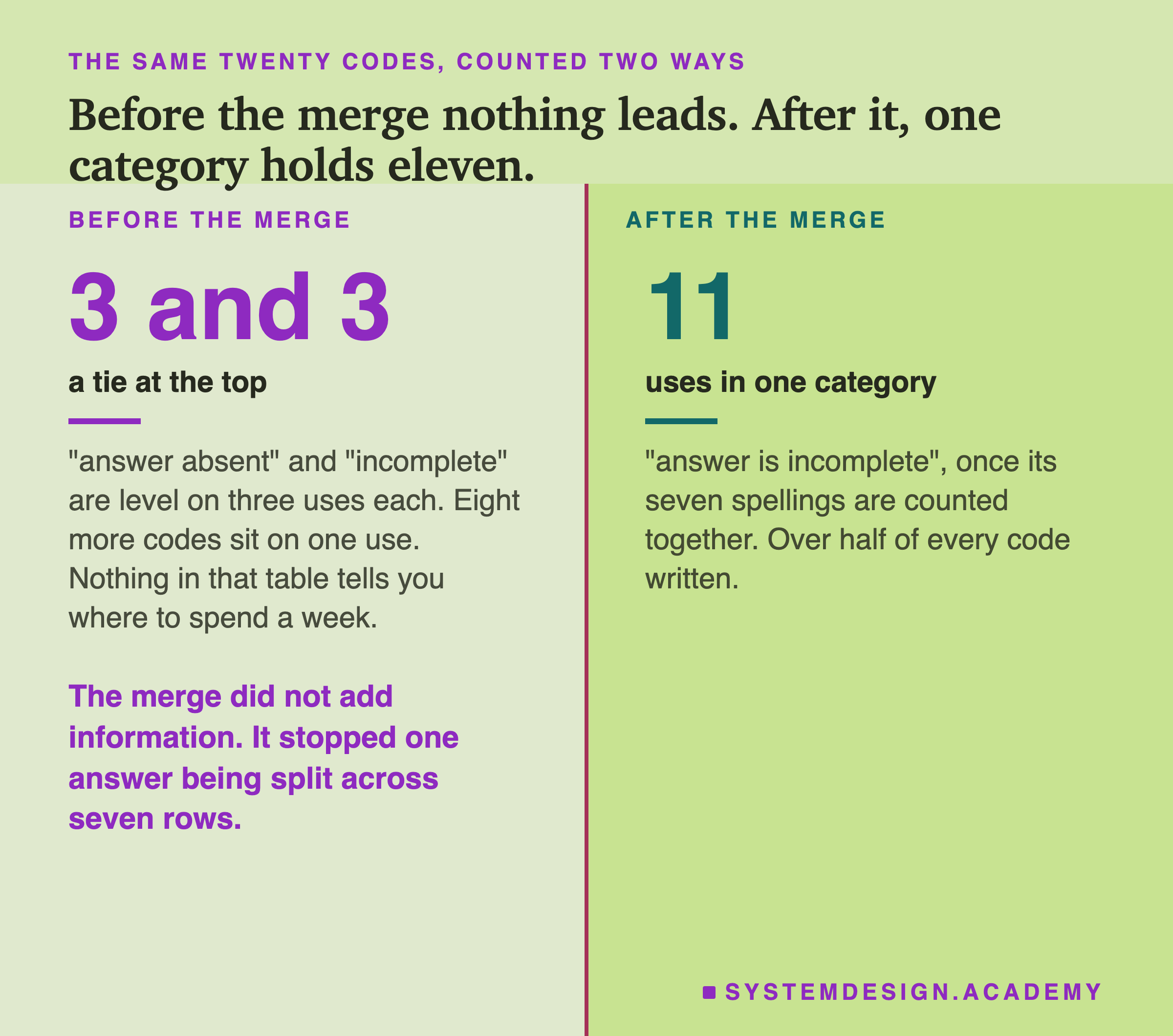
After the merge the largest category is "answer is incomplete", at 11 of the 20 codes written and touching 6 of the 40 traces. It was invisible before because it had been written seven different ways and every spelling counted separately.
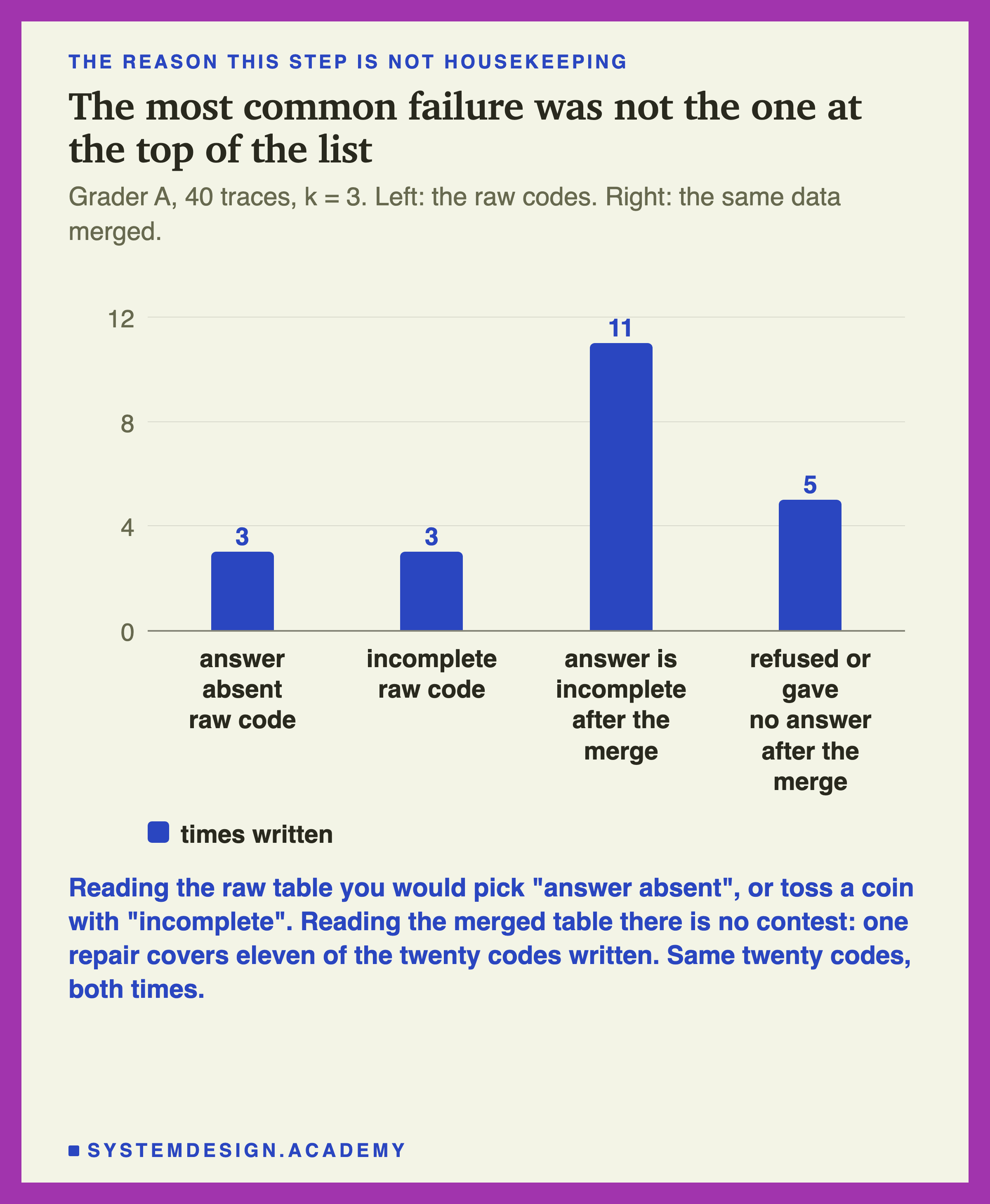
Same twenty codes, both times. Nothing was measured again and nothing was added. The only change is that seven rows saying one thing became one row saying it.
Axial coding is not tidying a chart. It decides what you fix first.