The Meeting Where You Agree the Categories Is the Problem
Your system is producing wrong answers. Somebody schedules a meeting to agree what the failure categories are, so everyone labels consistently.
That meeting is where the finding gets decided, before anybody has read a failure.
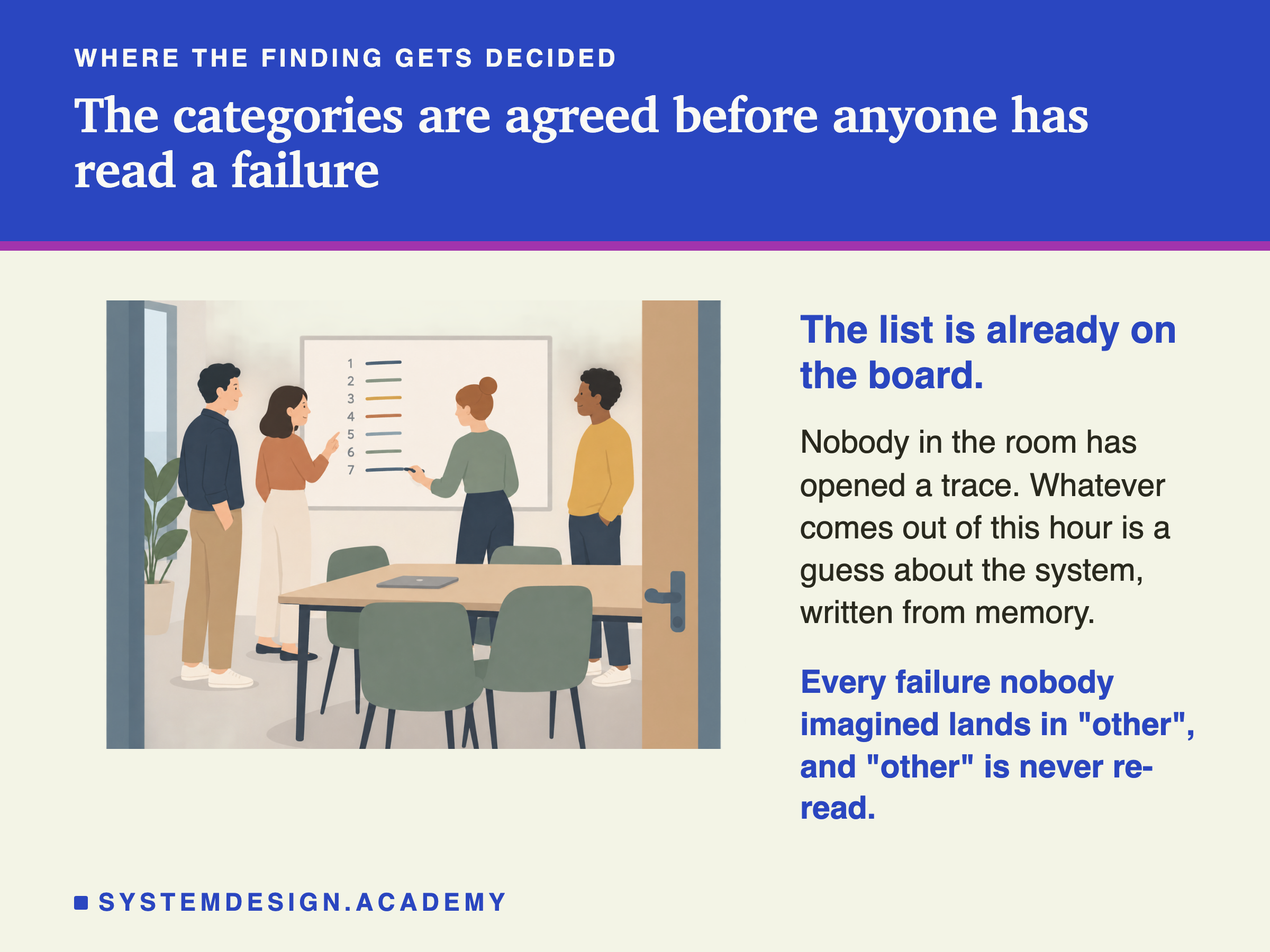
Seven items on the board and nobody has opened a trace. Whatever list comes out of that hour is a guess about your system, written by people reasoning from memory. Every trace that does not fit lands in "other". And "other" is where new failure kinds are never looked at again, because nobody re-reads a bucket whose name means "did not match".
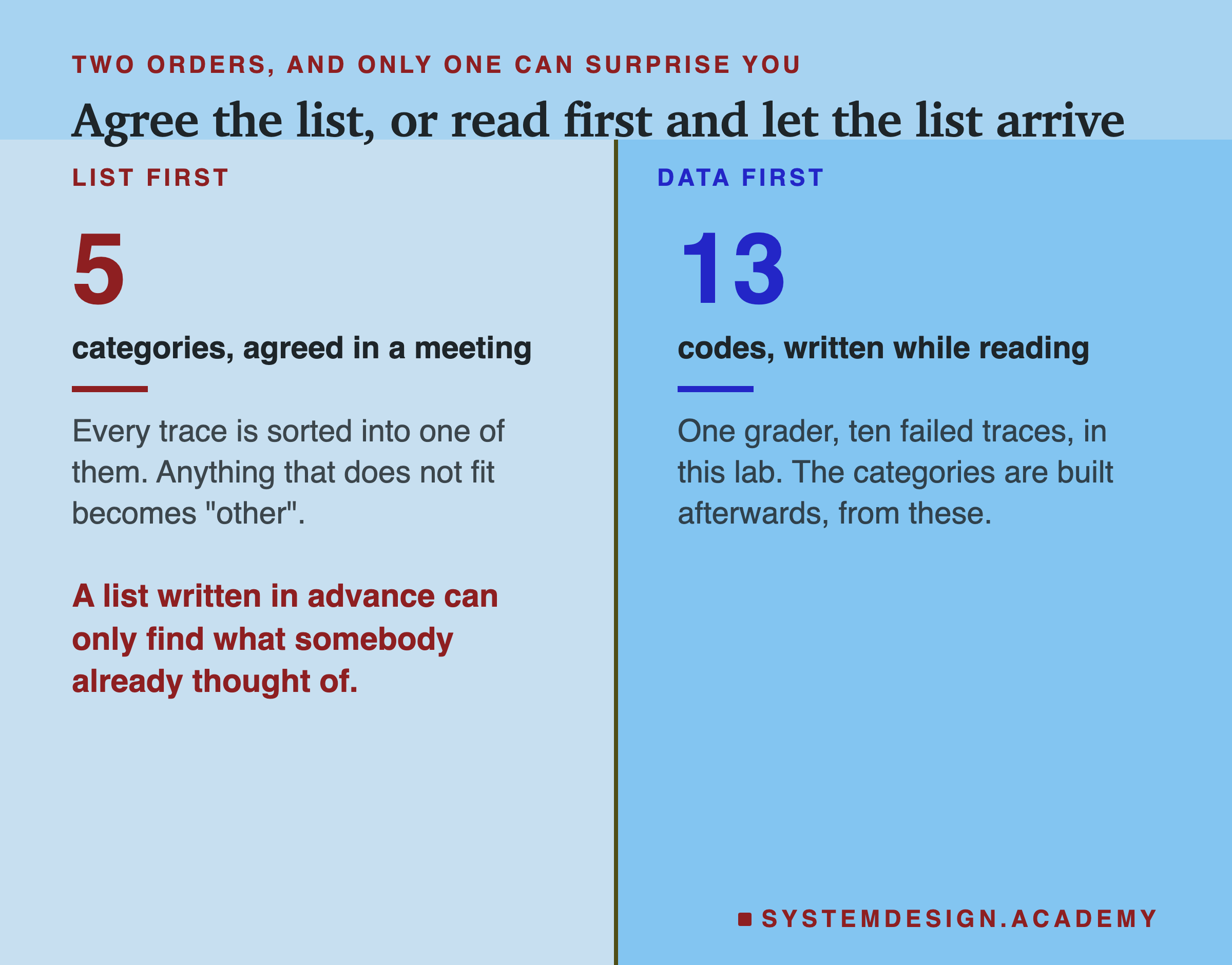
Five against thirteen is the whole argument in two numbers. The five are a guess made in advance and the thirteen are what one grader actually needed to describe ten failures. Four of the thirteen would have had nowhere to go on the left-hand side.
Open coding is the other order. You read failures and write a short description of each one in whatever words come to mind. No list. No dropdown. No consistency requirement.
Then, and only then, you build the categories from what you wrote. That is the next lesson. This one is about doing the messy part well, because the messy part is where the information is.