Spend The Same Fetch On A Better Guess
The previous lesson settled the budget: one prefetch per navigation, at low priority, in a pool that yields. Everything beyond that cost more than it returned. This lesson is about the only remaining lever, which is where that single fetch goes.
The proposal is to stop using a rule and start using the navigation log.
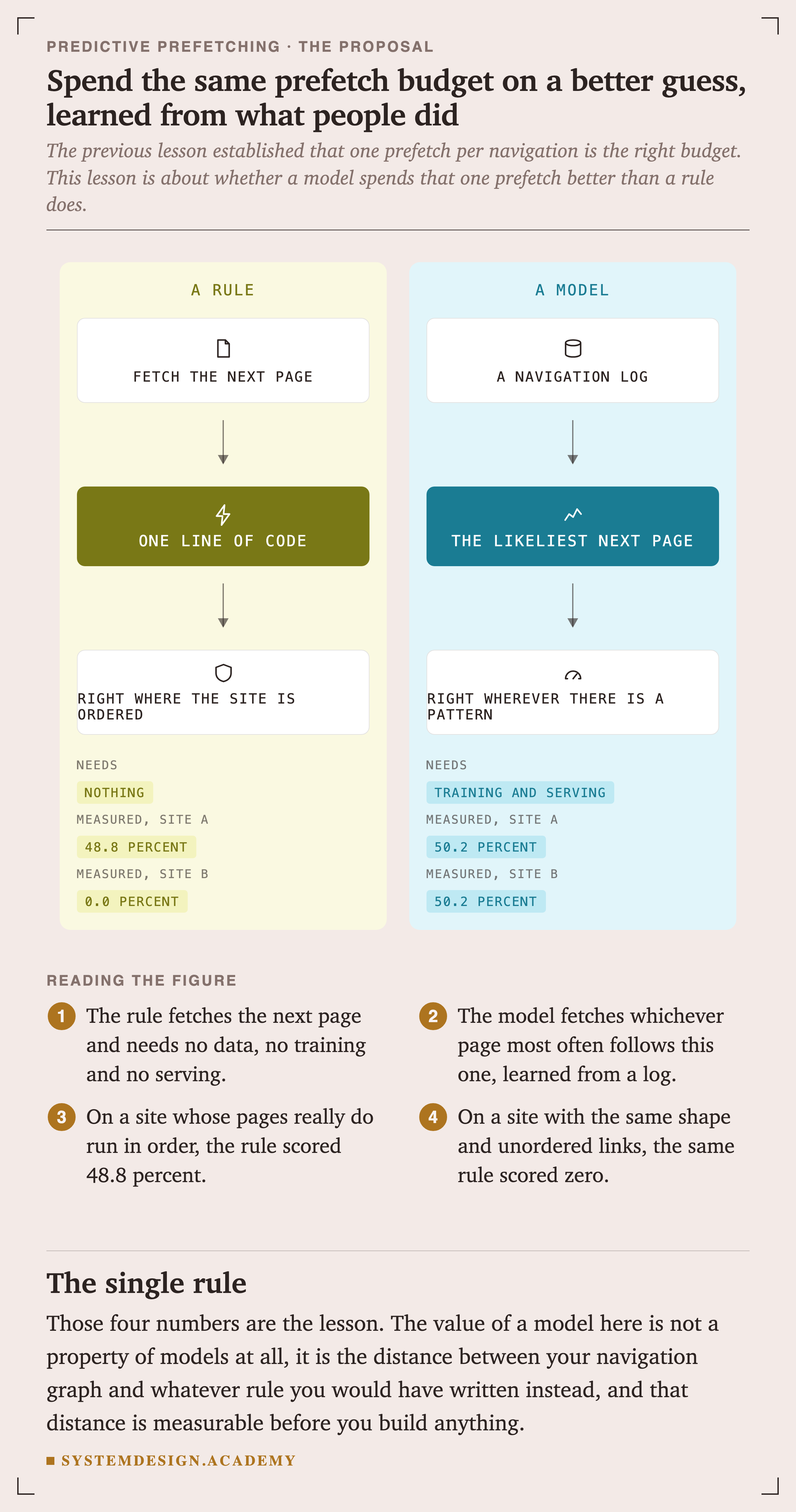
Those four numbers are the lesson. What a model is worth here has little to do with models, and everything to do with the distance between your navigation graph and whatever rule you would have written instead.
The Control That Was Not A Control
The measurement is a four hundred page site where twelve pages are hubs with many equal exits and everything else is a step in something with one dominant successor. Sixty thousand sessions to train on, twenty thousand held out to score against, and four policies compared.
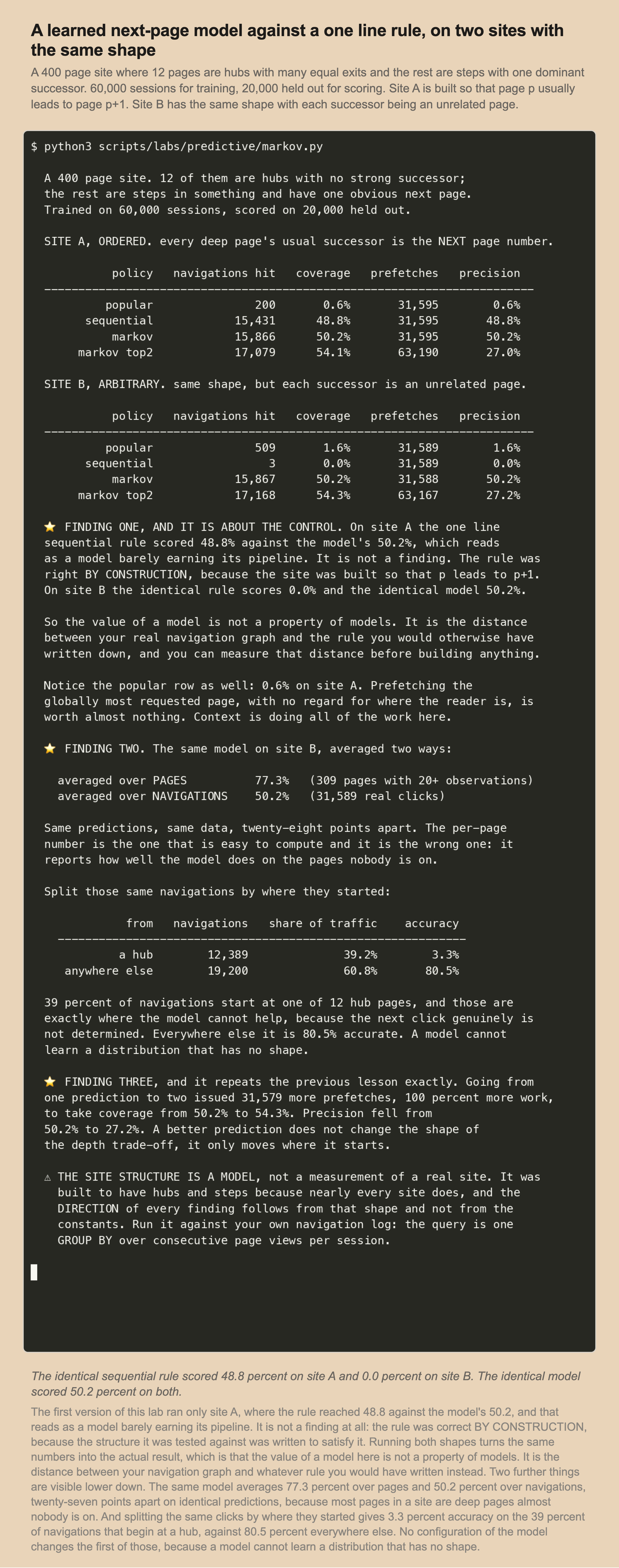
The first version of this lab ran only site A, where the rule reached 48.8 percent against the model's 50.2, and that reads as a model barely earning its pipeline.
That was never a finding. Site A was built so that page p usually leads to page p plus one, so the sequential rule was correct by construction: the structure it was tested against had been written to satisfy it. Running the second shape turns the same numbers into an actual result.
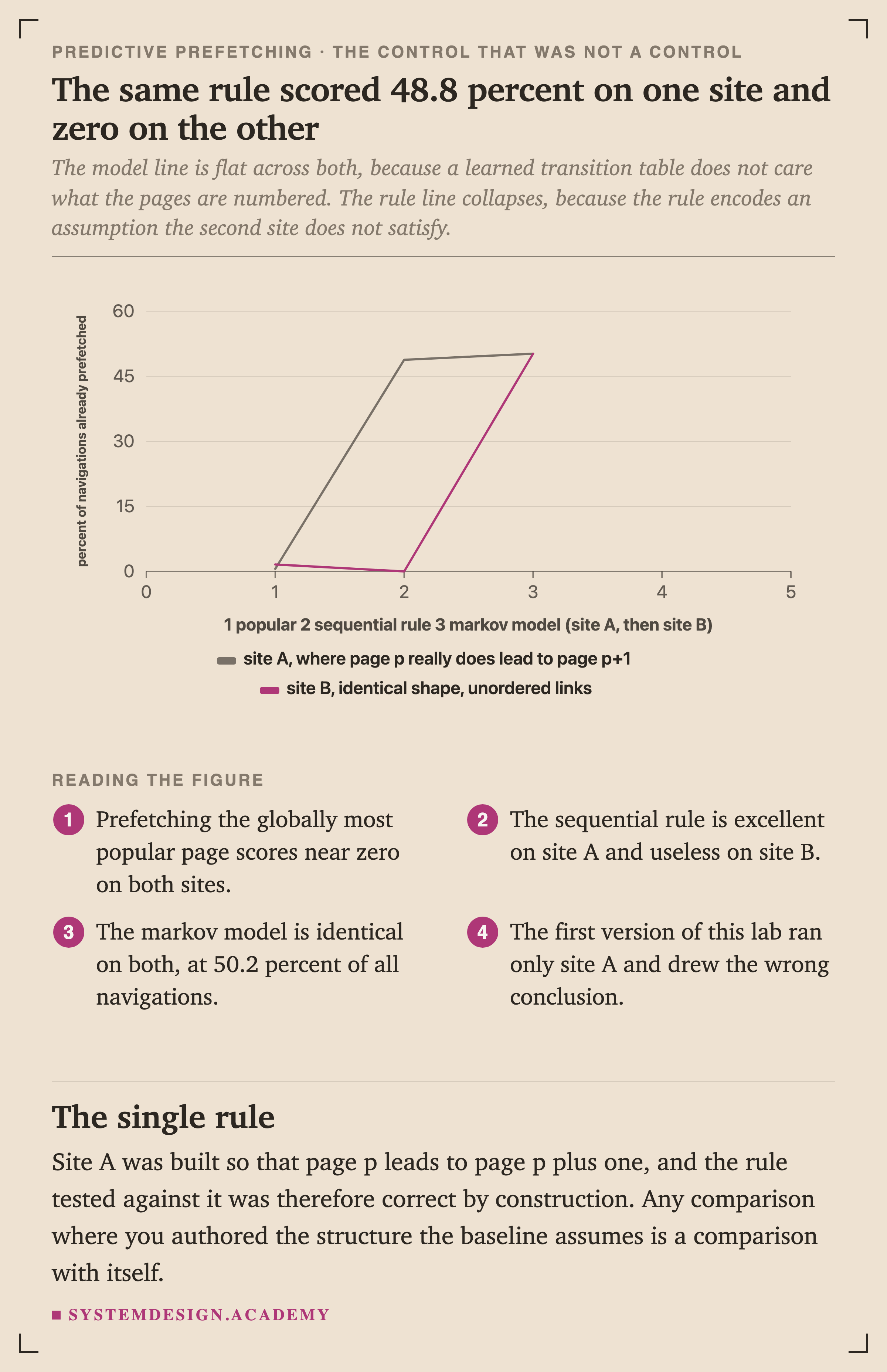
A learned transition table does not care what the pages are numbered. The rule encodes an assumption, and the second site does not satisfy it.
The general form of that mistake is worth keeping. Whenever a baseline performs suspiciously well, check whether the world it is being tested in was built by whoever wrote the baseline.
The popular row is also worth a glance. Prefetching the globally most requested page, with no regard for where the reader currently is, scored between half a percent and one and a half. Context is doing all of the work here.