The One Prediction Worth Making
The previous lesson took warming apart. A warming job predicts what a whole population will want, hours before they want it, from data that is already going stale. Prefetching is the same idea with the reach cut down to almost nothing, and that changes everything about it.
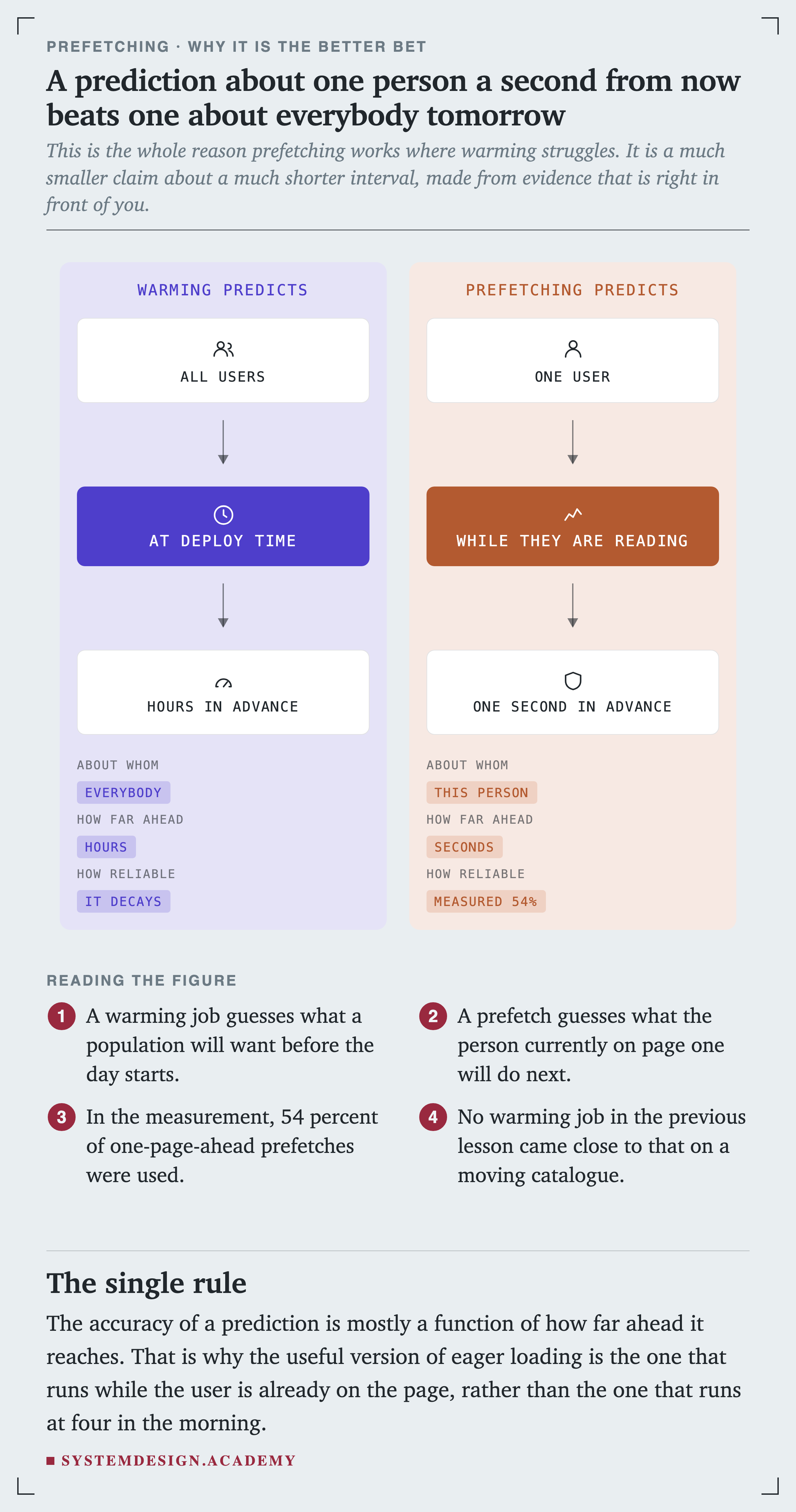
The accuracy of a prediction is mostly a function of how far ahead it reaches. Prefetching makes a much smaller claim about a much shorter interval, from evidence that is right in front of you.
That accuracy is real and it is measured below. What follows is the part that is usually left out, which is what the prefetches cost while they are being right.
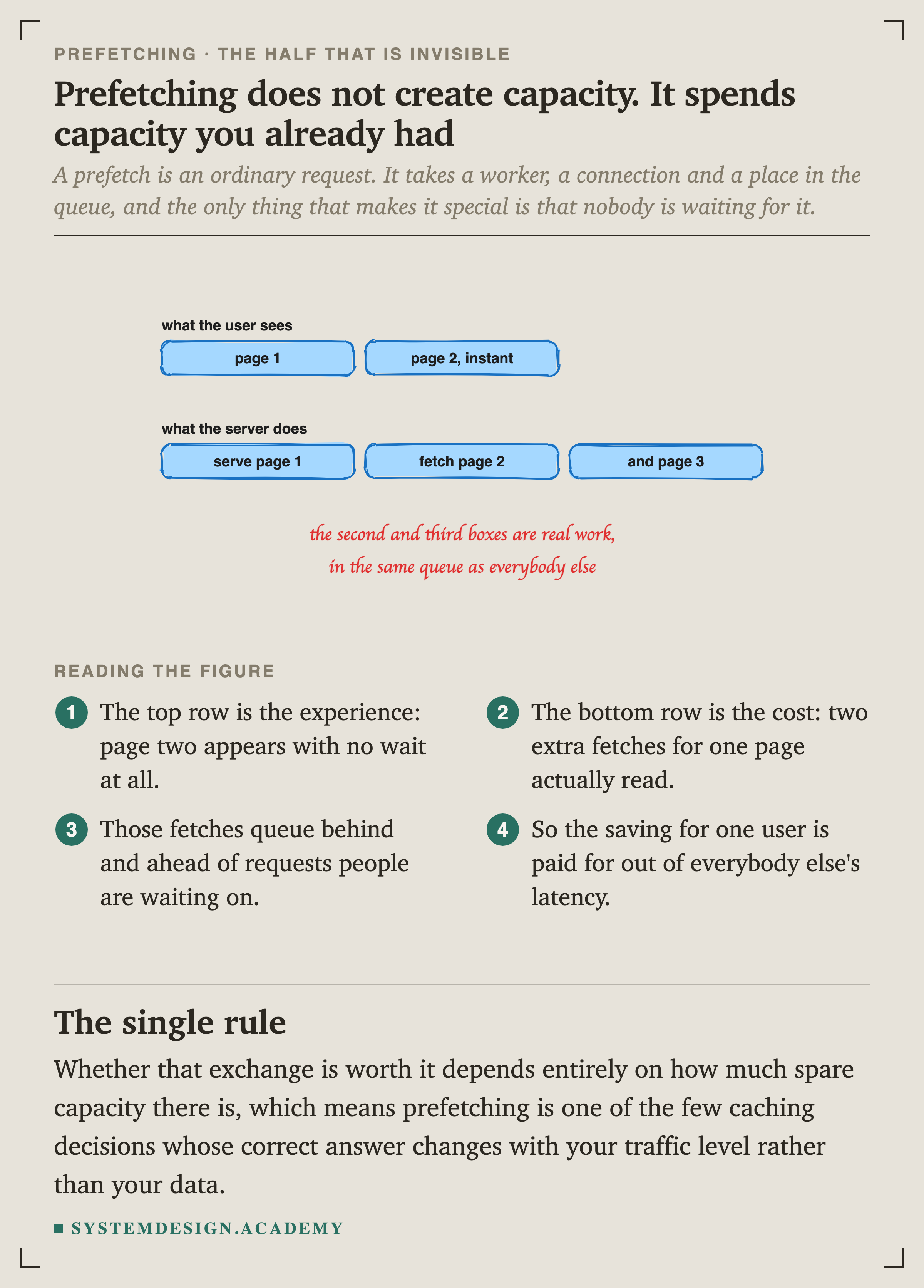
A prefetch is an ordinary request. It takes a worker, a connection and a place in the queue, and the only thing that makes it special is that nobody is waiting for it.
What Was Measured
To find out what that exchange rate actually is, the whole thing has to be simulated as a queue and not as a cache, because the cost lands on other people's requests and not on the one being prefetched.
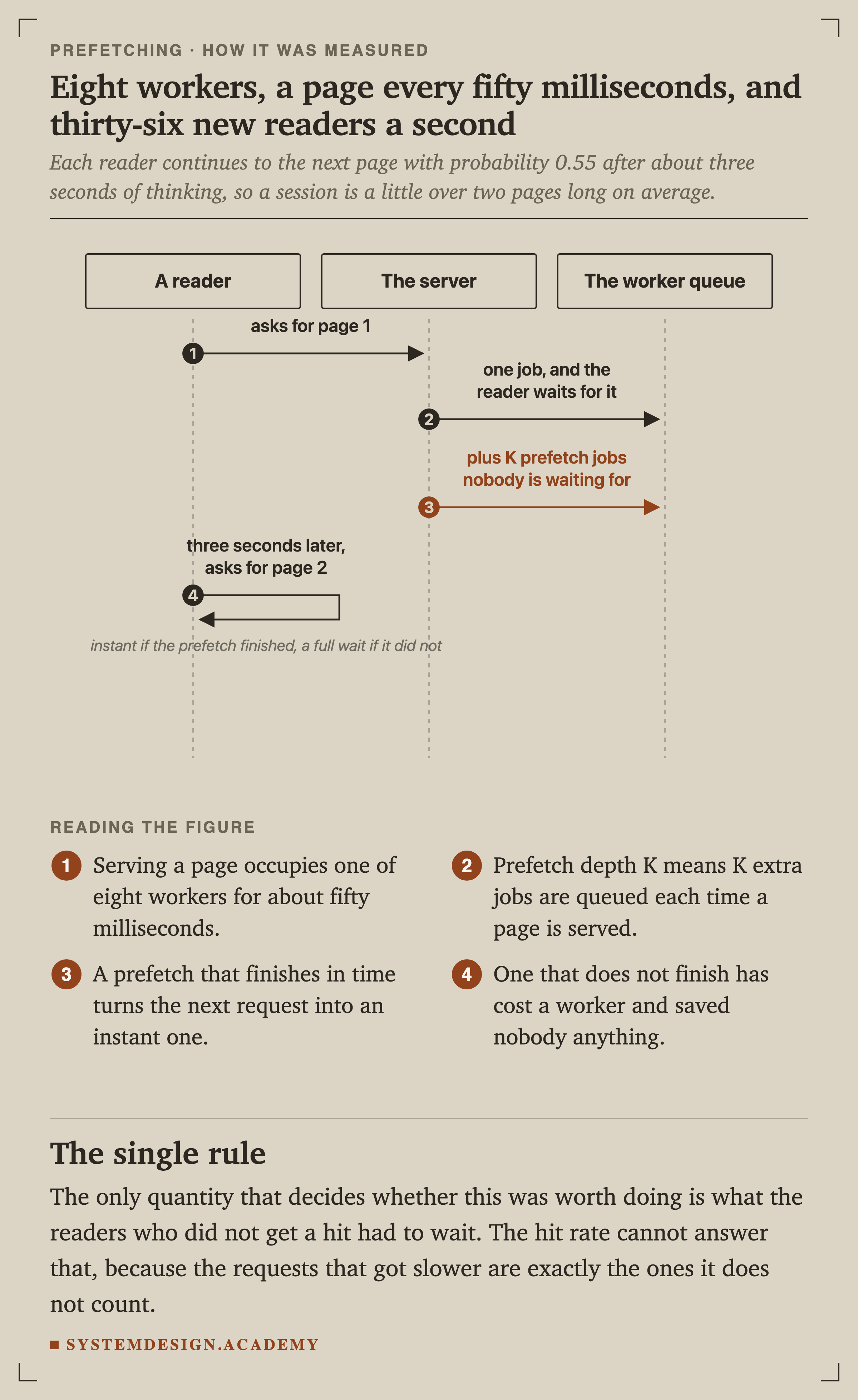
Each reader continues to the next page with probability 0.55 after about three seconds of thinking, so a session runs a little over two pages on average.
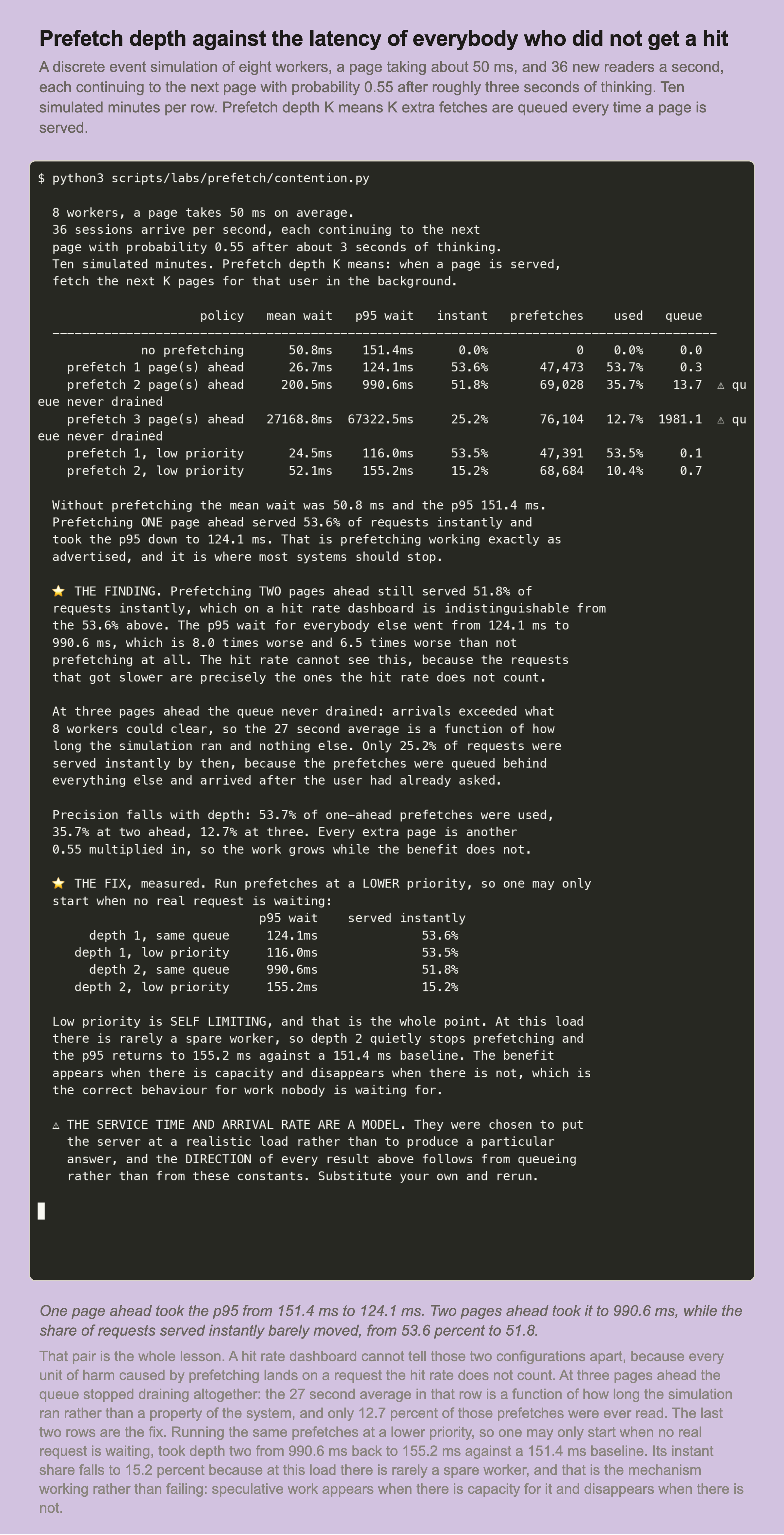
The only quantity that decides whether prefetching was worth doing is what the readers who did not get a hit had to wait. The hit rate cannot answer that, because the requests that got slower are exactly the ones it does not count.