What Microsoft-Decision-1 is, in plain words
“It is not intended for open-ended generation, conversation, translation, or summarization.”
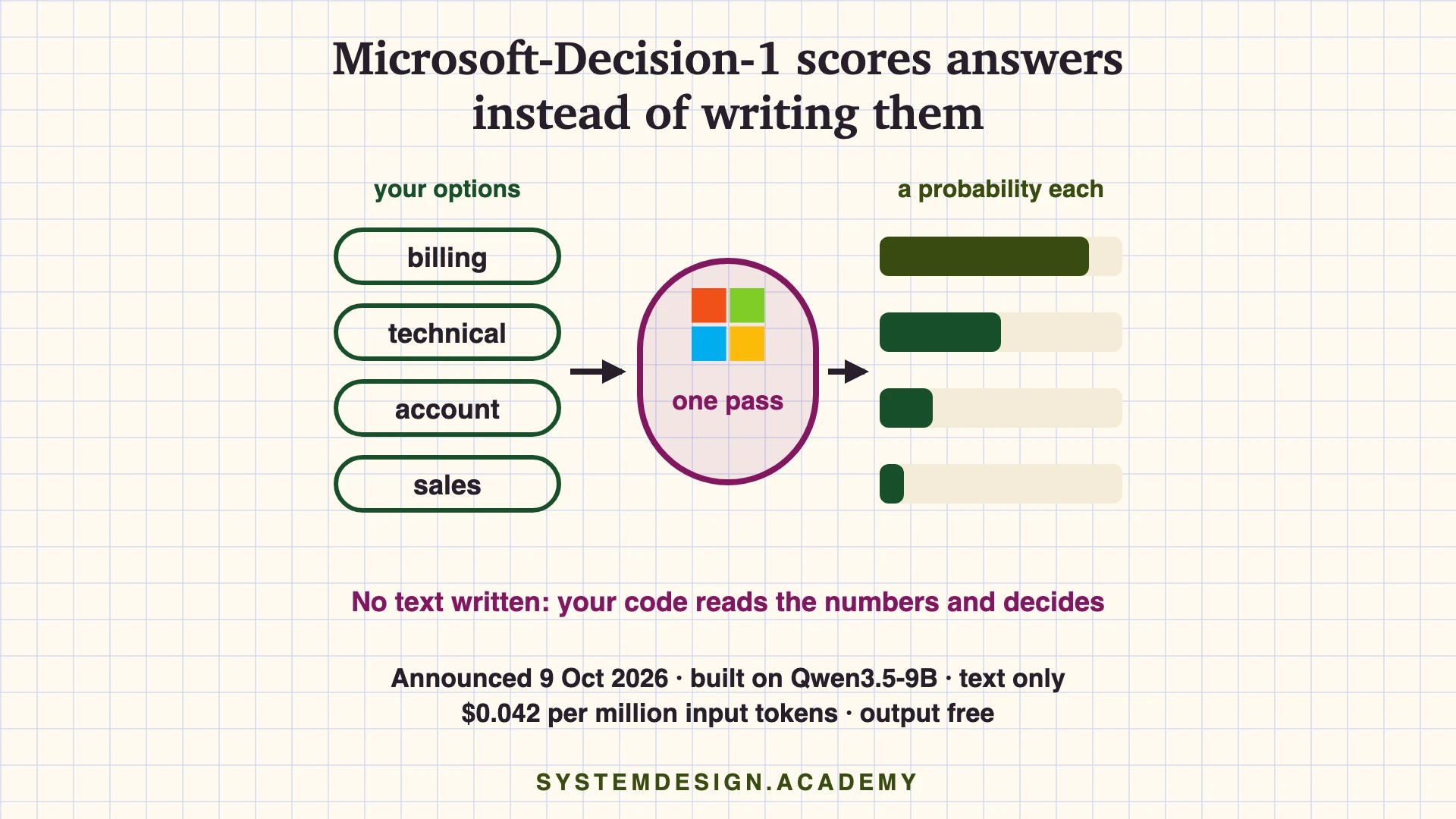
Most AI models answer by writing. Ask a chat model which team should handle a support ticket and it writes a word or a sentence. Your code then has to read that text, hope it is one of the team names, and guess how sure the model was.
A decision model answers like a multiple choice exam. You send three things: the context (the ticket), one question, and the fixed list of answers you allow. It reads them once and returns a probability for each answer, numbers from 0 to 1 that add up to 1. It never writes a sentence, so there is nothing to parse.
Microsoft built Decision-1 by taking Qwen3.5-9B, an open model from Alibaba with about 9 billion parameters, and training it further for this one job. Microsoft's model card lists the jobs: routing requests, classifying, sorting work by urgency, checking whether an answer is supported by the source text it was given, grading another AI's output, and checking a proposed agent action before your app lets it run.
It is the third hosted decision API in under a month. TypeSafe released Jev on 15 September and OpenAI opened its Decisions API on 6 October. Microsoft says it will later move Decision-1 onto other base models, including Microsoft's own MAI (Microsoft AI) models and OpenAI's.
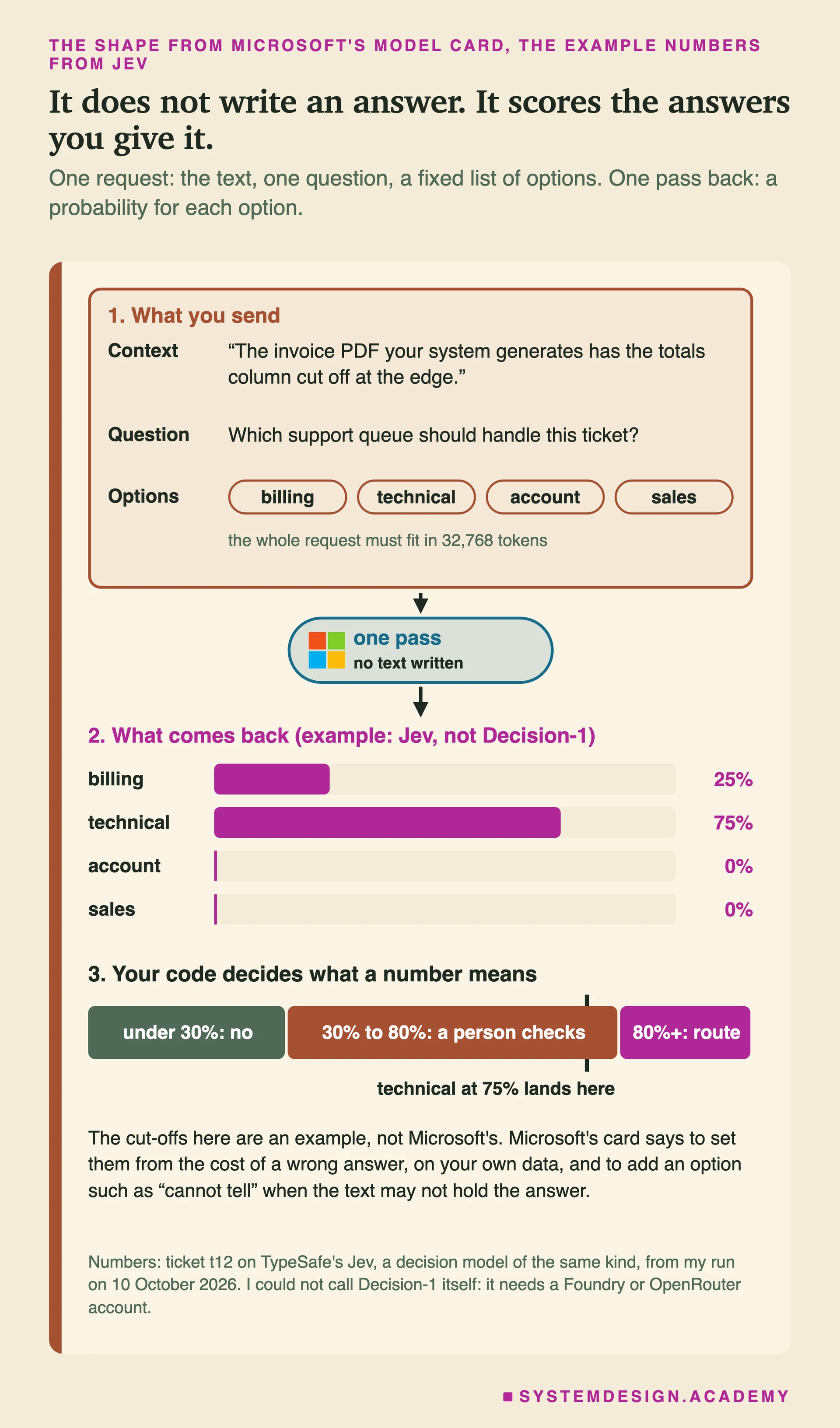
The ticket is about an invoice, but the problem is a layout bug, so a good scorer should be unsure, and it was: 75% technical, 25% billing. With an example cut-off at 80%, this one goes to a person. That middle band is where a decision model is most useful.