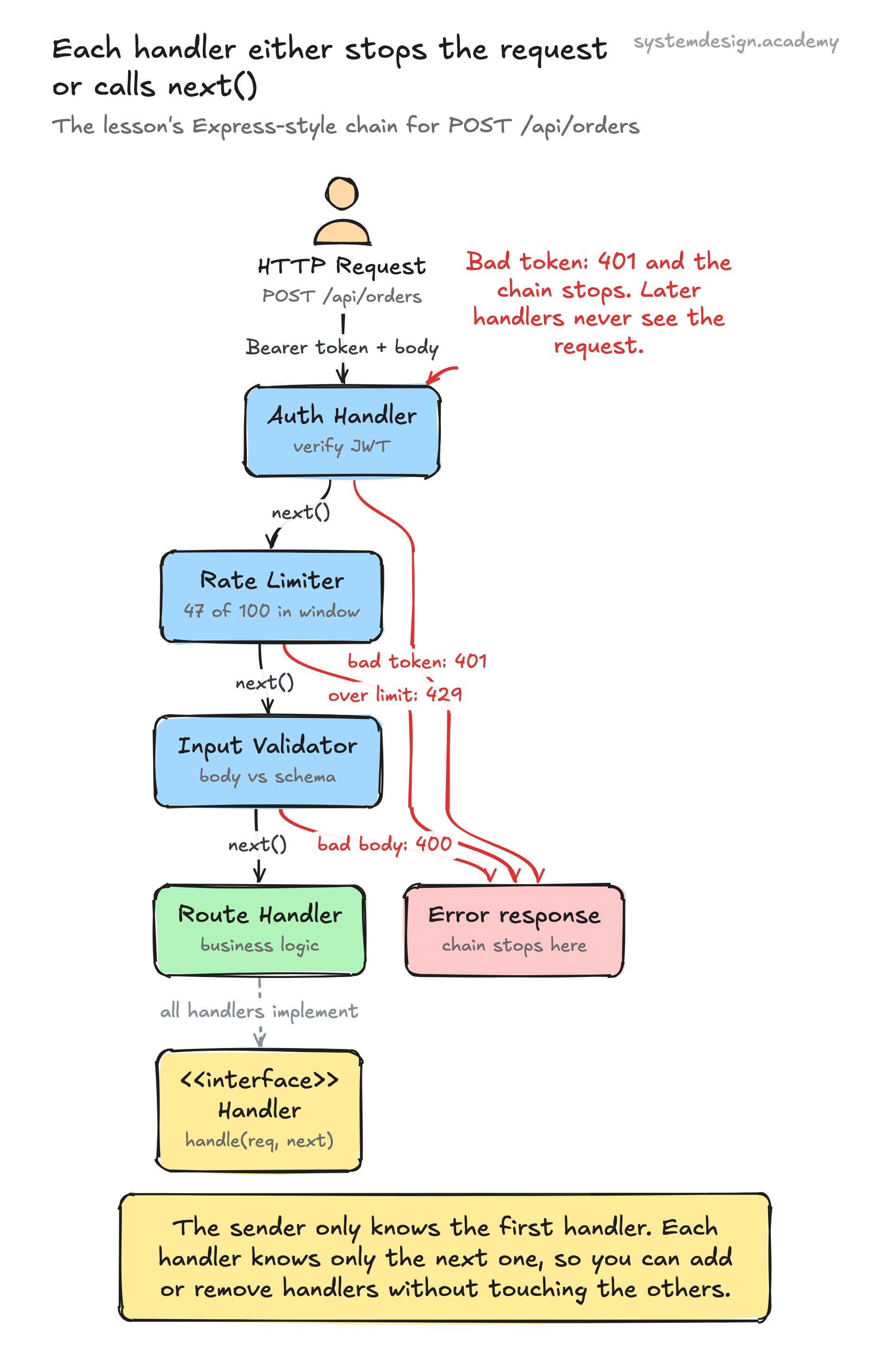
The chain of responsibility is one of the 23 design patterns in the Gang of Four book, from 1994. It is a behavioral pattern, which means it is about how objects share work and talk to each other. Its goal is to separate the sender of a request from the object that finally handles it. It does this by giving more than one object a chance to handle the request.
The objects that can act are called handlers. They are linked in an ordered line, the chain. A request enters at the first handler. That handler looks at it and decides. If it can deal with the request, it does. If not, it passes the request to the next handler. If no handler deals with it, a default action runs, or an error is returned.
The lesson opens with a phone call to a bank. An automated menu tries first. If it cannot help, a Level 1 agent takes the call. Then Level 2. For a really hard case, a manager. Each level gets a turn, nobody skips a level, and the call stops at the first level that can solve it. For the wider family of patterns, see design patterns.