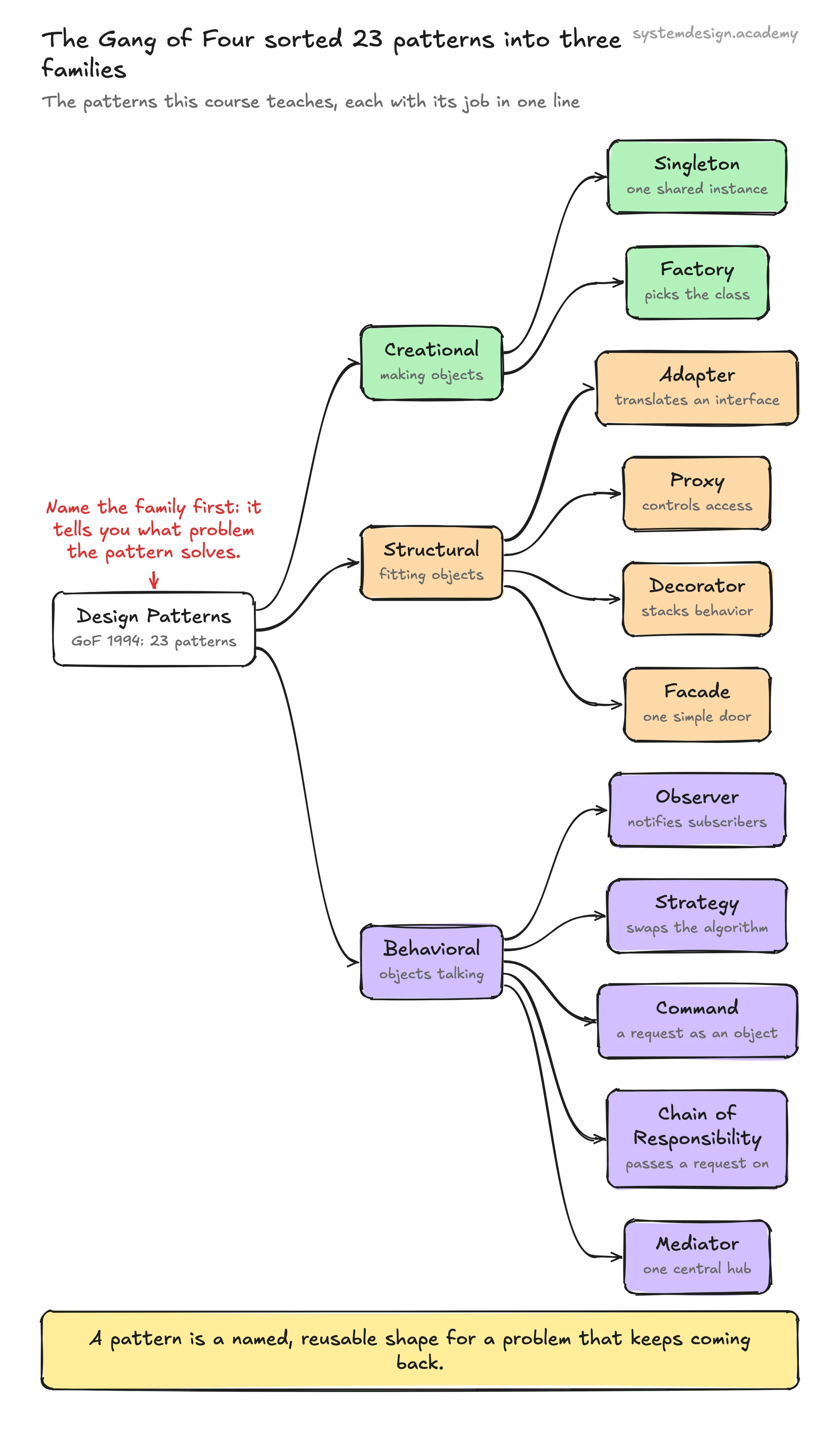
A pattern adds a layer of indirection, and every layer costs some readability. The lessons repeat one warning: add a pattern only when the problem forces it.
The Factory lesson's example is a UserServiceFactory that only ever returns UserService, with no test double and no second implementation planned. It adds a layer for zero benefit. The lesson calls that ceremony, not clean architecture.
The Singleton lesson goes further. Many engineers now treat the classic singleton as an anti-pattern, meaning a common answer that causes more problems than it solves. It hides what a class depends on, keeps state between tests, and ties code to one class. Most codebases get the same one-instance result from a dependency injection container instead. Dependency injection means a class receives what it needs through its constructor, and a framework builds and passes those objects in.
So learn the patterns as names for problems you already have, not as a checklist to apply. Start from the simplest code. Reach for a pattern when you see its problem appear.
The Singleton lesson is the simplest of the eleven and the best place to start, because it also shows how a pattern can go wrong. The Singleton Pattern lesson is the next step.