Yes, but the work is changing. A newer approach lets a large language model make the first pass. It suggests a label for each item, and a person confirms or corrects it. Checking a suggestion is usually faster than labelling from nothing. One 2023 study in PNAS found ChatGPT beat crowd workers by about 25 points on tweets and news articles, at under $0.003 a label. That is one study, on text, so treat it as one data point.
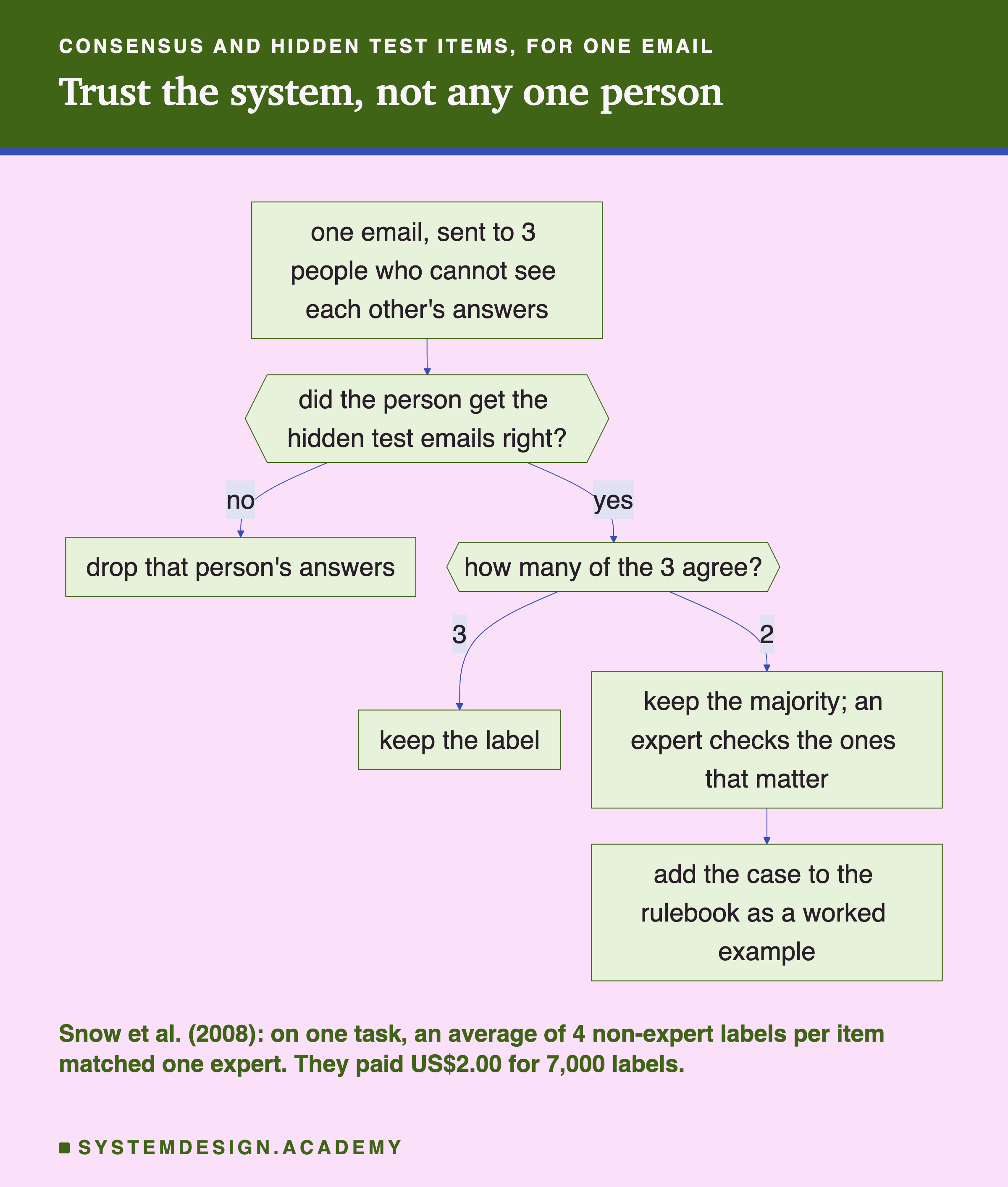
The risk is that a person only clicks accept. Then the labels are the model's labels with a person's name on them, and the model's blind spots go straight into your training data. Keep hidden test items under the checking step too.
The demand for human labels has not gone away. Labels also need refreshing when the meaning of the right answer changes, for example when a new kind of fraud appears. In June 2025, Scale AI announced an investment from Meta that it said values the company at over $29 billion.
The Data Labeling and Annotation lesson has the full lab, its code, a rule playground in the browser and a step-by-step plan for spending a labelling budget. It is the best next step if you have to decide how your own data gets labelled.