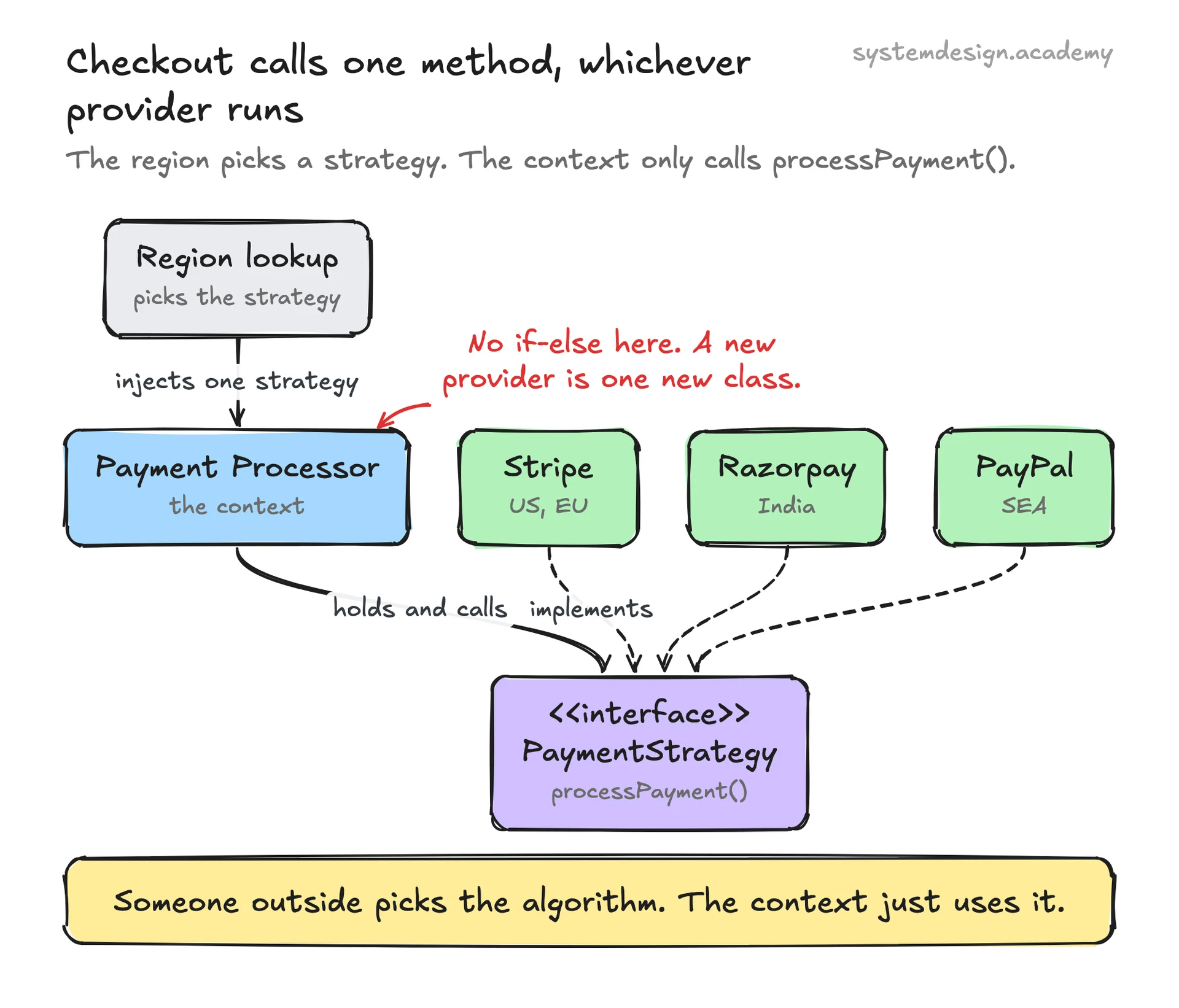
A design pattern is a named, reusable answer to a problem that keeps coming up in code. The classic list of 23 patterns comes from the 1994 book by Gamma, Helm, Johnson and Vlissides, often called the Gang of Four. Strategy is one of them. It belongs to the behavioral group, the patterns about how objects share work.
The book states the intent of Strategy like this: define a family of algorithms, encapsulate each one, and make them interchangeable. Strategy lets the algorithm vary independently from the clients that use it.
Here, an algorithm just means one way of doing a task. Encapsulate means to wrap it in its own class, so its details stay inside. Interchangeable means any one can stand in for another, because they all have the same method.
So the pattern has three roles. The context is the object that needs the work done. The strategy interface names the one method every version must have. The concrete strategies are the versions, one class each. The context holds a reference to the interface and calls it. It never knows which concrete class is behind it.