What MCP is, and why it exists
“MCP (Model Context Protocol) is an open-source standard for connecting AI applications to external systems.”
An AI app, such as Claude or ChatGPT, is most useful when it can reach your things: your files, your calendar, your company's database, your GitHub issues. Anthropic's launch post put the problem simply: before MCP, "every new data source requires its own custom implementation". Each app needed its own connecting code for each tool.
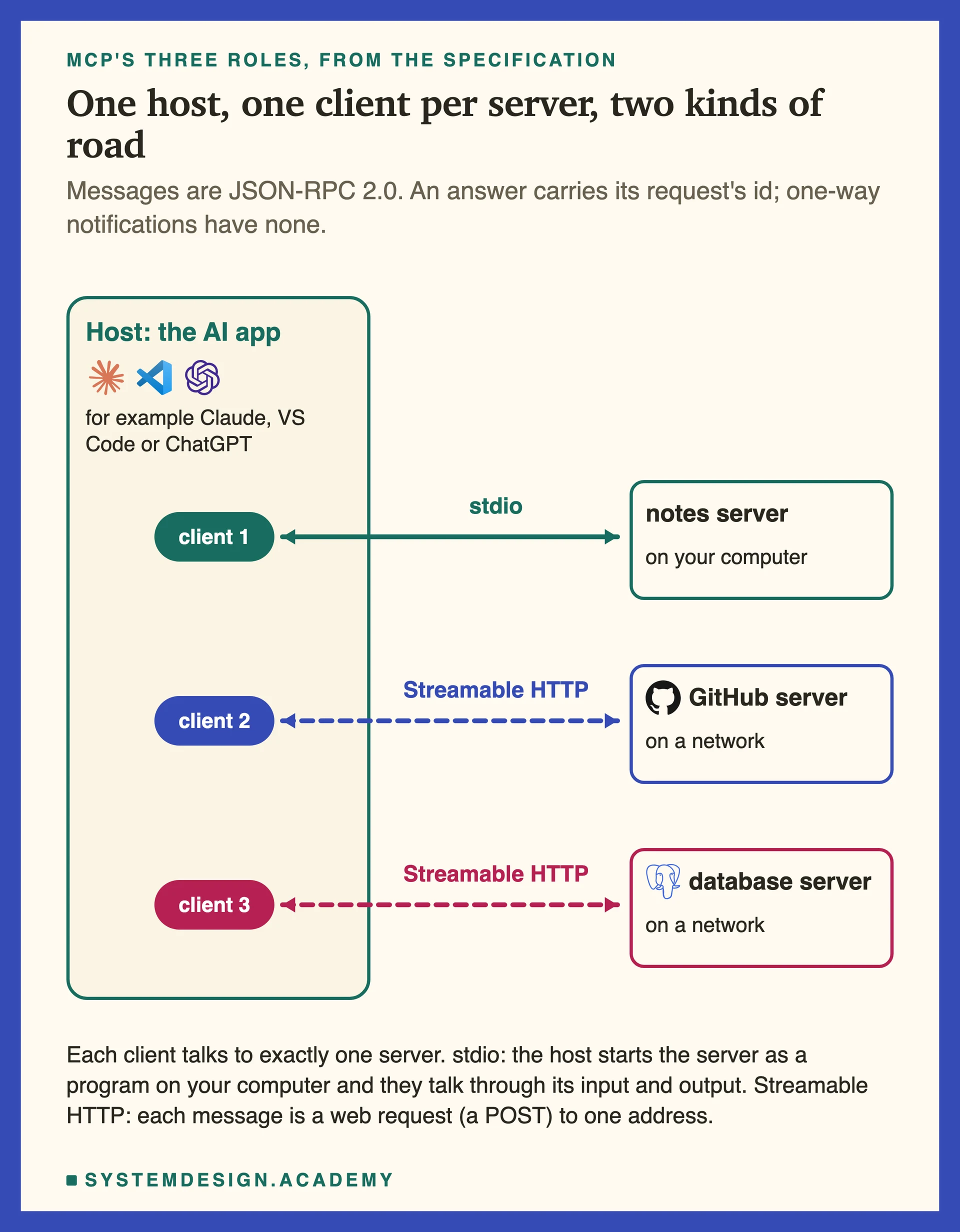
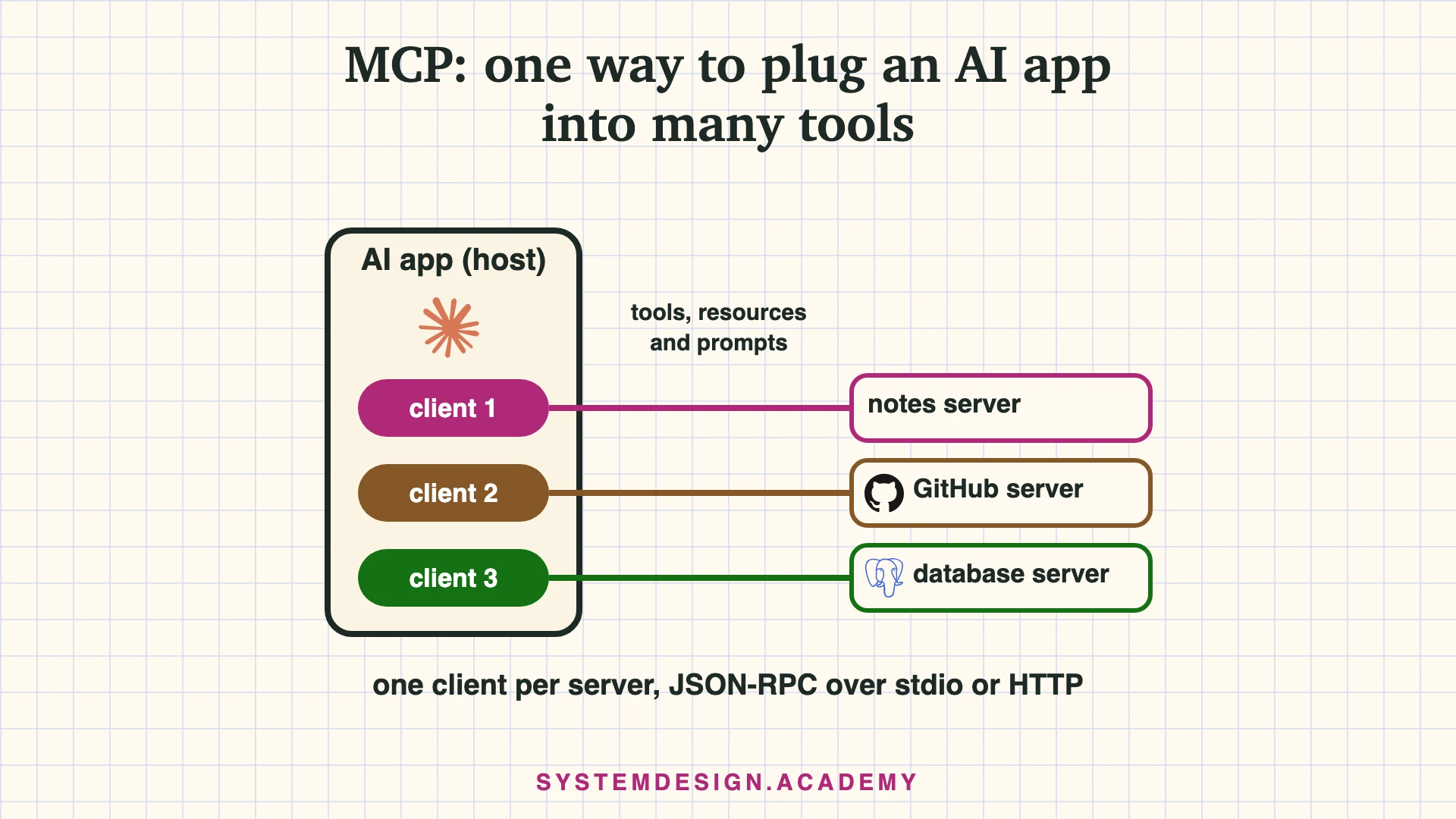
MCP fixes that with one shared set of rules, called a protocol. A protocol is an agreement about which messages two programs send and what each message means. USB-C is one plug shape that fits many devices; MCP is one way of connecting that fits many tools. If a tool speaks MCP, every app that speaks MCP can use it. The official docs put it this way: "Think of MCP like a USB-C port for AI applications."
Anthropic open-sourced MCP on 25 November 2024. The first version came with ready-made servers for Google Drive, Slack, GitHub, Git, Postgres (a database) and Puppeteer (a tool that controls a web browser). On 9 December 2025 Anthropic gave MCP to the Agentic AI Foundation, a group inside the Linux Foundation, the non-profit that looks after Linux and other open software. Anthropic, Block (the payments company) and OpenAI started the foundation together. Its post says the Linux Foundation will not decide MCP's technical direction. MCP's own maintainers, the people who look after the code, still make those choices.
The MCP docs name Claude, ChatGPT, Visual Studio Code, Cursor (a code editor) and MCPJam as apps that support it, and the foundation post adds Gemini and Microsoft Copilot. I did not check which protocol version each of these apps speaks today.
Read next: Claude Code mods: what a plugin can reach