What EmbeddingGemma 2 is, in plain words
“EmbeddingGemma 2 brings robust capabilities directly to edge hardware.”
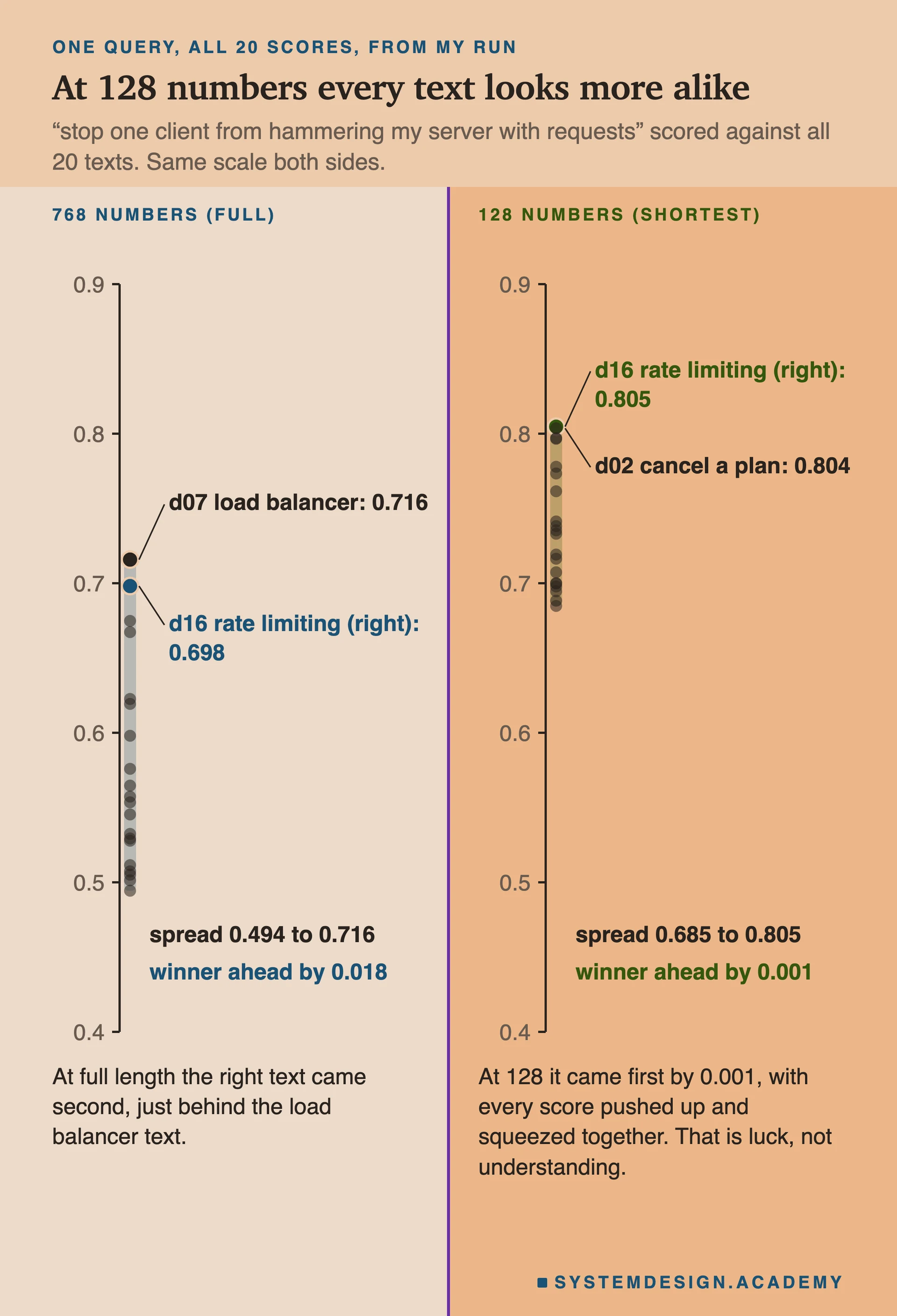
Computers cannot compare meanings directly. They can compare numbers. An embedding model is the translator: it reads a piece of text, or a picture, and writes down a list of numbers that captures what it is about. That list is called a vector or an embedding. Two things that mean similar things get lists that point in a similar direction, and the closeness is measured with cosine similarity, a score where 1 means pointing exactly the same way.
Why care? Because this is how search by meaning works. A keyword search for "why can't you make good tea at the top of Everest" finds nothing in a text about water boiling at a lower temperature on a mountain, because the words do not match. An embedding search finds it, because the meanings match. The same trick powers RAG (retrieval-augmented generation: look up the right documents first, then hand them to a chat model), recommendations, duplicate detection and grouping similar items.
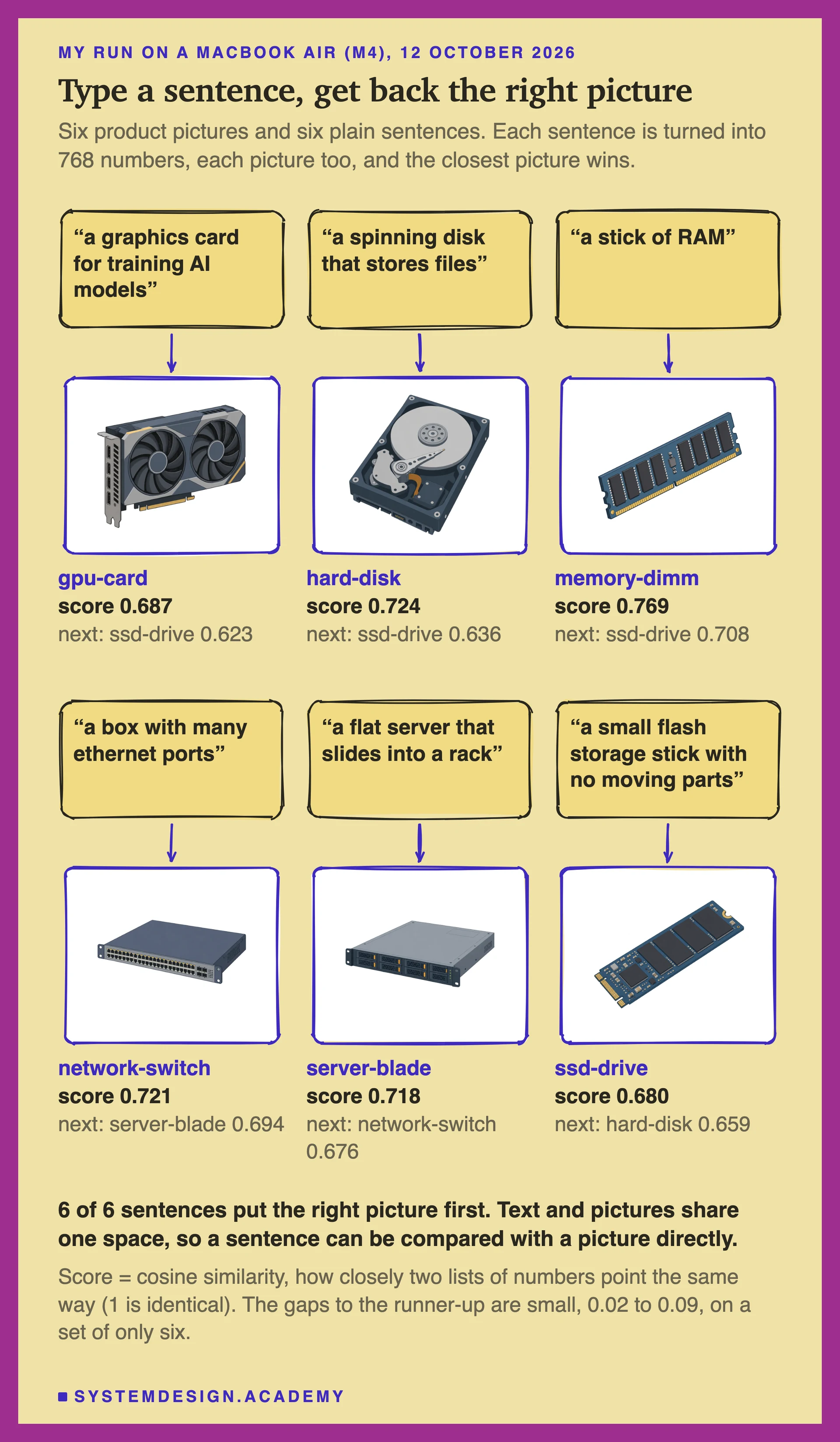
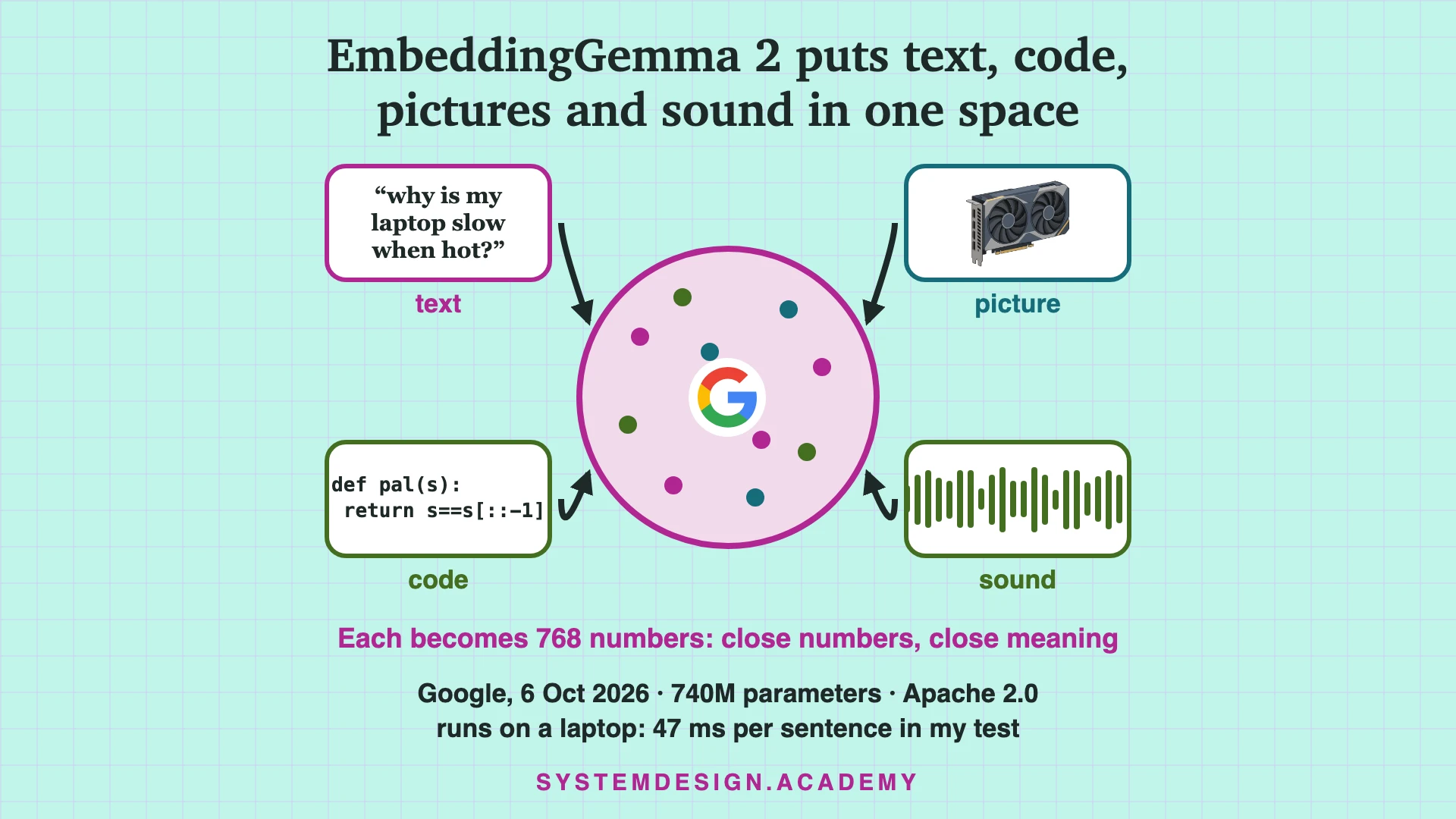
EmbeddingGemma 2 is Google DeepMind's second open embedding model in this family. The first, EmbeddingGemma, handled text only, and Google says it passed 20 million downloads. The new one puts text, code, images, video and audio into the same 768-number space, so a typed sentence can find a photo, a code snippet or a stretch of audio. Google built it on its Gemma 4 architecture and released it under Apache 2.0, a licence that lets anyone use it, change it and sell products built on it.
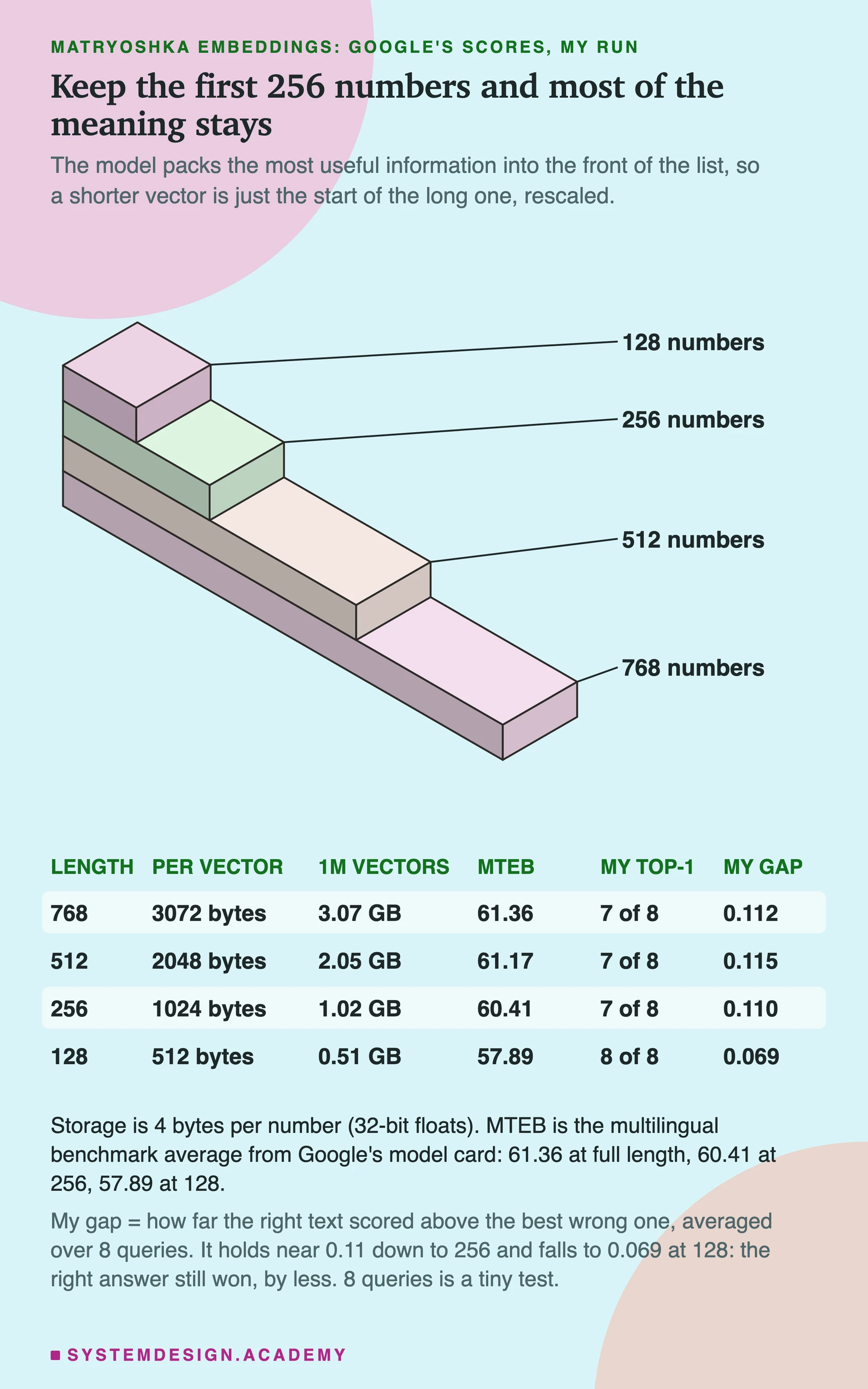
It is small on purpose. Google aims it at phones and laptops, so your data never has to leave the device to be searched. The model card describes it as a 270 million parameter text part (a 130 million parameter transformer plus a 140 million parameter embedder, the table that turns word pieces into numbers), with a 170 million parameter vision part and a 300 million parameter audio part you can leave unloaded if you do not need them.
Read next: What an embedding is, from the ground up