What JEV-35B is, in plain words
“JEV-35B is a decision model only: it does not chat or generate text.”
Most AI models answer by writing. Ask one which team should handle a support ticket and it writes a word, maybe a sentence. Your code then has to read that text, hope it matches one of your team names, and guess how sure the model was.
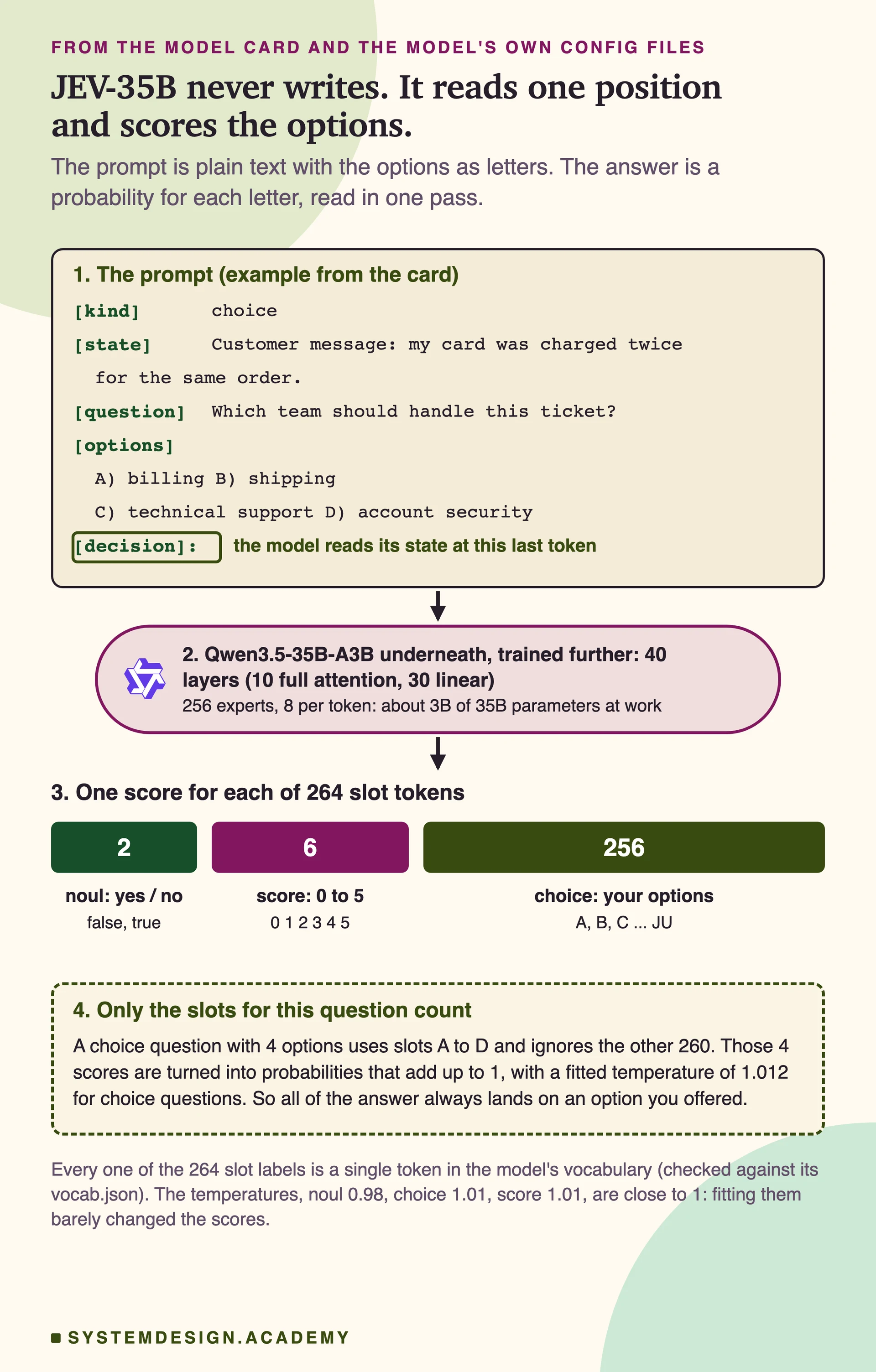
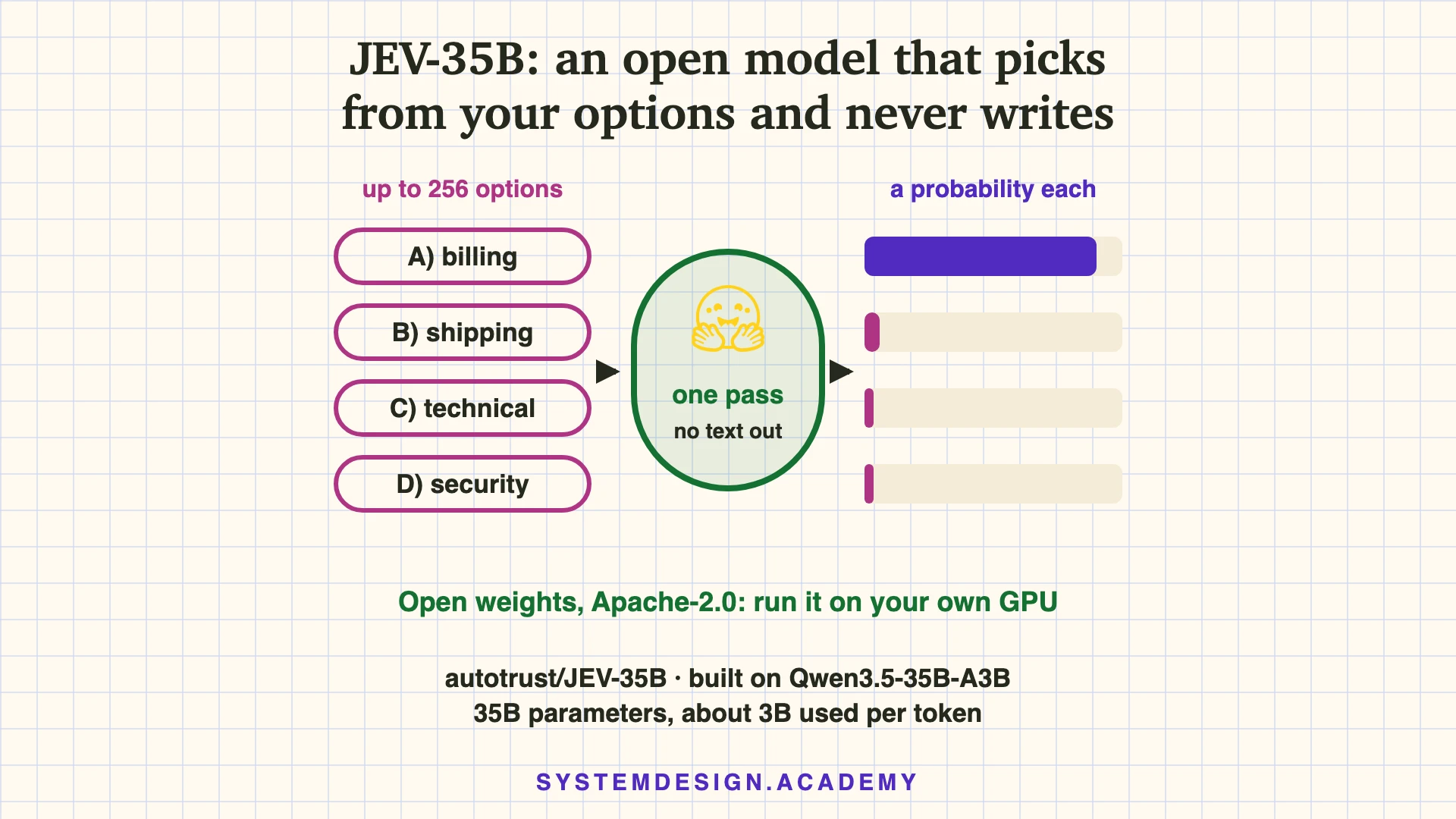
A decision model answers like a multiple choice exam. You send the situation (the state), one question, and the list of answers you allow. It reads them once and returns a probability for each answer, numbers between 0 and 1 that add up to 1. No text comes back, so nothing needs parsing, and the probability is something your code can act on: route the ticket automatically above a cut-off, send it to a person below.
JEV-35B does this for three kinds of question. The card calls them noul (yes or no), score (a whole number from 0 to 5) and choice (2 to 256 options of your own). The jobs it is aimed at are the boring, high-volume ones: routing, classifying, ranking search results, checking whether an answer is supported by its sources, and picking an agent's next step. AutoTrust runs a public news ranking demo built on its decision models, where every ranking is one of these decisions.
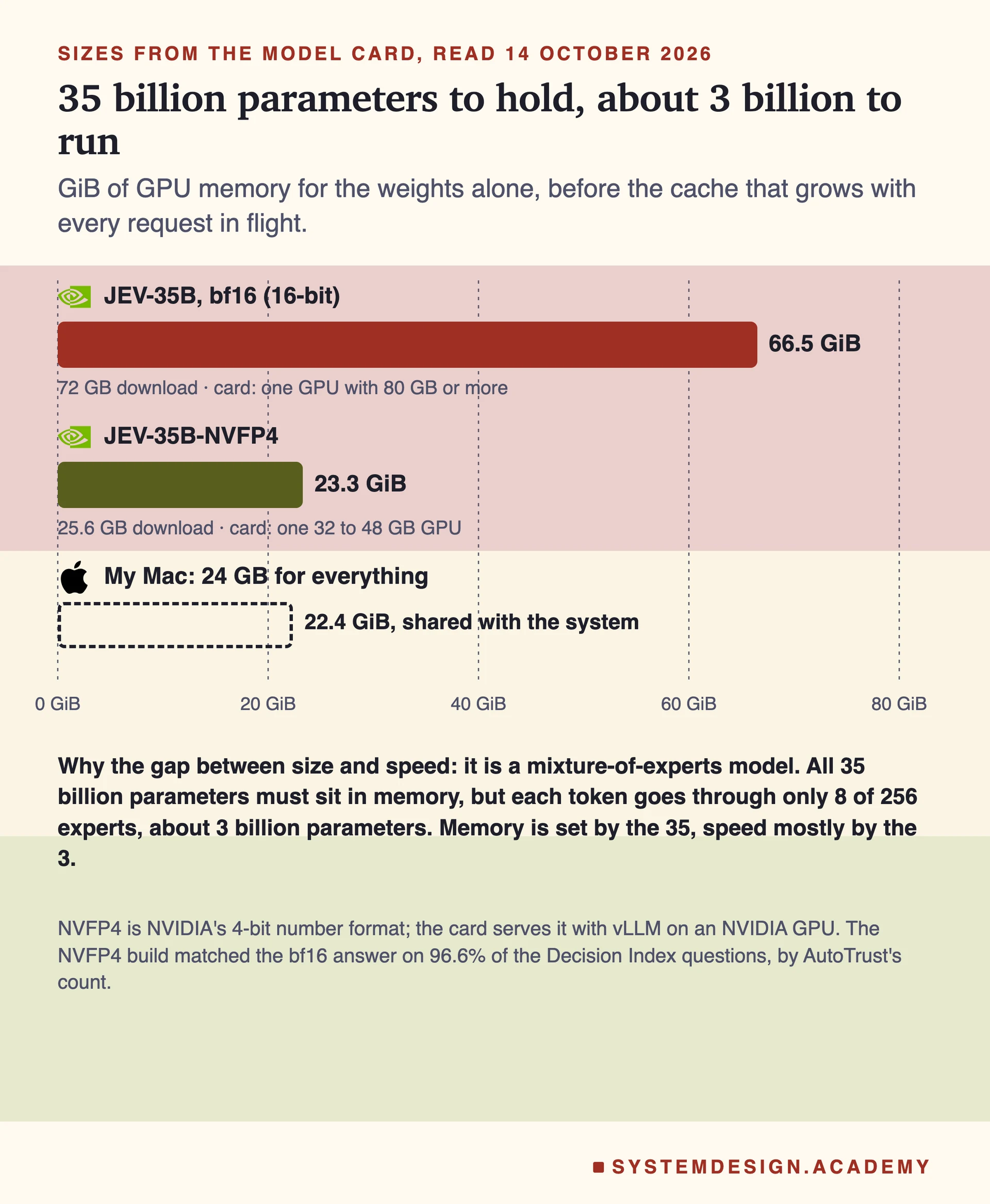
The difference from the decision models we have covered before is where it runs. TypeSafe's Jev, OpenAI's Decisions API and Microsoft-Decision-1 are hosted APIs (see our pages on OpenAI's Decisions API and Microsoft-Decision-1): you send your data to them and pay per token. JEV-35B is a set of files you download and run on your own GPU, which matters when the text you are classifying cannot leave your network.