Intel D270 specs, price and release date
“Built on Intel's latest Xe3P architecture, the GPU combines up to 480 GB of LPDDR5X memory, 1.5 TB/s of memory bandwidth and 1.3 petaflops of FP8 compute within a 350-watt power envelope.”
Intel used the Open Compute Project (OCP) Global Summit in San Jose, which runs from 12 to 15 October 2026, to give the full details of its inference GPU code-named Crescent Island. It is now the Intel GPU D-series, and Intel's product page labels the card "Intel GPU D270 | Inference-Optimized Data Center GPU". The newsroom post itself only says D-series.
It is built only for inference. A GPU for training has to do huge amounts of maths very fast. A GPU for inference, especially for large language models, spends much of its time waiting for numbers to arrive from memory, so Intel built this one around memory. The product page says the die area (the space on the silicon chip) was "reallocated from graphics and ray-tracing pipelines to Xe3P cores and matrix compute". Xe3P is Intel's newest GPU design; the card has 32 Xe3P cores and 256 XMX matrix engines, the parts that do the multiplications a model needs.
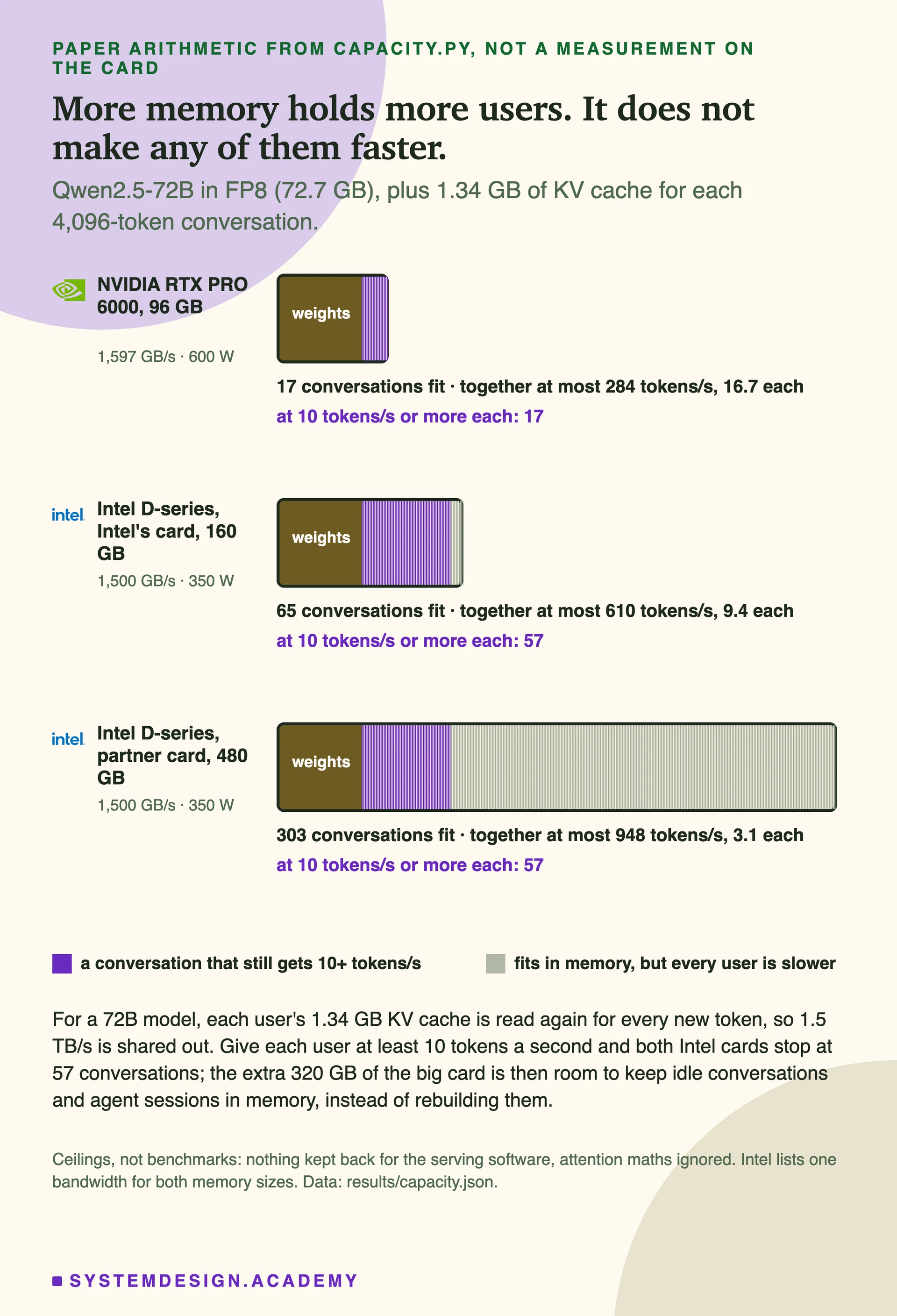
The headline numbers, from Intel's newsroom post: up to 480 GB of LPDDR5X memory, 1.5 TB/s of memory bandwidth and 1.3 petaflops of FP8 compute (FP8 means each number is stored in 8 bits) within a 350-watt power envelope. A footnote adds: "Intel branded PCIe card has 160GB LPDDR5x", and the design lets partners build their own cards "with flexible options up to 480GB memory".
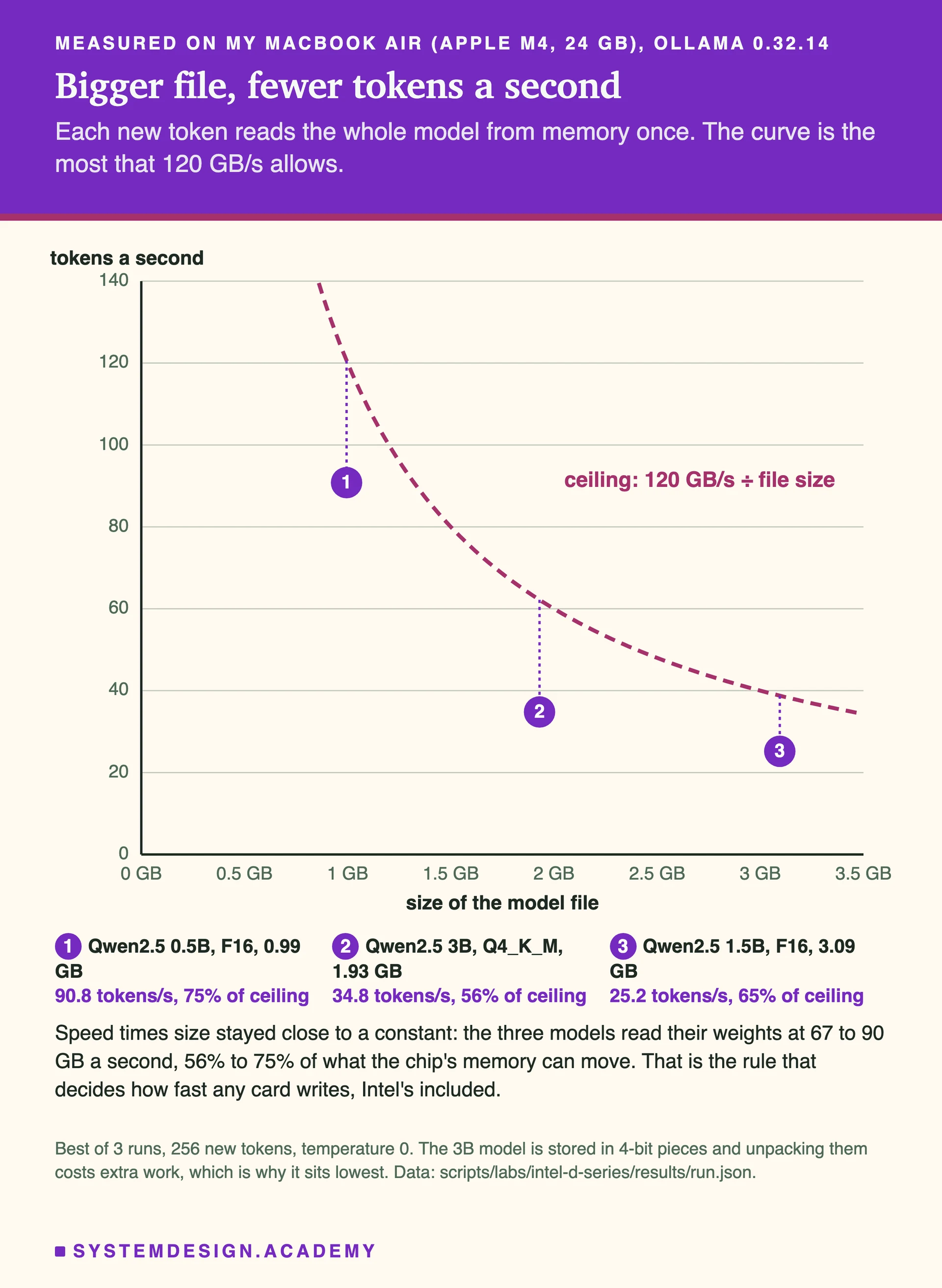
LPDDR5X is the kind of memory used in laptops and phones. It is not HBM (High Bandwidth Memory, stacked right next to the chip), which the biggest data center GPUs use for speed. The result is a lot of room read at a moderate speed: 480 GB, at 1.5 TB/s. That single choice explains almost everything below.
Intel says the card supports models with up to 300 billion parameters on a single card and more than one trillion in an eight-GPU system, that customer sampling is underway, and that it runs vLLM and the open PyTorch tools, with SGLang and OpenAI Triton listed on the product page "where approved". It has not given a price or a date for general sale.