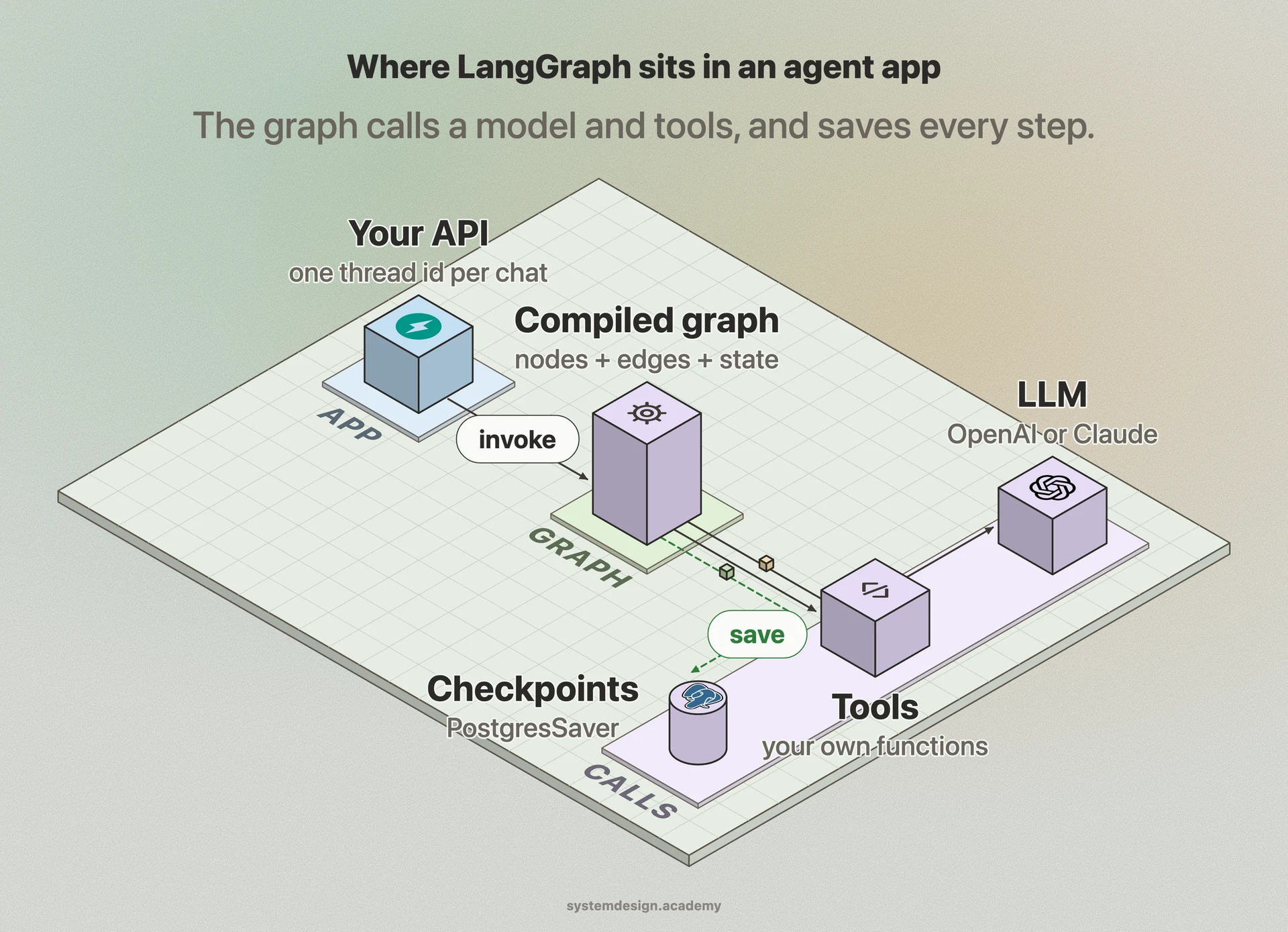
An AI agent is a program that uses a large language model (LLM), the kind of model behind ChatGPT, to decide what to do next. It calls tools, reads the results and decides again. A tool is just a function the agent may run, such as "look up an order".
Simple agents are a loop. Real ones need more control. Some steps must always happen in a fixed order. Some must wait for a person. And a long run must not lose its work if the server restarts.
LangGraph is a framework for that control. A framework is ready-made code you build on. The LangGraph docs call it "a low-level orchestration framework and runtime for building, managing, and deploying long-running, stateful agents." Orchestration means deciding which step runs when. Stateful means it remembers what happened so far. Low-level means you control the details yourself. A runtime is the part that actually runs your steps, and deploying means putting the program live on a server.
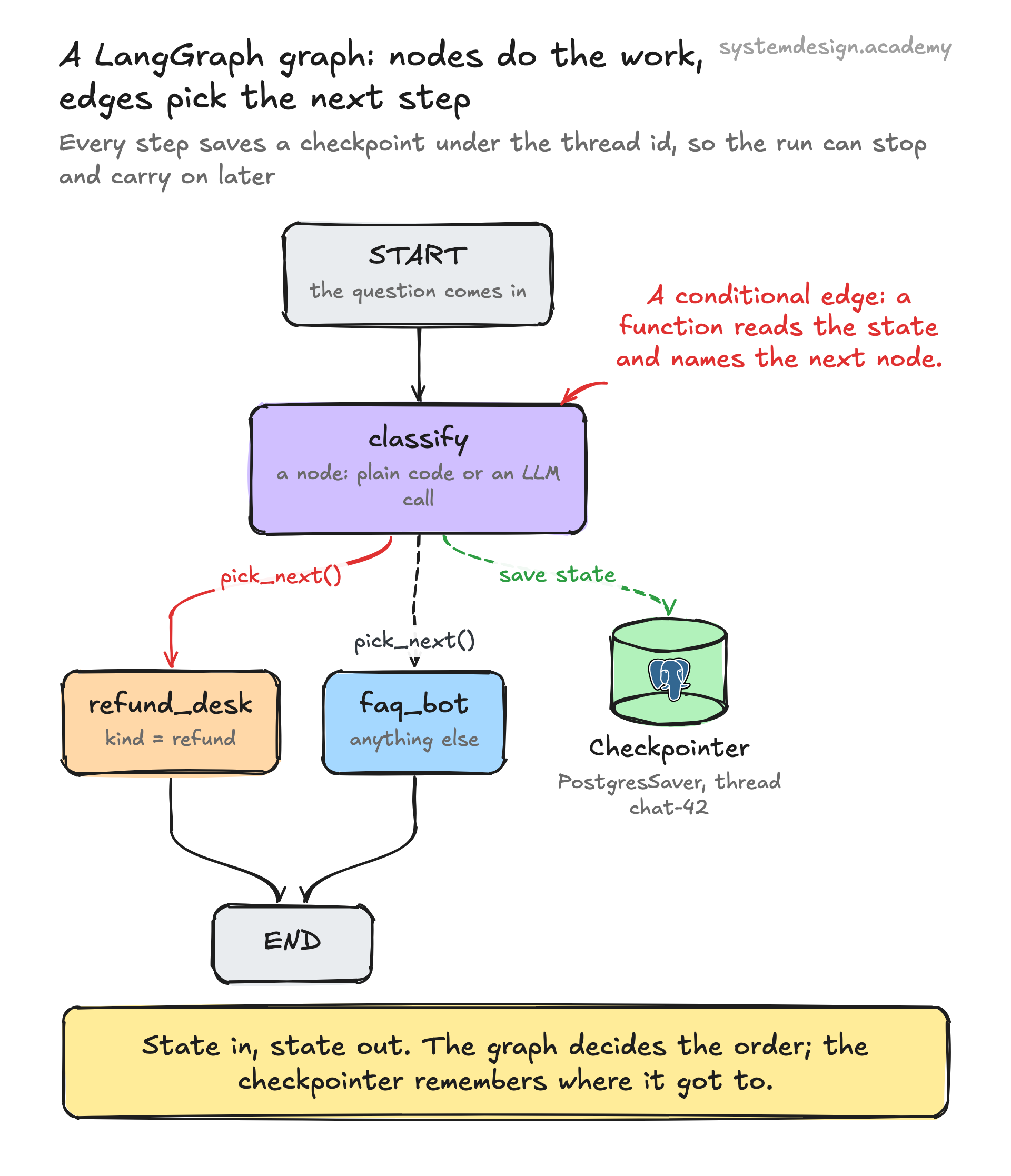
You describe your agent as a graph. In maths and programming, a graph is a set of points joined by lines. In LangGraph the points are steps and the lines say which step comes next. LangChain Inc builds it, but its docs say plainly: "you don't need to use LangChain to use LangGraph." It comes for Python and for JavaScript. The docs name Klarna, Uber and J.P. Morgan among the companies that use it.