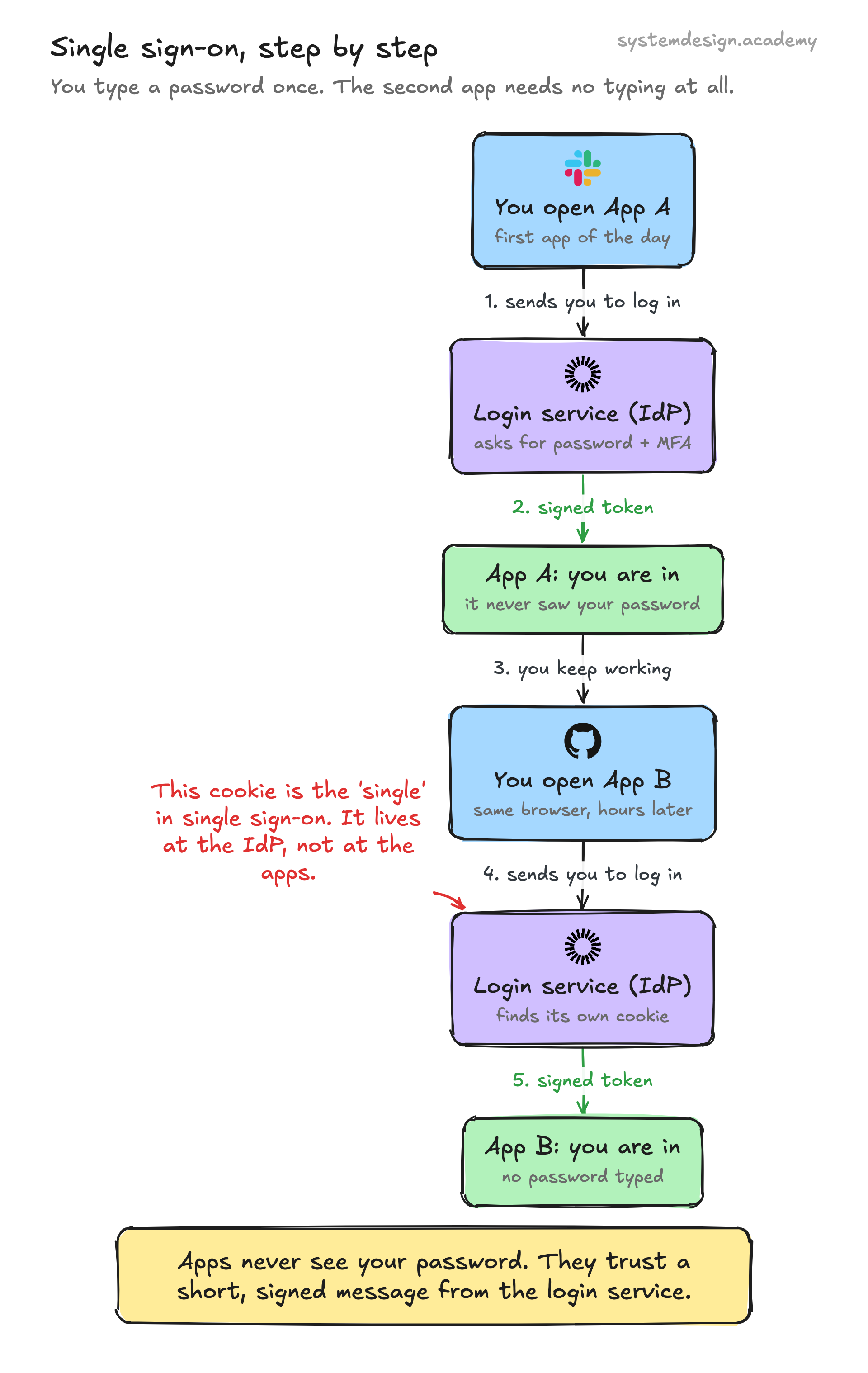
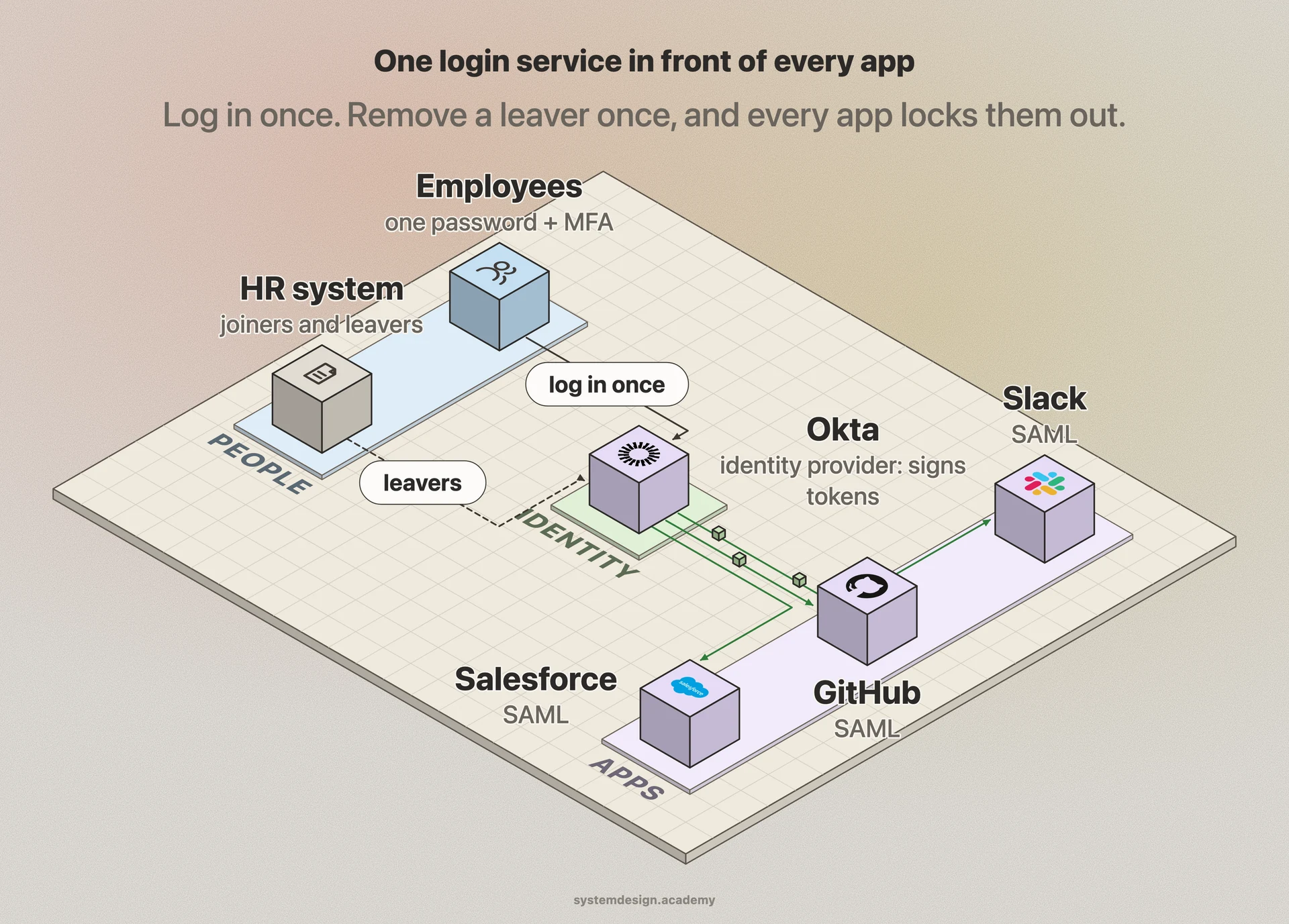
Interviewers ask about SSO in two ways. Sometimes it is the whole question: "design login for a company with 200 internal apps". More often it is a follow-up inside a bigger design: "how do enterprise customers log in to your SaaS product?" SaaS means software people use over the internet and pay for as a service.
A strong answer names the parts (IdP, SP, the signed message), picks a protocol for a reason (OIDC for a new web app, SAML because the customer's IdP requires it), says what the app checks on every token, and covers the hard parts: creating and removing accounts with SCIM, the IdP as a single point of failure (one part whose failure stops everything), and logout. Saying "we just use OAuth" is the common weak answer, because OAuth alone does not say who the user is.
If two companies are involved, for example your customers log in with their own company's IdP, the word for that is identity federation. SSO is what the person feels. Federation is the trust between the two systems that makes it possible.
The SSO lesson in the System Design course goes further, with the full SAML login flow, the session lifecycle, and how much one stolen login can reach.