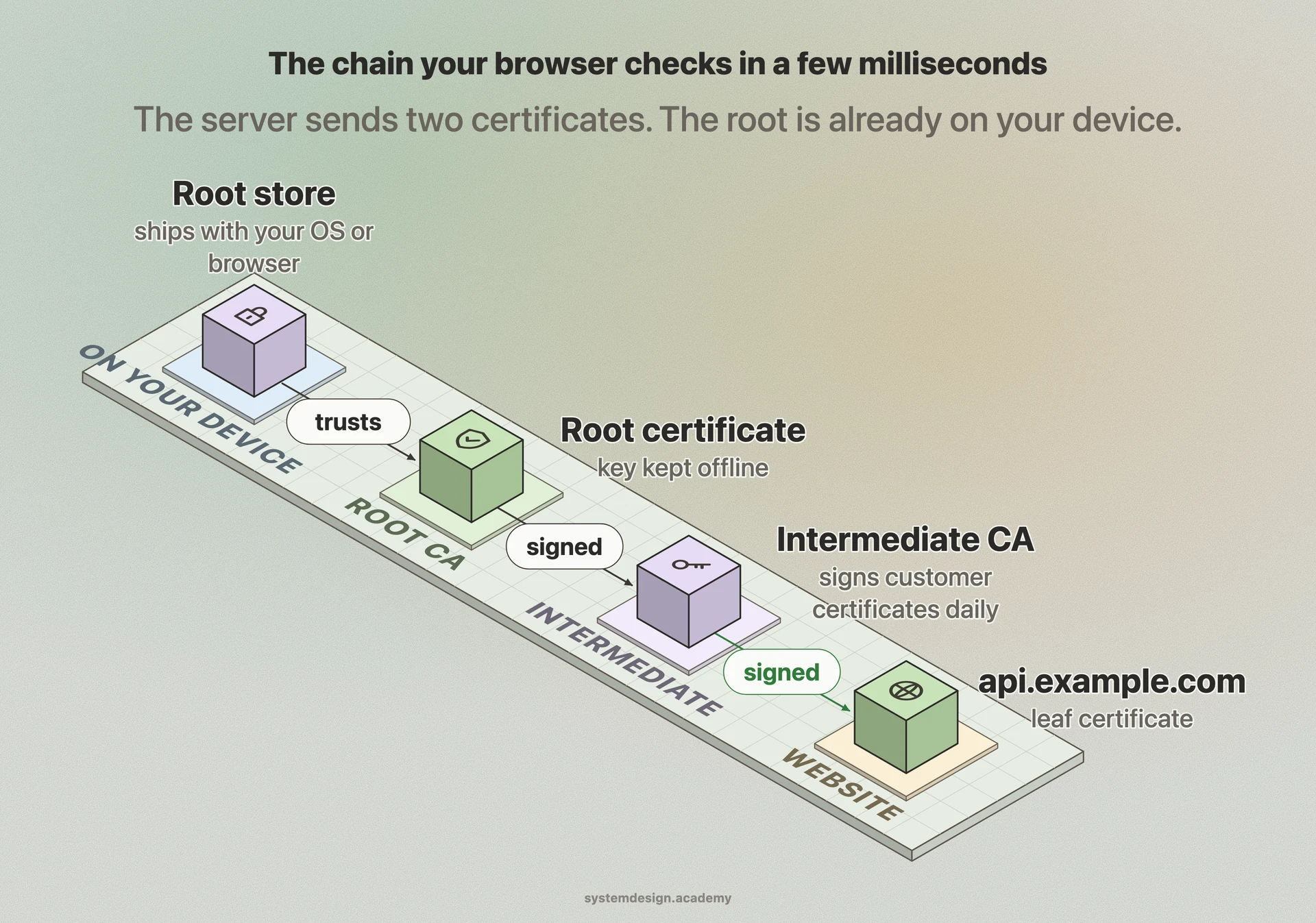
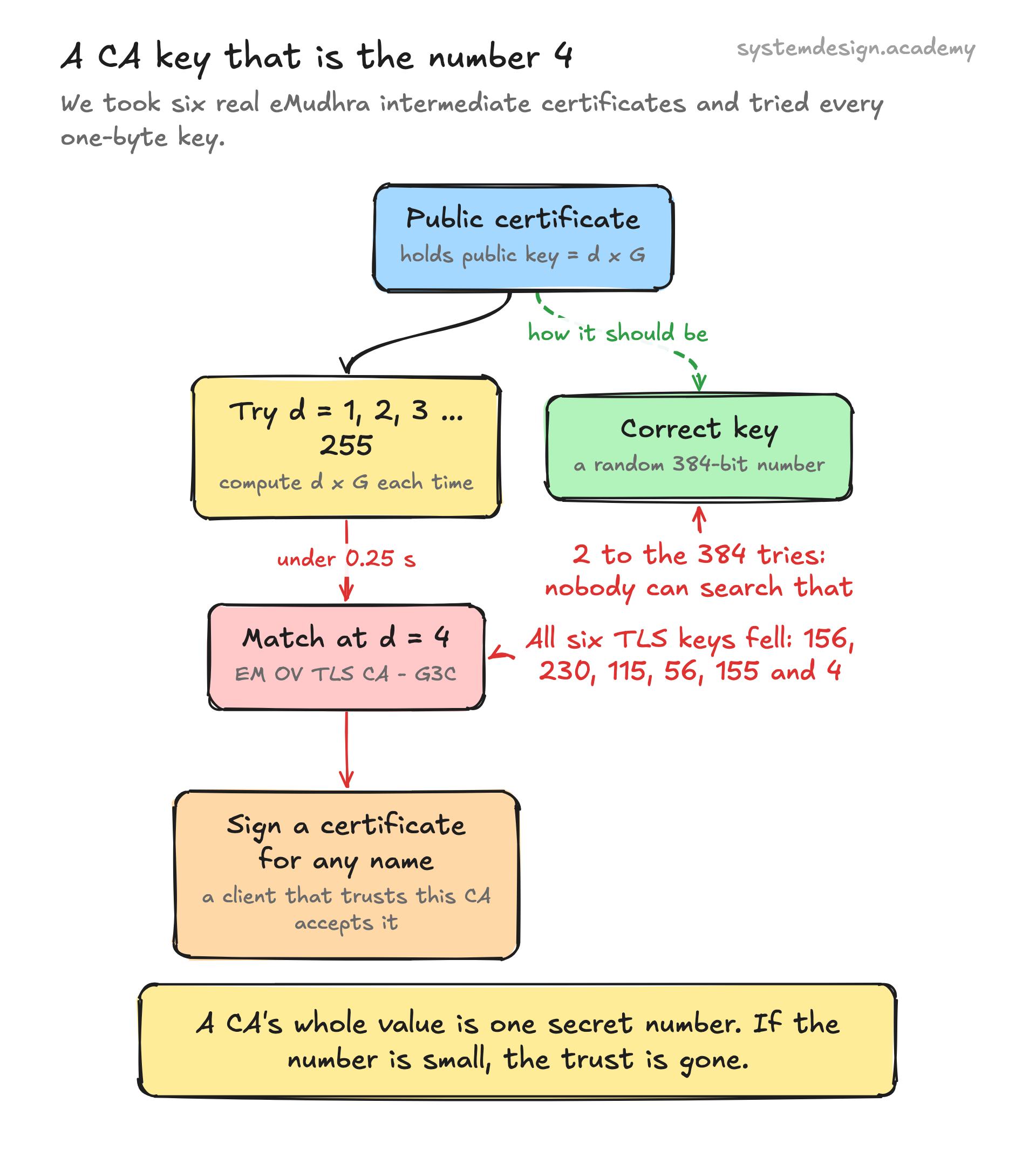
According to the disclosure page, the certificates have been blocked in Firefox and Chrome since 17 October, on Apple devices since 19 October and on Microsoft platforms since 20 October, and the CA revoked them. The intermediates never appeared in Certificate Transparency logs, the public, append-only logs that browsers require certificates to be listed in, so browsers that enforce those logs could not have been fooled.
The harder part is everything else. Many programs that make HTTPS calls, such as scripts using curl, Python, Node.js or Go, trust a bundle of root certificates on disk and do not check revocation or transparency logs by default. Two roots had signed these intermediates: eMudhra's own and the older Comodo "AAA Certificate Services" root (now run by Sectigo), which cross-signed them. Ubuntu, for example, shipped a ca-certificates update that removes both roots. Until a system gets an update like that, it can still trust the bad intermediates. The certificate revocation page explains why revoking does not reach these clients.
The practical fix is plain: update the operating system's CA package, update language-level bundles such as Python's certifi, and rebuild container images so they pick up the new bundle.