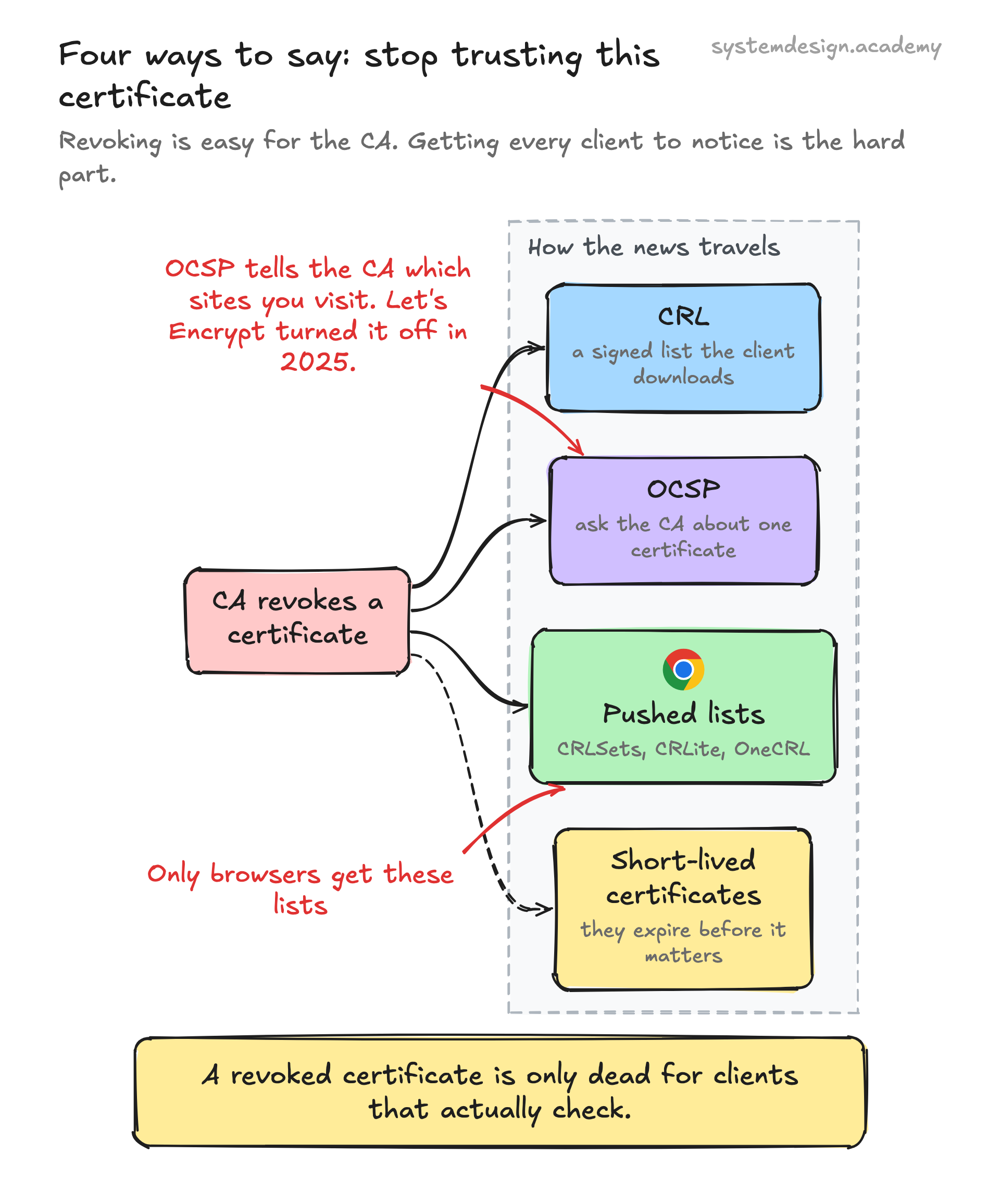
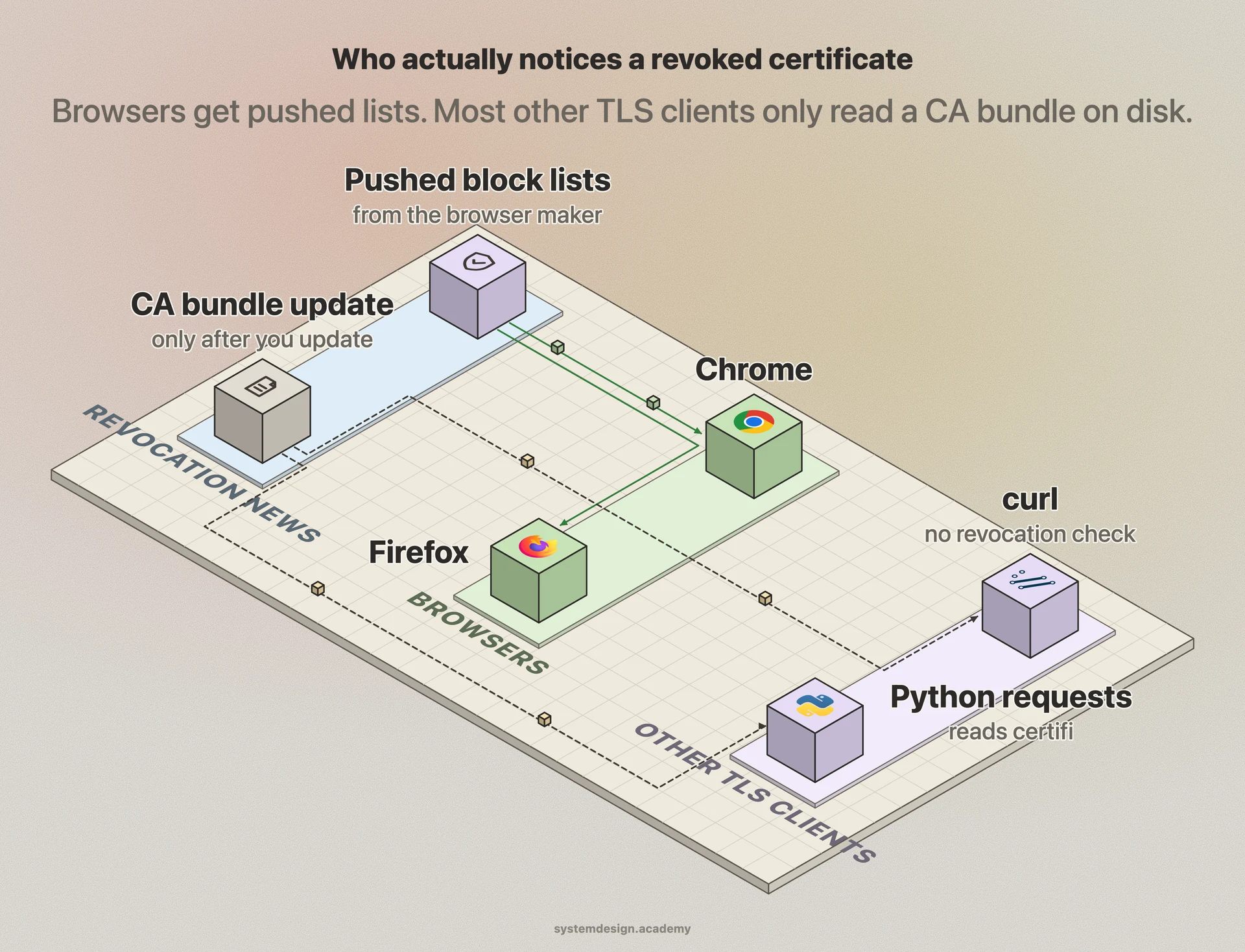
Mainstream browsers are in good shape. They get pushed lists and they also require every certificate to appear in Certificate Transparency logs, public append-only logs of issued certificates, which makes a secretly issued certificate hard to use against them.
Most other TLS clients are not. Command-line tools, language runtimes and the scripts built on them, such as curl, Python's requests (which reads the certifi bundle), Node.js and Go, trust whatever root bundle is on disk. With default settings they do not check revocation and do not check transparency logs. So for them, a revoked intermediate is still trusted until the bundle itself changes. The eMudhra disclosure page says exactly this: many clients do not consume revocation information and need software updates.
That is why the real fix after a CA failure is a bundle update: the operating system's ca-certificates package, language bundles such as certifi, and a rebuild of every container image, because an image keeps the bundle it was built with.