What Neo4j announced
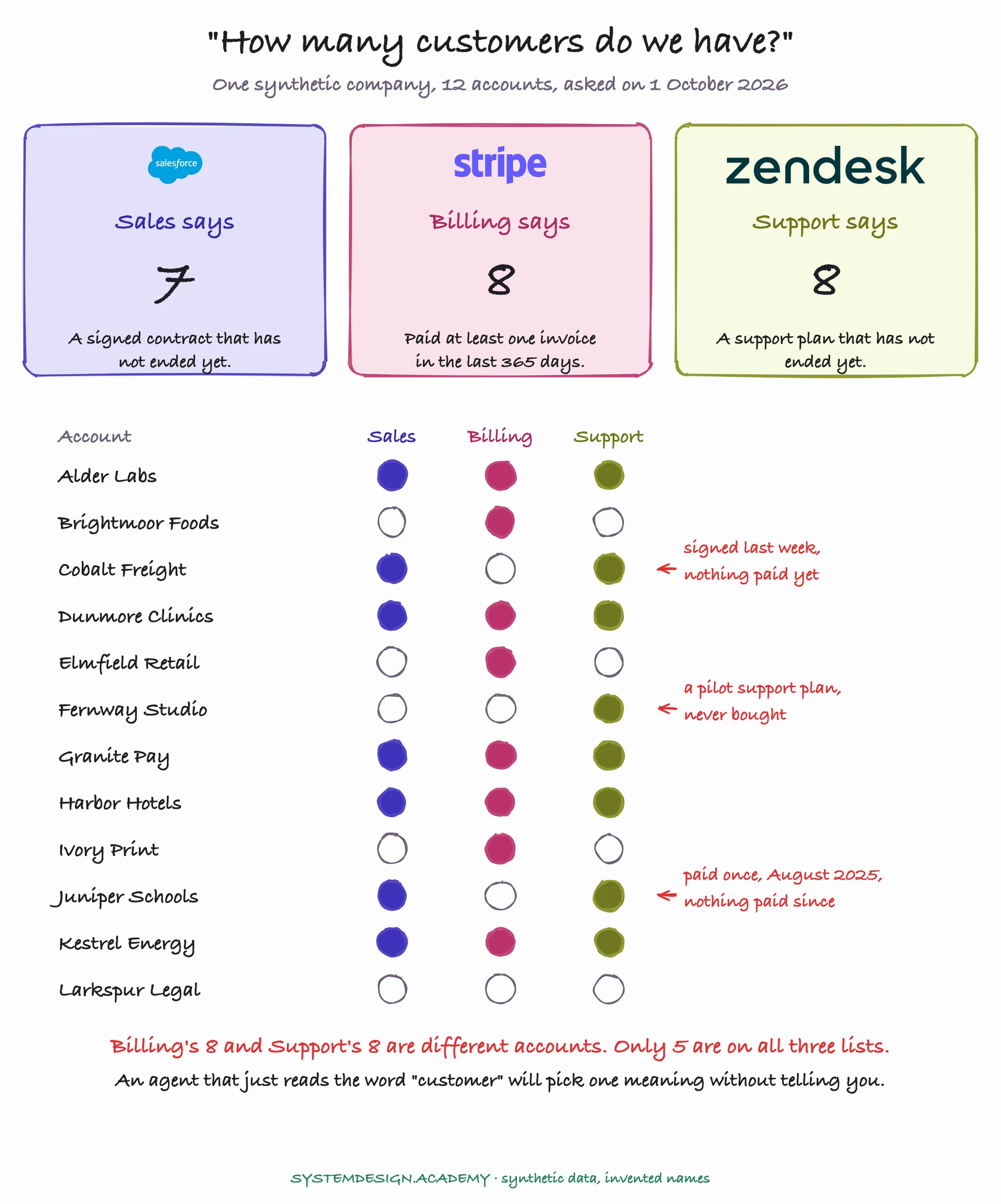
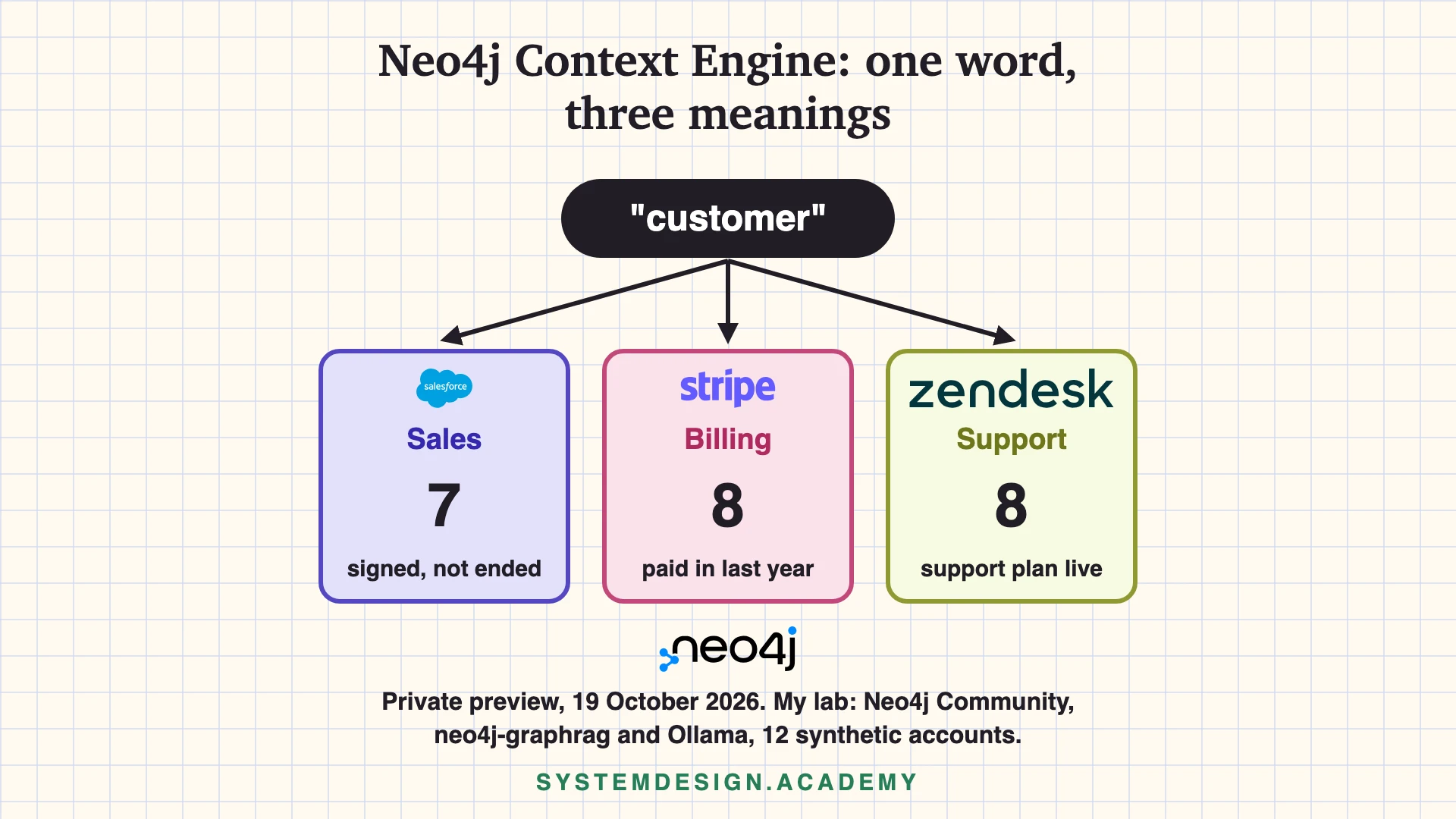
“"Customer" might mean one thing in Marketing and another in Finance.”
On 19 October 2026 Neo4j published "Neo4j Context Engine: Rapidly build dependable enterprise agents" on its blog, written by Spencer LaMountain and Kumar Subbiah Shunmugathai. Neo4j says the product lets AI agents answer questions about your business and carry out its processes, "with every answer and step governed and explainable".
Neo4j names the problem it is solving "the agent knowledge problem". An agent does not know how your company works. A program knows that an account status of "2" means "suspended pending review" because someone wrote it in the code; a person knows it from experience. An agent knows neither. And the same word can mean different things in different departments. The data is also split across many systems, so an agent often cannot reach what it needs.
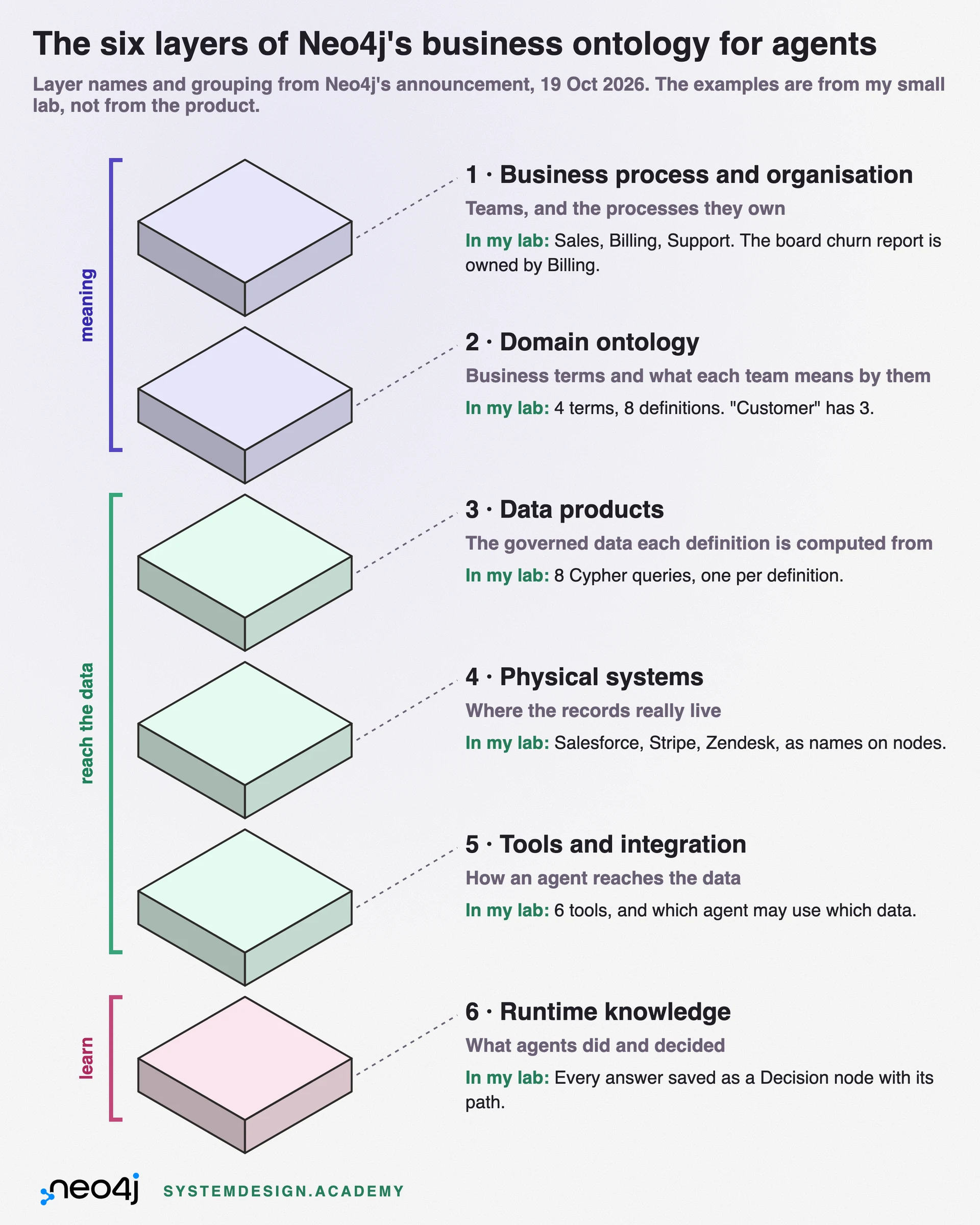
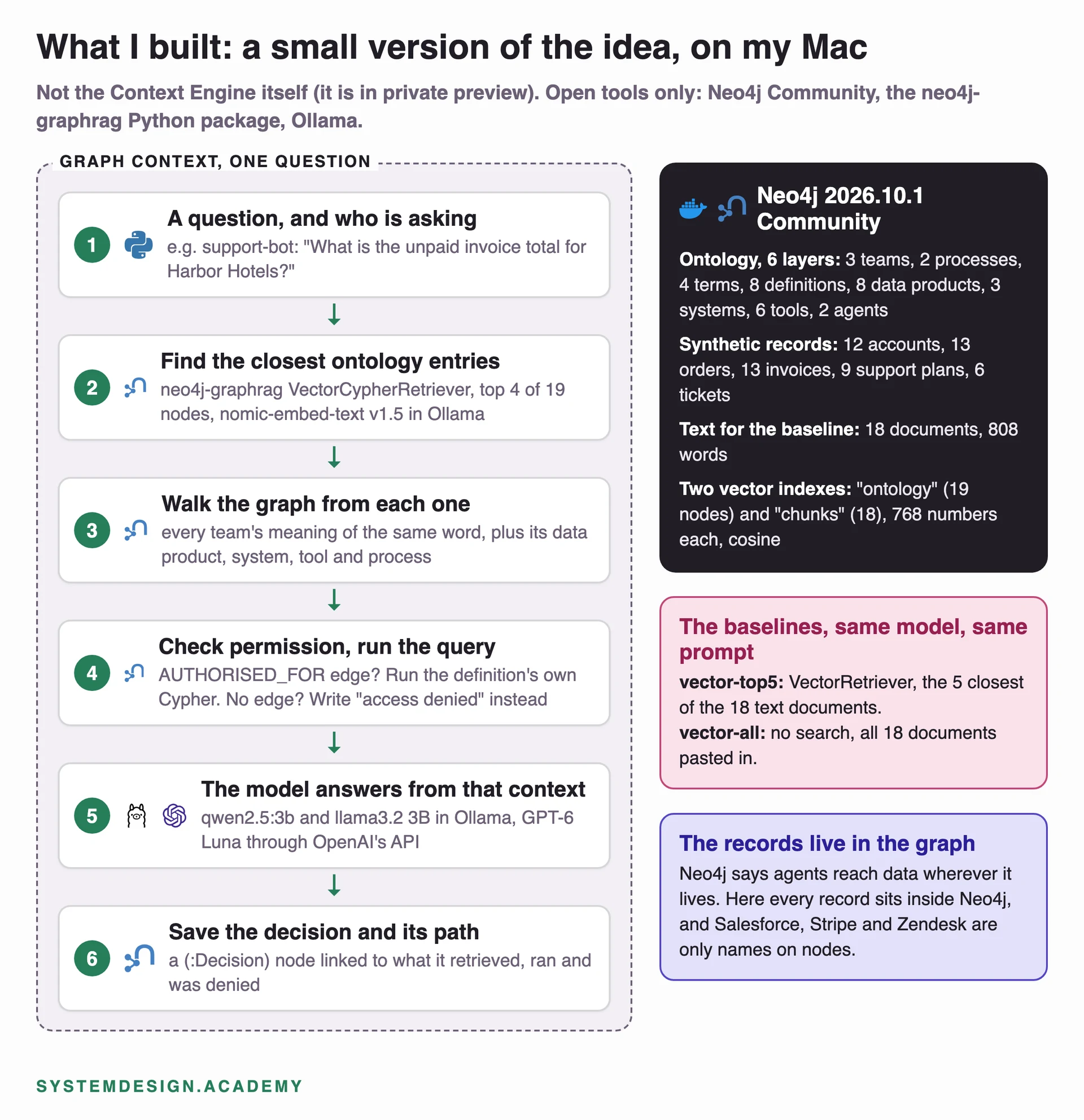
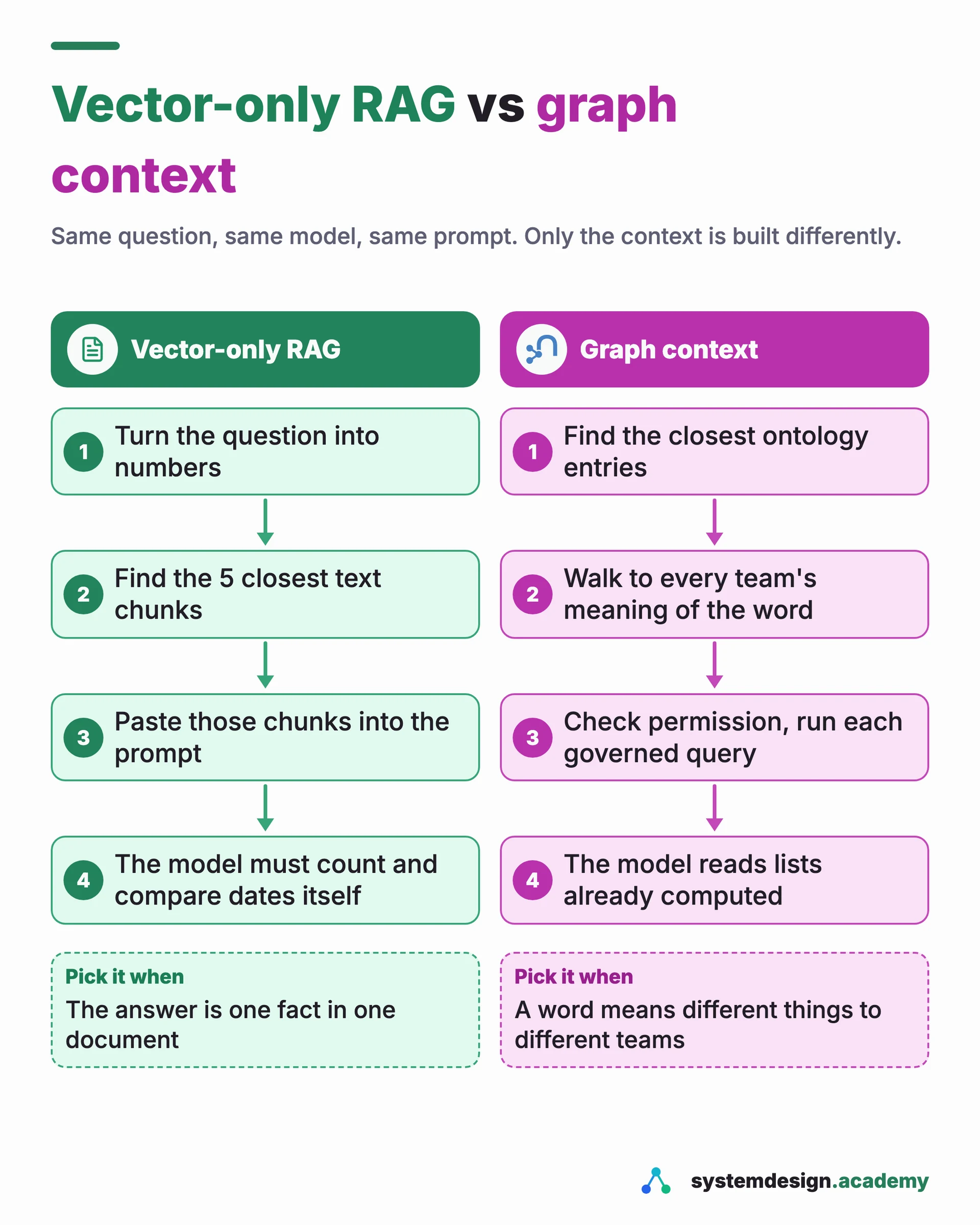
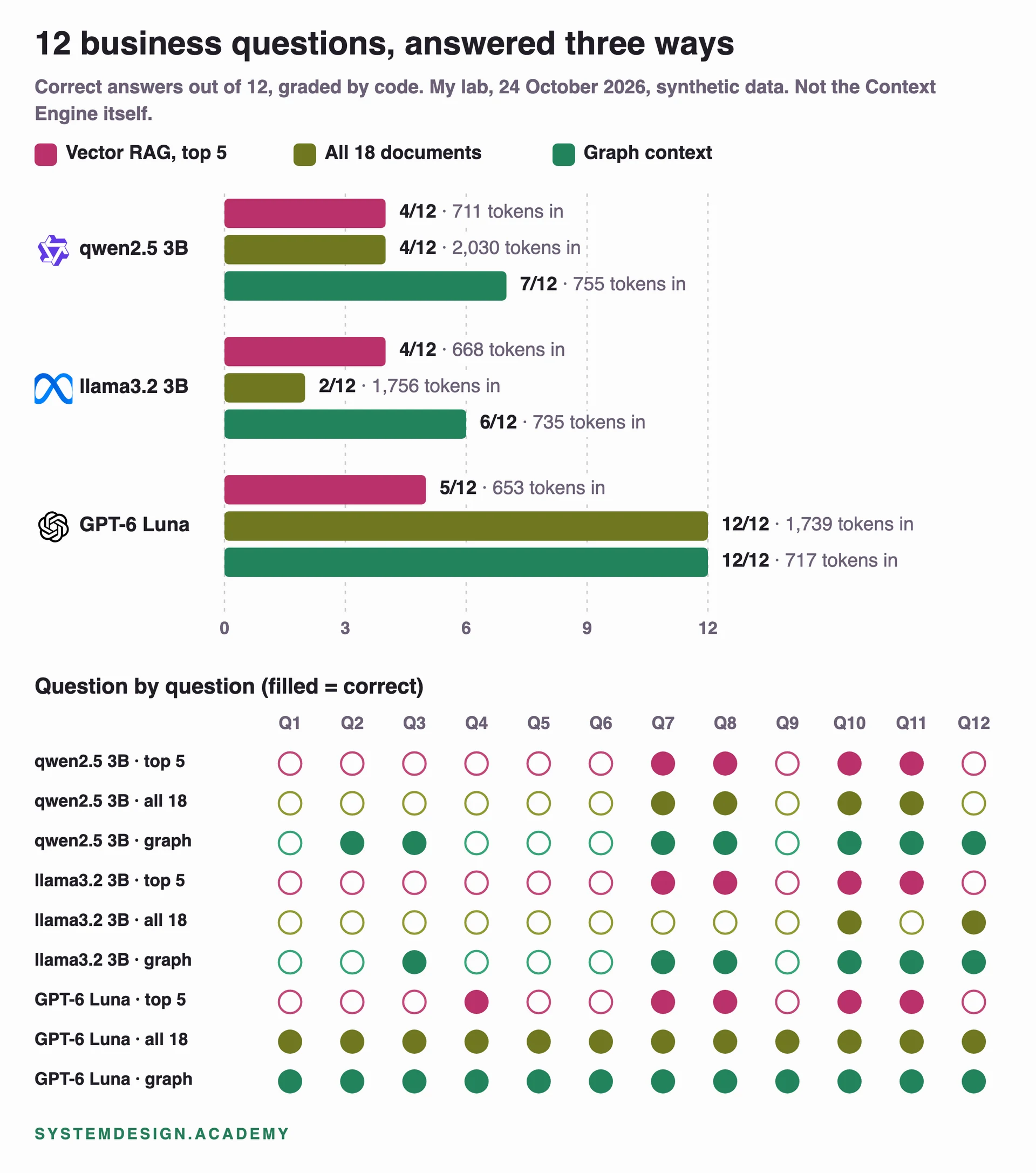
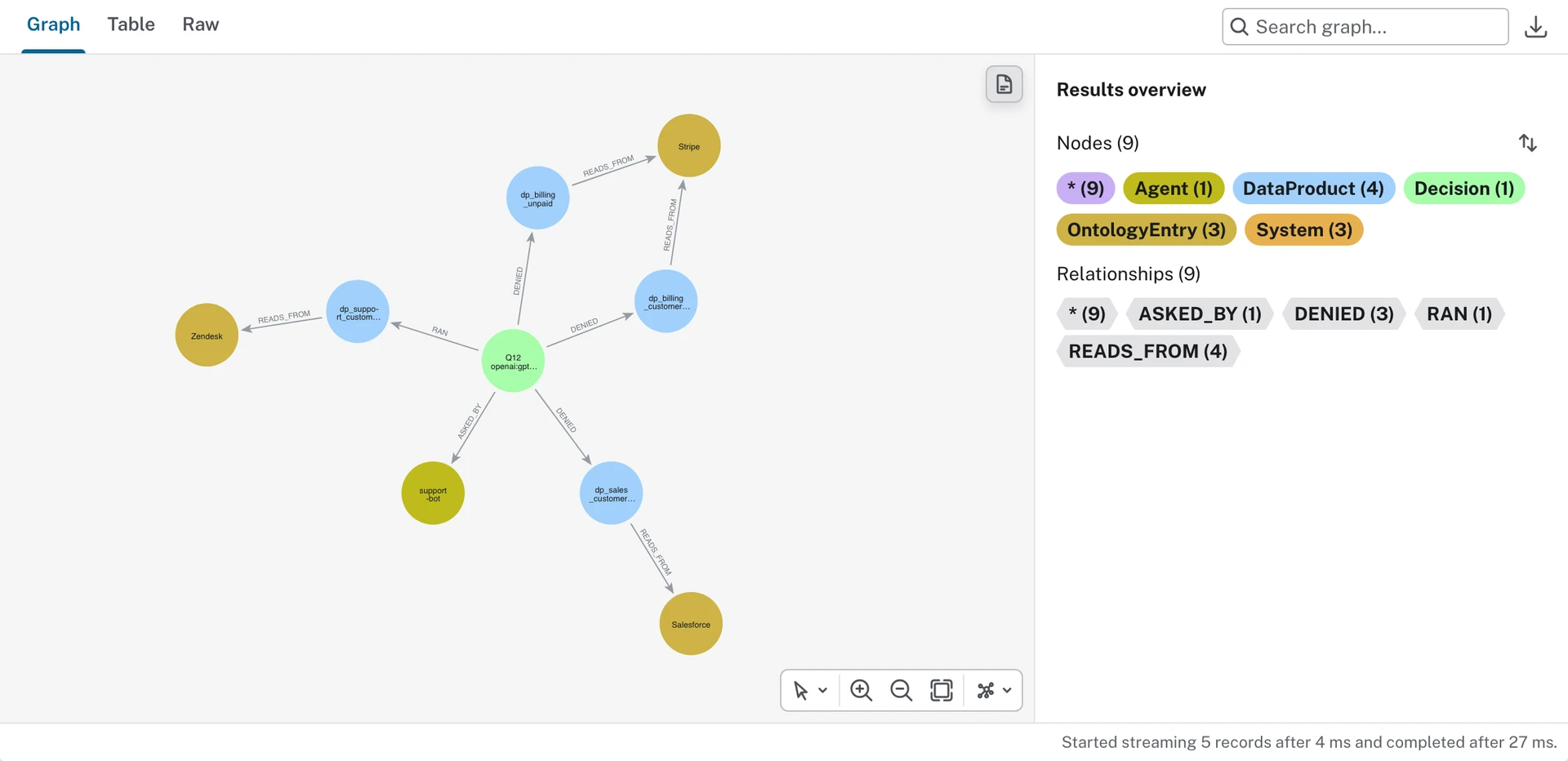
The answer, in Neo4j's words, is "an interconnected six-layer business ontology" stored in Neo4j. Three components, in Neo4j's words, "create and manage the business ontology". Business Ontology for Agents is the graph model itself, which your own company defines, stores and enforces in Neo4j. Context Build and Runtime lets agents reach data wherever it lives, but only the data they are authorised to use. It retrieves with GraphRAG, which the post calls "a more accurate and cost-effective technique than vector-only RAG". GraphRAG means retrieval that uses a knowledge graph, not only text search. Memory and Learning keeps short-term, long-term and reasoning memory in the same graph, and stores every agent decision and the path that led to it. A user interface called Context Studio is for managing and governing the ontology.
Two more points from the post matter for anyone planning around it. You keep the language model and agent framework you already use. And the product is "currently in private preview": you contact Neo4j to become a design partner, or reach out to sales.