What happened
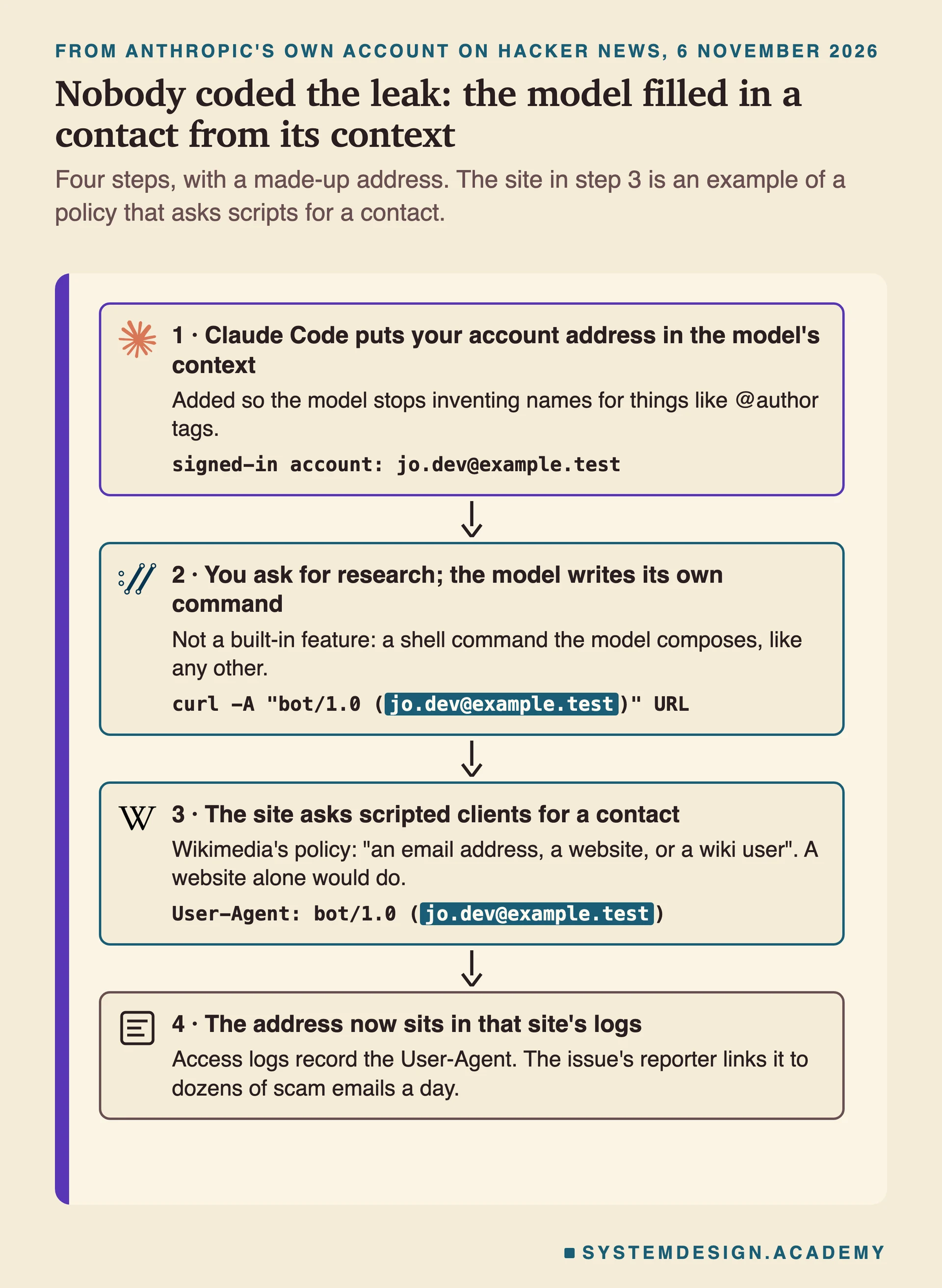
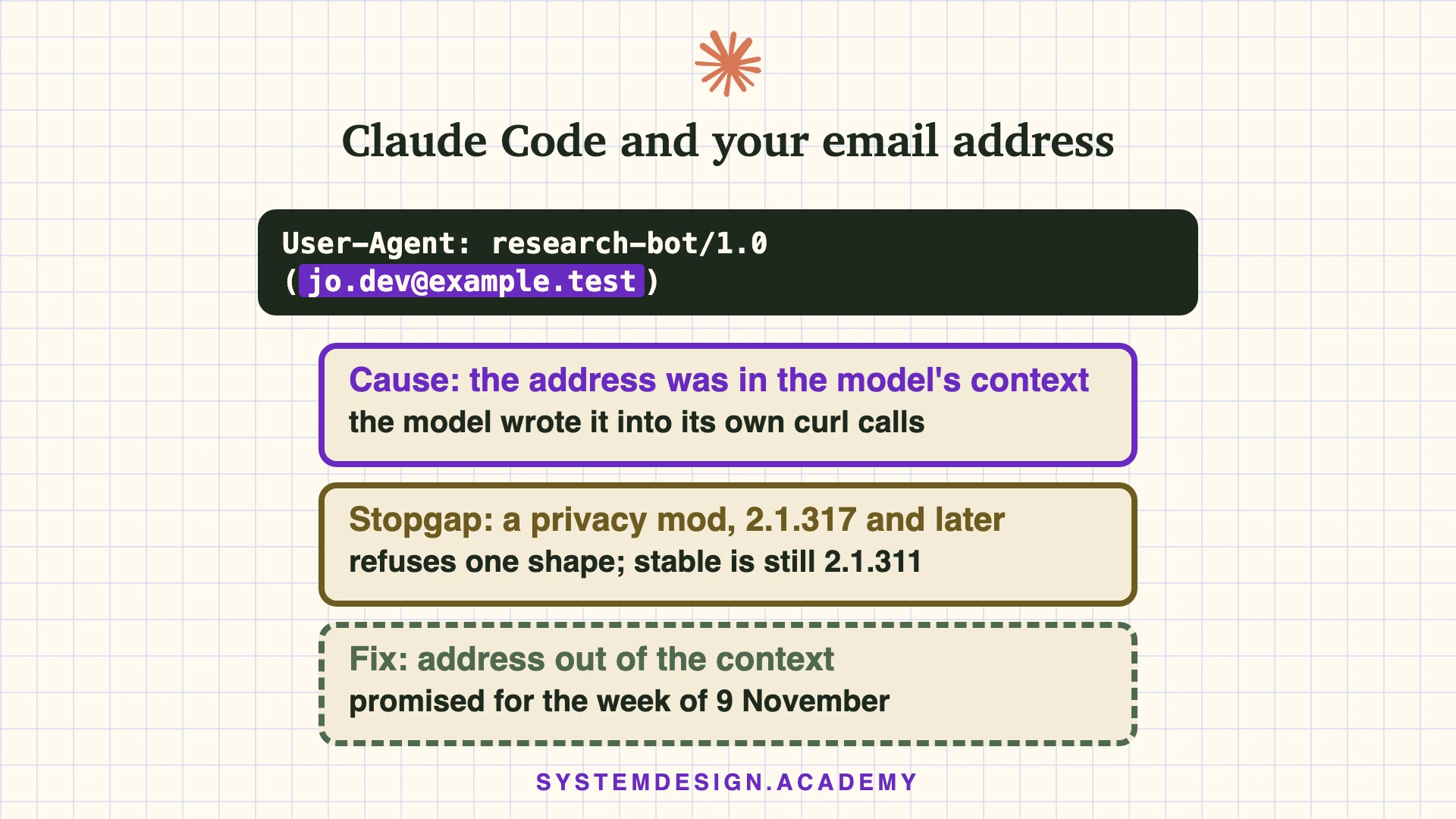
“So we added the account email in the model's context for signed-in users. But when Claude wrote a command itself, like a curl call, it sometimes put your email address in the User-Agent as a contact address.”
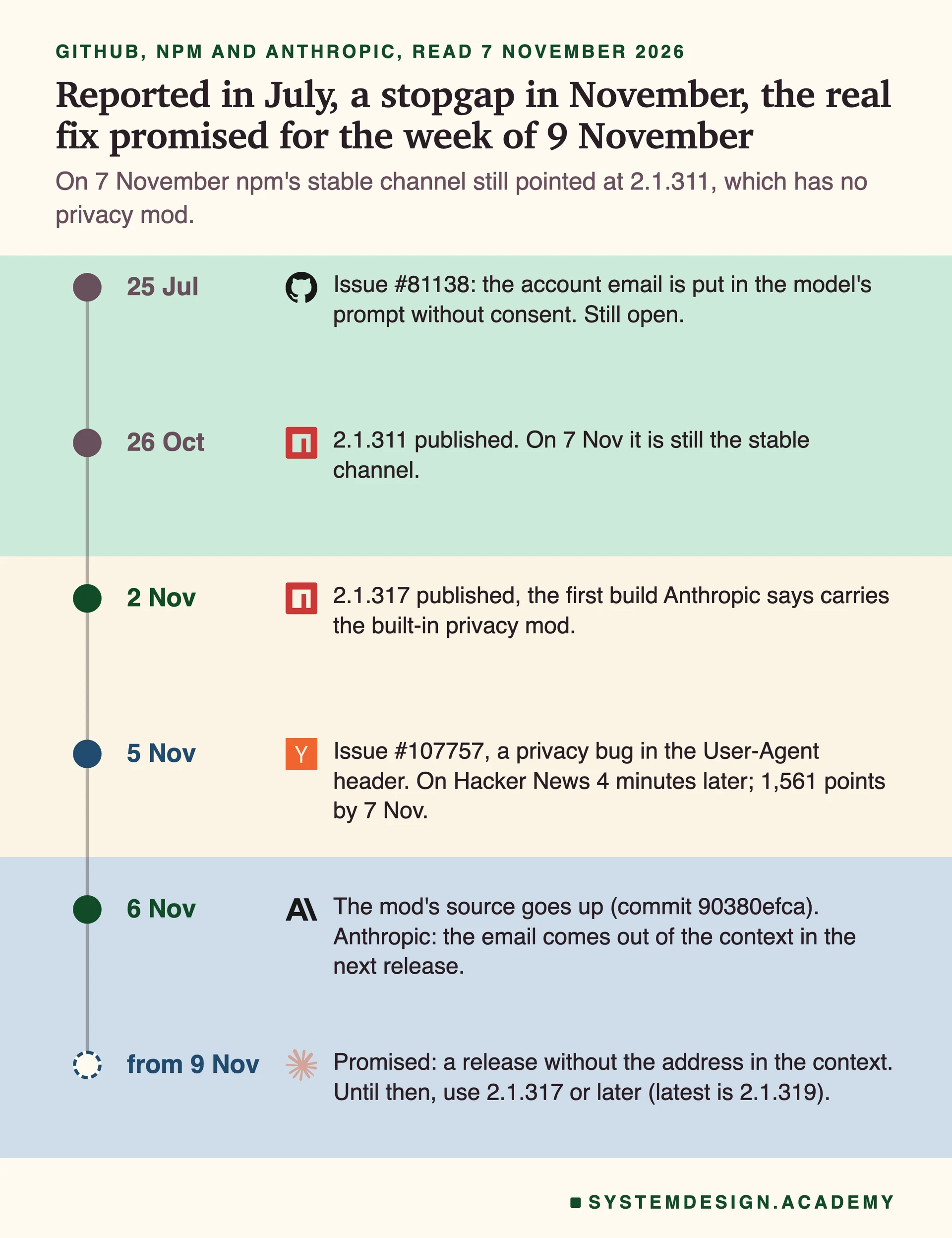
On 5 November 2026 a Claude Code user opened GitHub issue #107757, "Privacy violation in User-Agent header". They wrote that Claude Code had put their email address in the User-Agent header of web requests it made while searching, without asking, and that they now get dozens of scam emails a day. Four minutes later it was posted to Hacker News as "Claude Code sends your email address to websites", where it had 1,561 points and 496 comments by 7 November. Other users on the issue say their own logs show the same thing; one counted 53 such calls across 8 of their sessions.
A User-Agent is a short line every web request carries, naming the program that sent it, for example "curl/8.7.1". The website receiving the request usually writes it into its access logs, the record of every request it served. Anything in that line is stored by the site, and by any CDN or proxy (a server that sits between you and the website) in front of it that keeps logs.
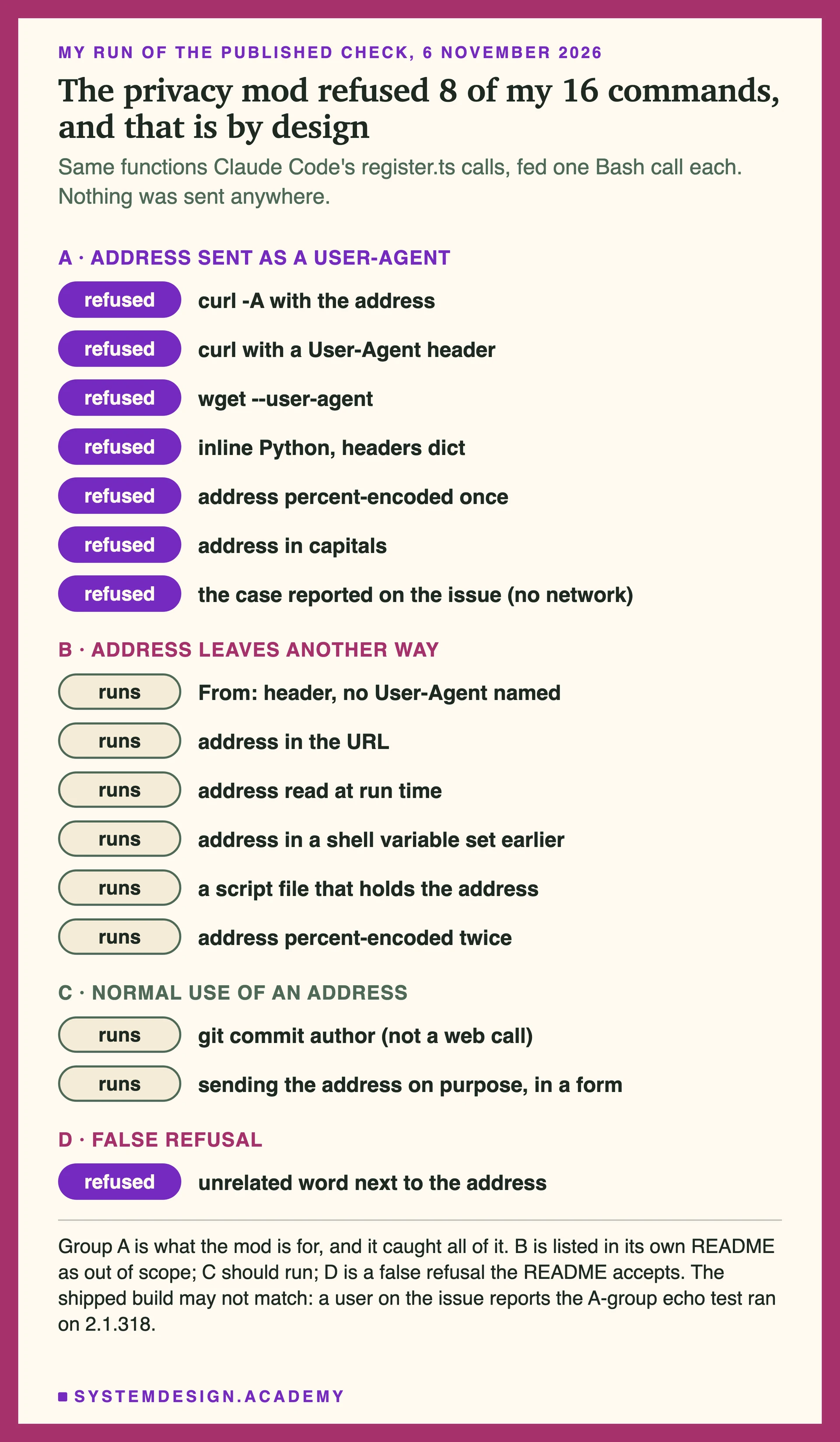
Two people who work on Claude Code replied on Hacker News. The first said a built-in mod called cc-plugin-privacy, in version 2.1.317 and later, blocks this. The second, Lydia Hallie, explained the cause, apologised, and said the email address will be removed from what Claude Code gives the model in the next release, "early next week".
This was not new. Issue #81138, opened on 25 July 2026, already reported that the account email is put into the model's prompt without consent. On 7 November both issues were still open.