What is MaxxBench?
“We changed requirements in a coding benchmark and found models talking themselves out of following them.”
Coding agents, the AI tools that edit a real code base and run its tests, are ranked on public benchmarks. DeepSWE, made by Datacurve, is one of them, and it is unusually open: its agent trajectories are public. It has 113 tasks taken from active open-source projects in TypeScript, Go, Python, JavaScript and Rust. The agent gets an instruction, works in an isolated container, and its patch is graded by hidden tests in a separate clean container.
Once a benchmark is popular, it starts to shape the models it measures. Its tasks can leak into training data, its scores decide which checkpoint ships, and teams tune their agents against its failures. The MaxxBench authors call this benchmaxxing: getting better at one exam rather than at the work it stands for.
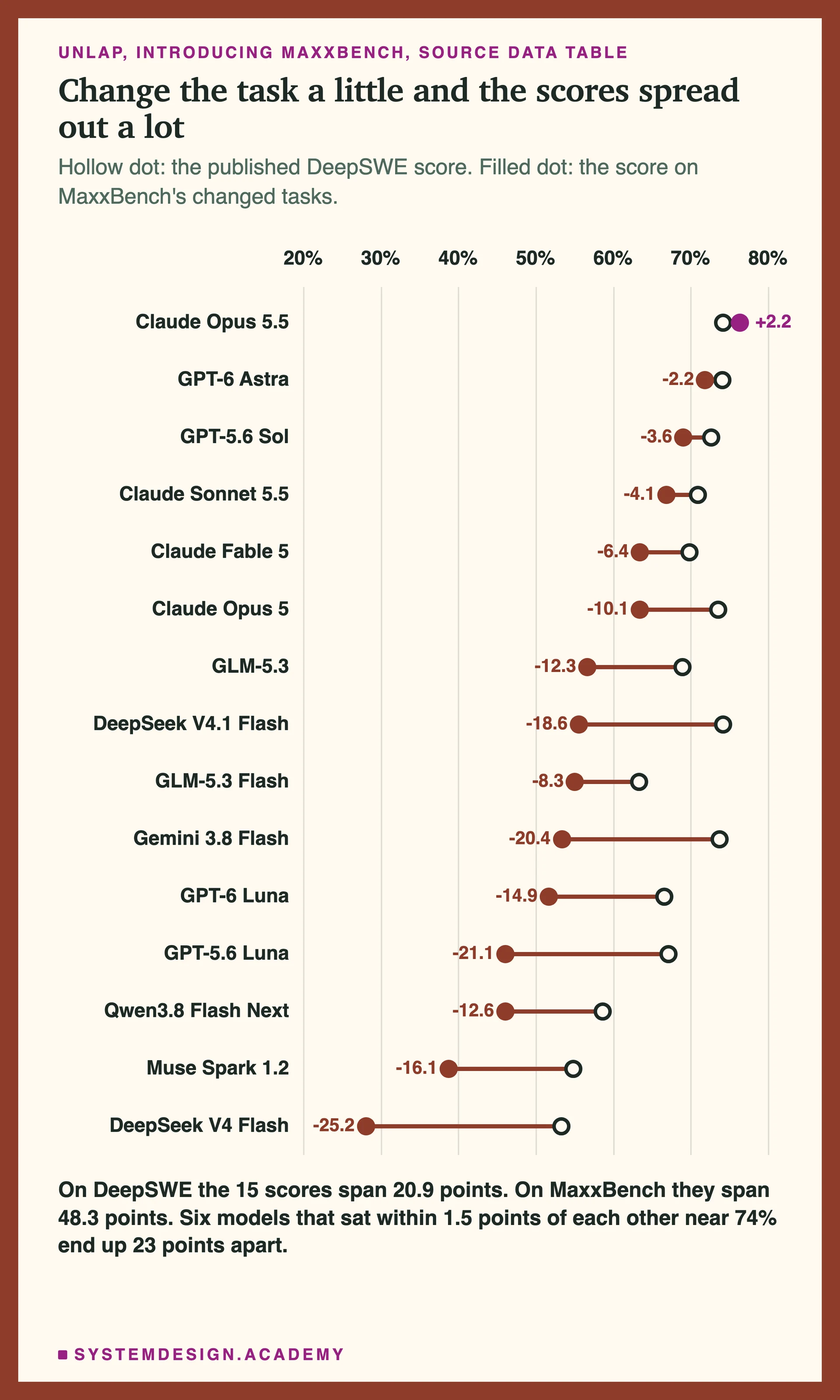
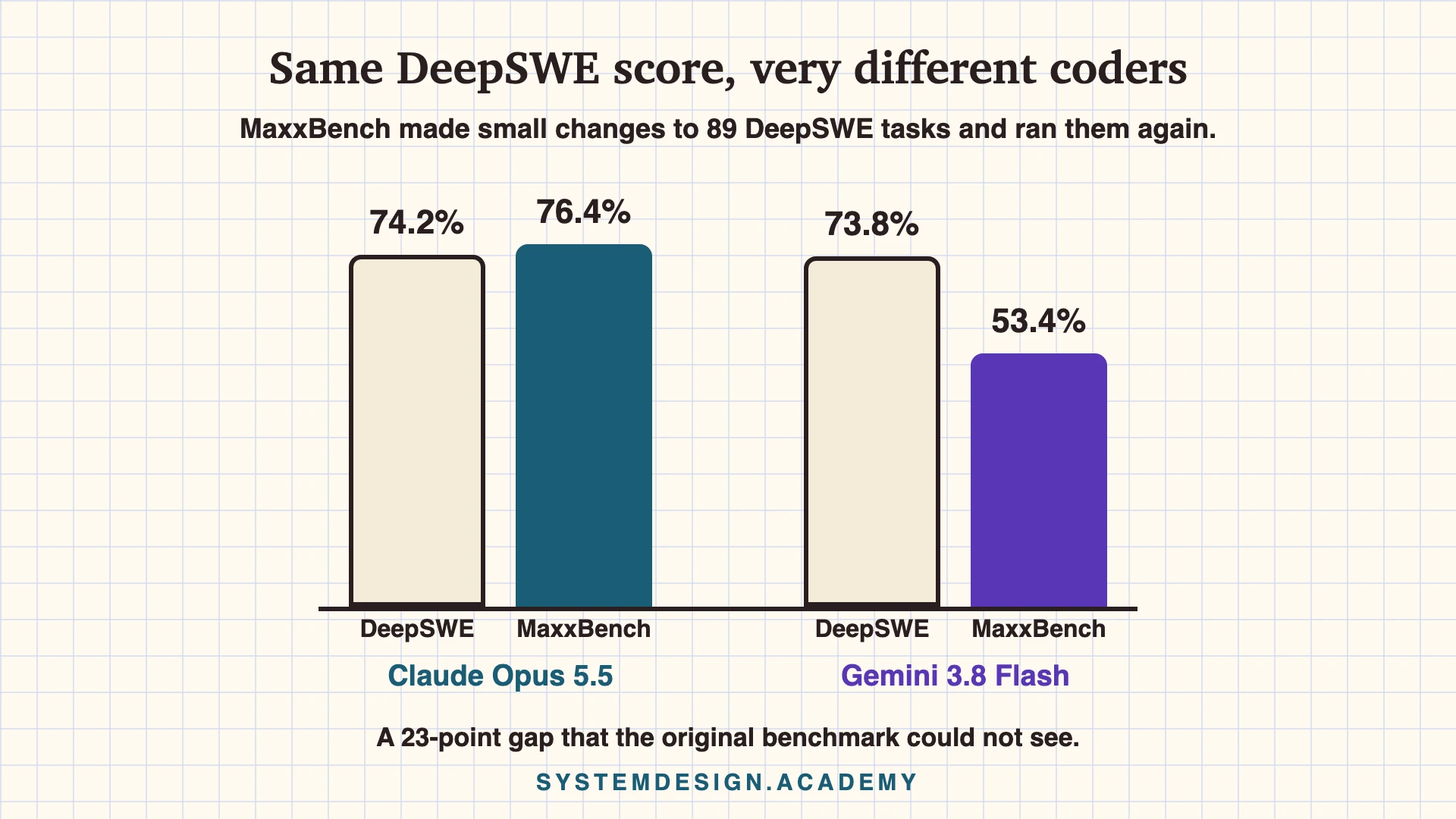
MaxxBench tests for that directly. It takes 89 of DeepSWE's feature tasks and changes each one a little. One task asks the agent to write a test report per browser; MaxxBench adds that the filenames must be lowercase, so Chrome.xml becomes chrome.xml. Another asks for retirement dates on FastAPI routes; MaxxBench asks for UTC timestamps ending in Z. The authors rewrite the reference fix and the tests to match, and keep every check that still applies.