What Revolut said
“The billing is flat, we don't have any bill shock at the end of the month.”
Revolut is a European digital bank with, in the speaker's words, 80 million customers in 45 markets. On 29 October 2026 the AI Engineer conference channel published an 11-minute talk by David Abitbol, who leads AI operations there, called "How Revolut Cut AI Coding Costs 90% With Self-Hosted Open Models". It reached Hacker News on 3 November with 193 points.
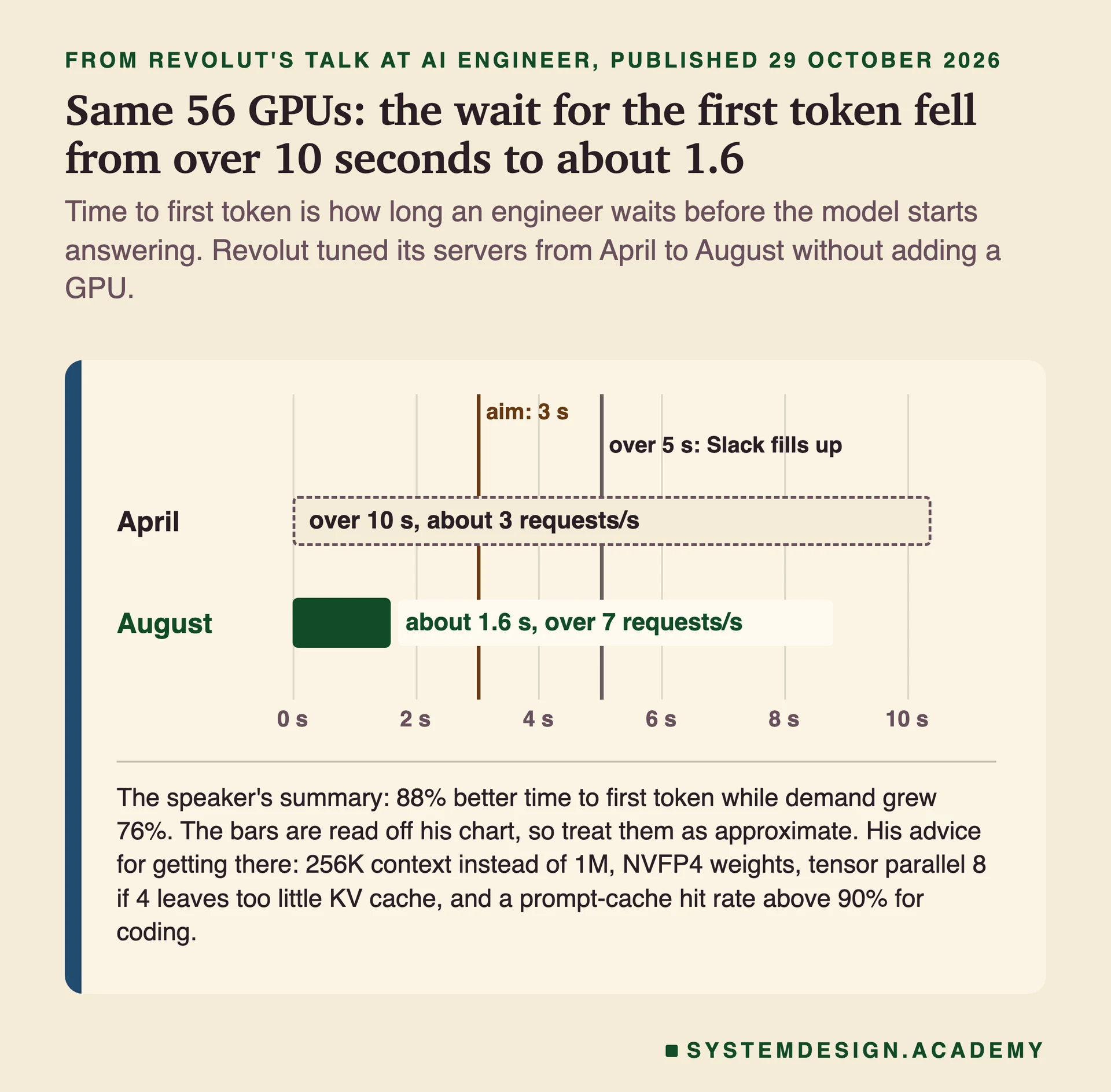
His story runs like this. Revolut first gave engineers an AI model with access to company data in January 2025 (Google's Gemini), then rolled out Claude Code, Anthropic's coding agent, with strict budget limits, because some engineers were spending $1,000 or $10,000 a month without a clear return. To give engineers unlimited tokens (the small pieces of text models read and write) at a fraction of the cost, Revolut began running open models on its own GPUs in April 2026, starting with GLM-5.1 from Z.ai, and now runs GLM-5.3.
On his chart of 2,000 engineers, the self-hosted model came with a 60% improvement in coding time and 70% in lead time (from picking up a feature to having it merged), against the months before it. His reading: the bigger gain was in lead time, so the slow part of engineering is not only writing code, and engineers with unlimited tokens use the model for email, Jira and documentation too. These are Revolut's internal numbers, not an outside study.
Revolut has not dropped the closed models. Claude Code, Codex and Gemini are still available as exceptions, and GLM-5.3 is the default. GLM-5.3 reads text only. His advice is to put a router in front that sends image questions to a model that reads images, such as Gemini.
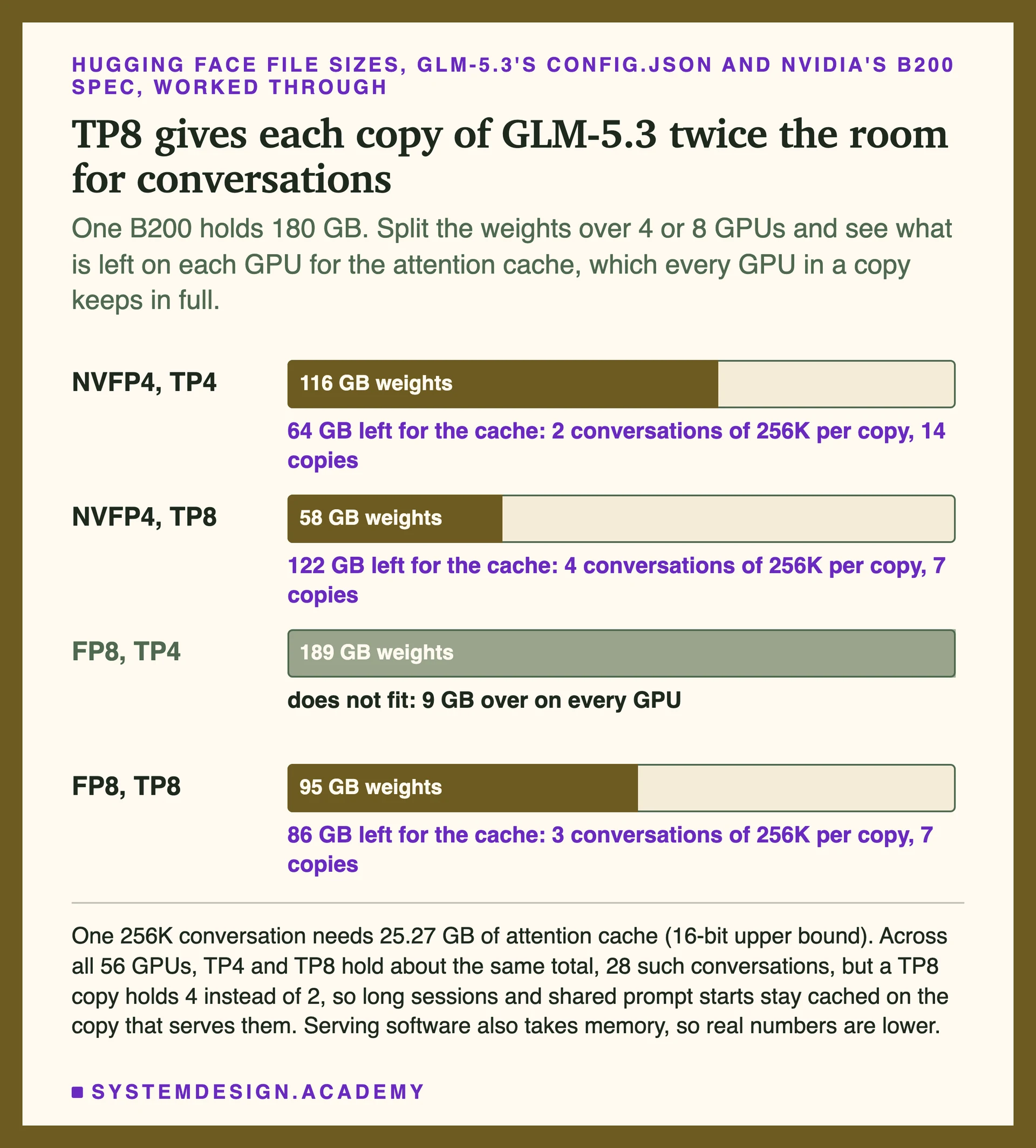
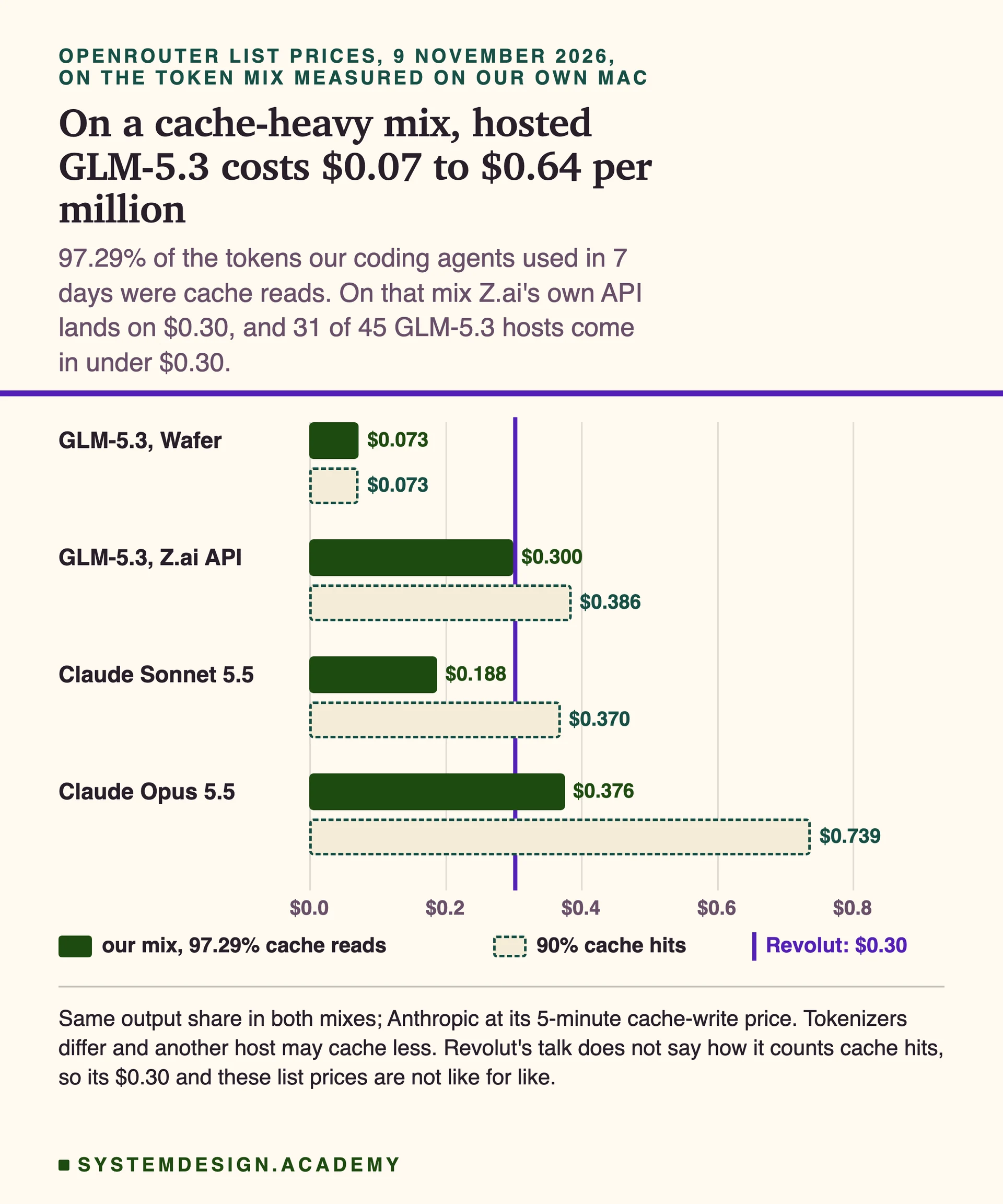
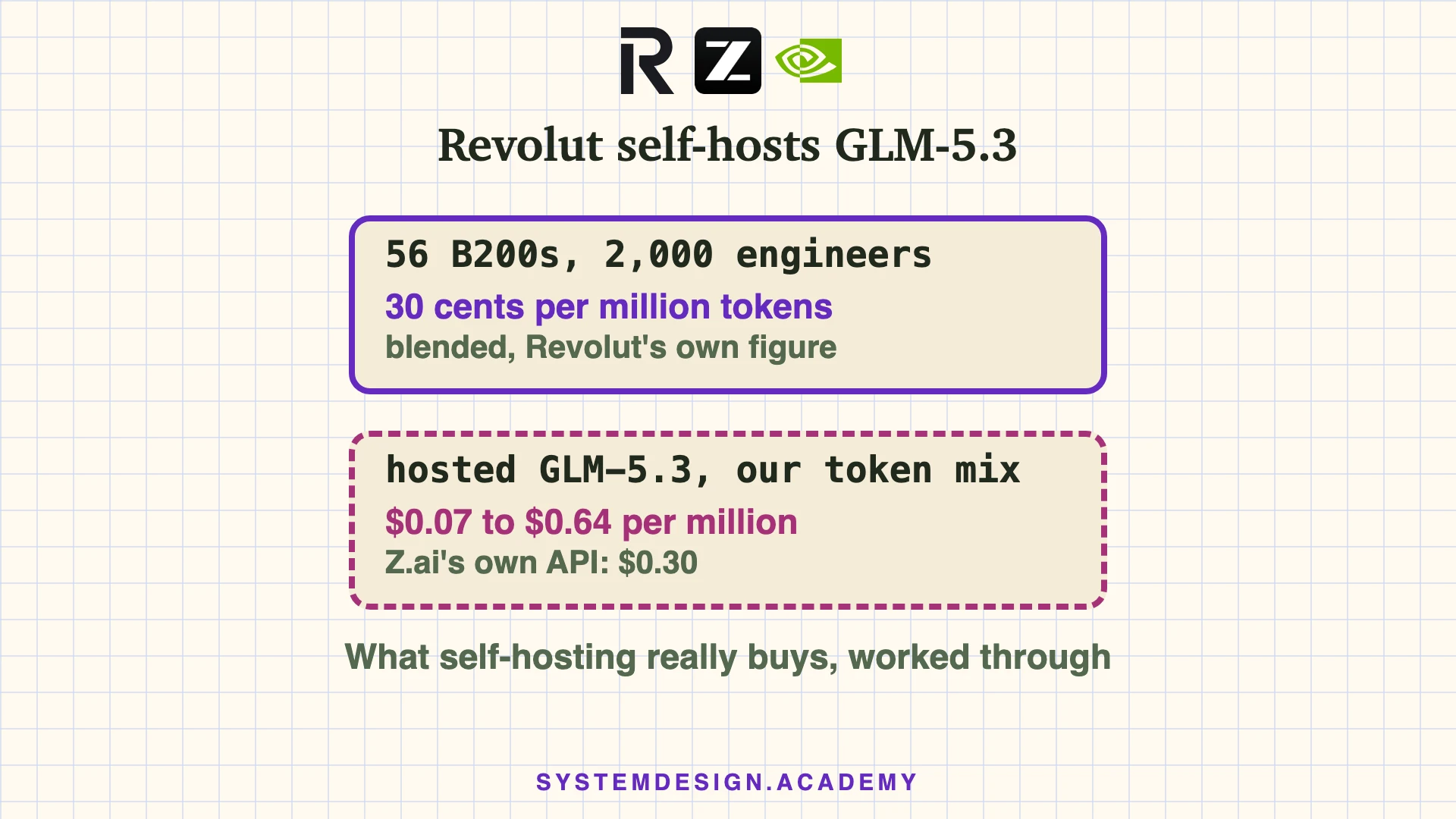
In short: the GPU setup Revolut describes checks out on paper, and the saving is believable, but its $0.30 cannot be compared directly with a list price. The rest of this page shows why.