What changed in Valkey 9.2?
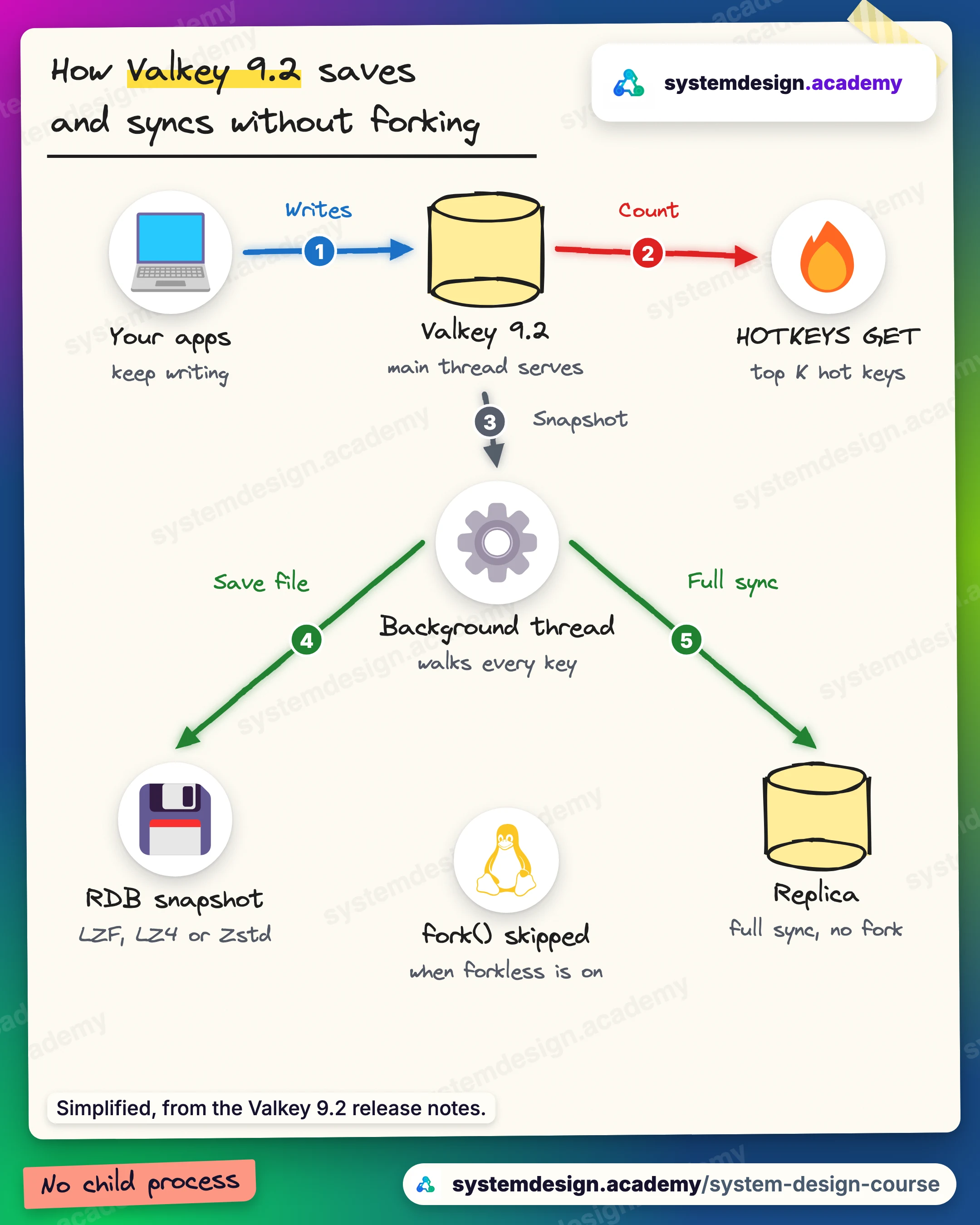
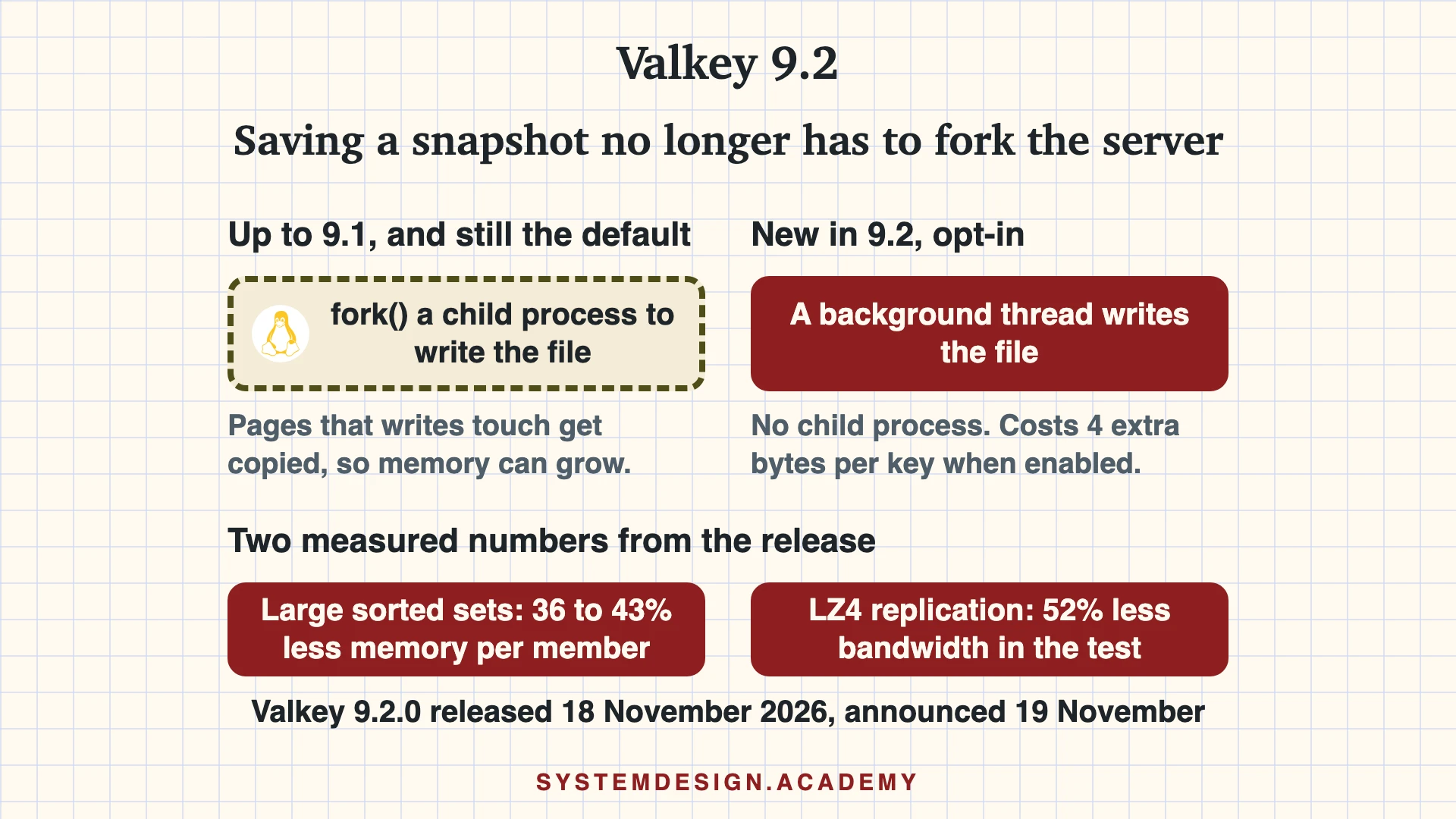
“Forkless operations do their work on a background thread instead of forking, avoiding the copy-on-write memory overhead a fork can incur under write-heavy load.”
Valkey is an in-memory key-value database. Teams use it the way they used Redis: as a cache in front of a database, for sessions, rate limits, leaderboards and queues. It started in 2024 as a community fork of Redis under the Linux Foundation, after Redis changed its license, and many cloud providers now offer it as a managed service.
Version 9.2.0 is the first stable release of the 9.2 line. The biggest change is under the hood: Valkey can now save a snapshot of its data, and copy its data to a new replica, without calling fork(). The rest of the release is a set of practical improvements: compressed replication, smaller sorted sets, server-side hot key detection, access-control roles, a new data type for path lookups, and commands that check a condition and write in one step.
None of the big changes switch on by themselves. Forkless saving, replication compression and hot key tracking are all settings you choose. A few small behaviour changes do apply to everyone, and we list them at the end.