What changed in TensorRT-LLM 1.3?
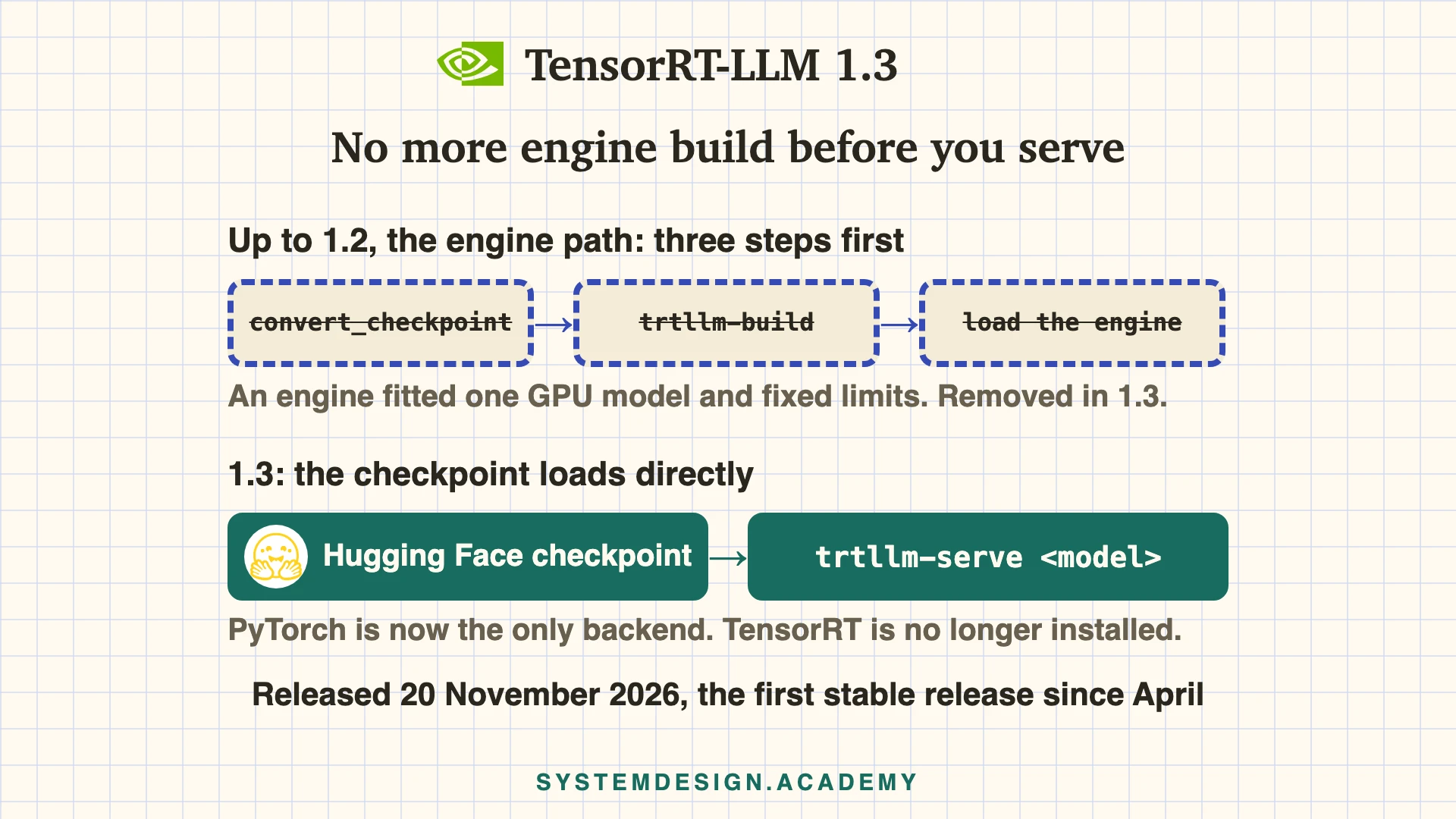
“The TensorRT engine backend has been removed. PyTorch is now the sole execution backend for TensorRT LLM.”
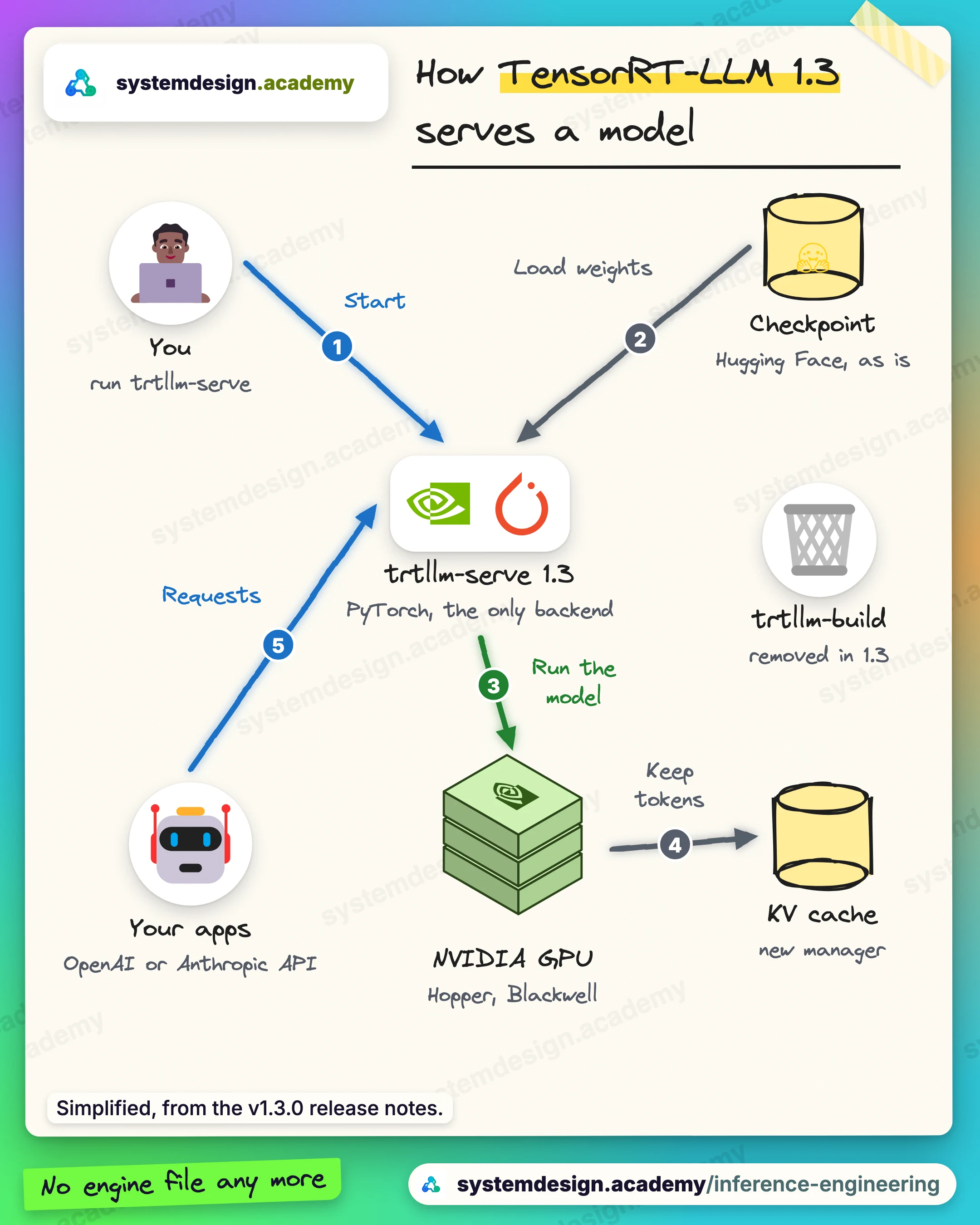
TensorRT-LLM is NVIDIA's library for serving large language models on NVIDIA GPUs. It holds the model code, the fast GPU kernels, the KV cache, the scheduler that mixes many conversations, and a server called trtllm-serve that answers through an OpenAI-style API. Many inference job descriptions name it next to vLLM and SGLang.
Until now it had two ways to run a model. The older way converted the model and compiled it into a TensorRT engine, a file built for one GPU model. The newer way, the default since version 1.0, ran the model in PyTorch with NVIDIA's kernels for the heavy parts. Version 1.3.0 removes the older way completely. The migration guide says it in one line: PyTorch is now the sole execution backend.
So the commands that built engines are gone, the checkpoint conversion scripts are gone, and TensorRT itself is no longer installed with the library. If you start the server with a model name, it loads the Hugging Face checkpoint as it is. The release also adds a lot more, which we cover below, but this removal is the change that can break an existing deployment.