What OpenAI built, and why
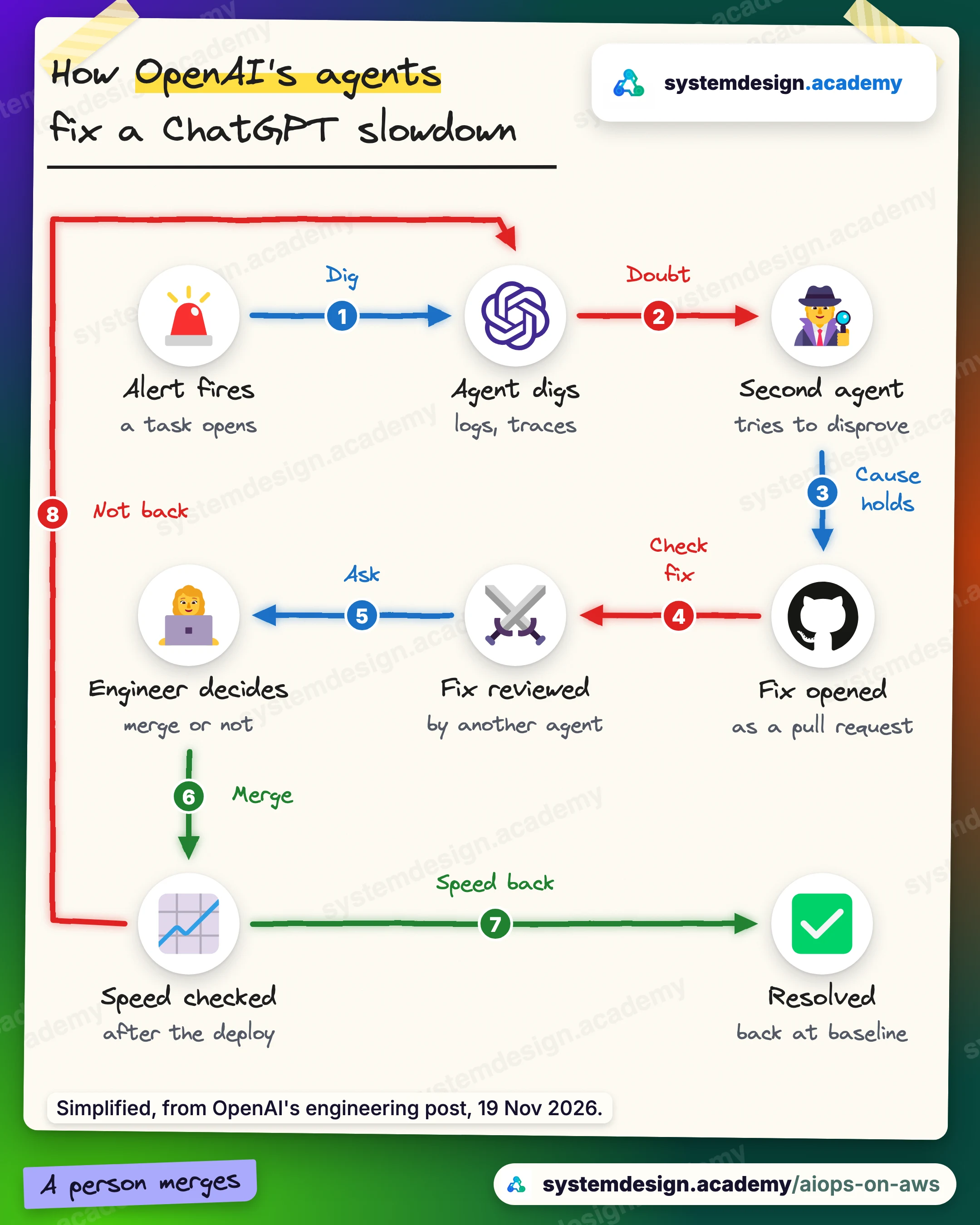
A performance regression is a change that makes a service slower than it was, for example a new feature that adds a slow database call to every request. In a large product the cause can sit in any of hundreds of recent code changes, feature flags or deployments, and finding it means reading metrics, logs, traces and code until the story fits.
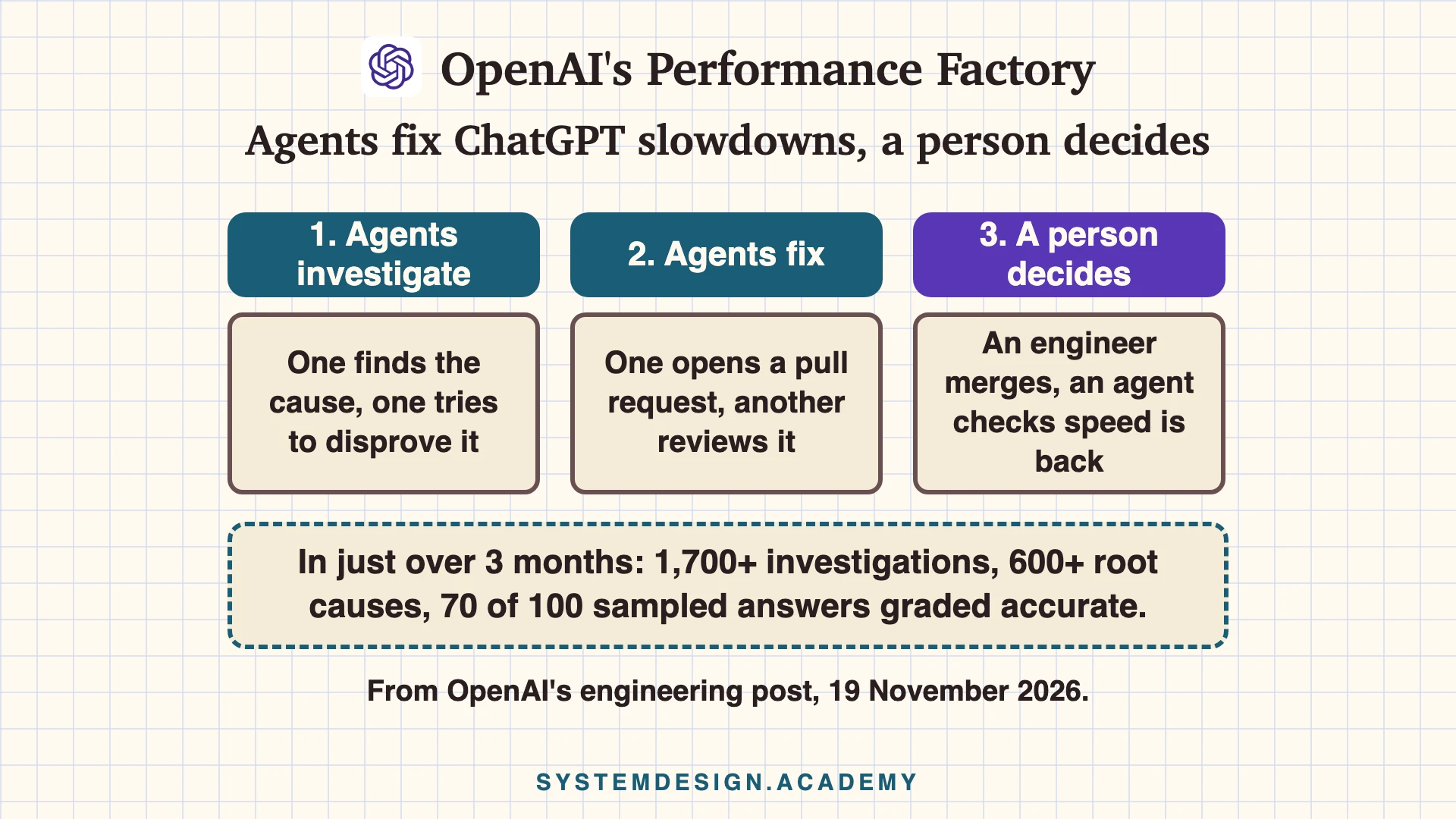
OpenAI says that way of working stopped keeping up. With agents now writing a lot of its code, changes ship faster than engineers can investigate every slowdown by hand. Its answer is the Performance Factory: a system that runs in OpenAI's cloud and uses Codex, OpenAI's coding agent, to carry out the investigation and the fix as a series of steps. Engineers write the steps down once, as a workflow with plain Markdown instructions for each step, and the system runs it every time an alert fires.
OpenAI did not start there. The post describes six stages: engineers working by hand with more than 30 performance tools they had built, then using Codex as a partner they steered, then a shared skill called perf-forensics that wrote down the investigation playbook and was tested against past regressions, then engineers copying alerts into Codex and pasting the answers back into Slack, then investigations that started on their own but stopped at a diagnosis, and finally the factory, which carries a task all the way to a verified fix.